
Pochettino: 'I accept the arrogance of Spain, Argentina, England... But in the United States there’s a bit of confusion'
The US men’s national coach reflects on his mission to lead the World Cup host in turbulent times
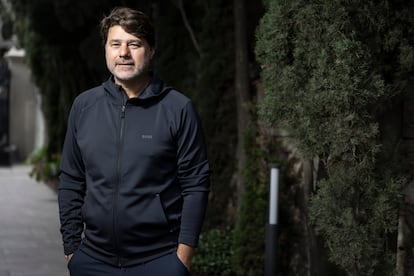

Politics occupies an increasingly oppressive sphere in the United States, and the national team cannot escape it. After two decades of disappointment, the host team of the biggest World Cup in history faces the dual challenge of winning over a tense country and competing successfully on a historically unfavorable stage. Leading the operation is Mauricio Pochettino (Murphy, Argentina; 54), arguably the national team coach with the most complex mission of all.
Question. When Donald Trump asked whether you could win the World Cup, you didn’t hesitate: “Of course, Mr. President.” Do you really believe it?
Answer. I answered that way first because I believe it. Second, because when the chief representative of a country asks you that question… If I were the president and the coach didn’t respond with a resounding yes, I would fire him. What do you do with a coach who doubts his chances? From day one, when we accepted this challenge, we said: whatever pressure there is, let’s turn it into a source of energy. Outwardly there isn’t that pressure because no one talks about the United States as a favorite. But when we accepted we said: ‘Why not?’ If you analyze other World Cups you see cases like Morocco in 2022 or South Korea in 2002, who reached the semifinals.
Q. Does soccer’s growth in the United States mean audiences for the country’s traditional sports will decline? Don’t they see it as a threat?
A. I think there is room for everyone. The United States has almost 350 million inhabitants. And there are 80 million Latinos who have soccer in their DNA. There are a lot of people here who want to accelerate the development of the sport. What’s the problem? They want results now. They want to build infrastructure so children can play, and at the same time they want a Messi or a Cristiano to appear immediately. That emotional relationship with the game takes time to develop.
Q. What do you mean by an emotional relationship with the game?
A. A child shouldn’t have to wait until they’re 12 to start using their feet on the ball. They should begin as soon as they start walking. In soccer it’s not enough just to be a good athlete. That childhood relationship with the ball determines how you compete as an adult. This isn’t taught at universities or in soccer schools. What happens is many methods are copied. They set up soccer schools in the United States and tell kids: ‘Pass the ball from here to there, go back and shoot when you get there.’ That’s not soccer. When we learn, when we relate to the game, it’s with absolute freedom. I take the ball and my brother, my cousin, or my friend two years older takes it away from me. How do I get it back later? That’s the game; it’s not something robotic. The earlier that relationship starts, the sooner talents like those in Brazil, Argentina, England, or Spain will emerge. On that point alone, the United States can’t close the gap yet. In everything else, yes. In preparation, mentality, psychology, understanding… that’s more than covered. What’s missing is the childhood relationship with the game. It’s what determines the winning character of the great football powers.
Q. Germany, Brazil, Italy, Argentina, Spain… they are part of soccer’s great history. The United States is almost a blank page. Are you attracted by the idea of being the founder?
A. I accept the arrogance of Spain, Argentina, England, France... But when I see arrogance in the United States I think there’s a bit of confusion. ‘I’m from the United States. We’re number one. We’re the best. We fought and reached the Moon first...’ But then they don’t compete and don’t win. I think in soccer there’s a mismatch between what they think they are and what they are. I hope we can win. But what matters most to us is to give U.S. soccer’s structure a balance so the challenge is posed on a basis of reality. Because sometimes you come across many people who believe the United States has to win because ‘we’re the best in basketball and hockey…’
If you start an MLS club and three months later you haven’t won any matches and you’re at the bottom, what’s the consequence if there are no promotions, relegations, or international competition? American sport rewards losers!Mauricio Pochettino, USMNT coach
Q. We know how England, France, Spain play… Players from countries with a long tradition have a recognizable character. What is the United States team’s style? How do Americans want to play?
A. Their culture is playful. They want to play. We used to tell them: ‘Guys, playing soccer is one thing, competing is another.’ They are two completely different sports. They grow up in a culture of playing. Why? If you start an MLS club and three months later you haven’t won any matches and you’re at the bottom, what’s the consequence if there are no promotions, relegations, or international competition? American sport rewards losers! But soccer is different: if you reward the one who doesn’t win… If you don’t have goals, I won’t fight. If I lose, what happens? Nothing. They just fire the coach. Also, the American player is disciplined. But with a sense of comfort that is not good for soccer. It took us a year and a half to change that mentality.
Q. You were part of Argentina’s 2002 World Cup squad, when the team could not bear the weight of the social and political responsibility placed on it. How do you manage the pressure that threatens the team at a critical moment in the country’s history?
A. My idea is to protect the players. We’re all empathetic and sensitive to injustices. We all want a better world. We all want no violence. What we cannot allow, as those responsible for preparing a group to compete, is for that to affect the group dynamic because each of us has a different view and that spills onto the field and prevents us from performing. I have great respect for people who step outside the system to fight. But if I’m inside the system, I owe something to the system because I’m part of it. If I disagree, if I don’t feel comfortable as a national team coach at a World Cup, I have to step aside. I couldn’t be the United States coach. That doesn’t mean I validate what happens in the political or social arena, because I have my own ideas and values. But when you accept a post you acquire responsibilities and obligations you must provide. If I’m inside and I benefit while simultaneously acting against it, I could fall into populism and hypocrisy. If we want to compete and want to win the World Cup, which is what we are paid to do, we need to be united. We cannot allow what happens outside to affect the group because soccer is pure emotion.
Q. The United States is more polarized than ever, in every area. Is there anything your national team can do about that?
A. How can we help society face all the conflict situations we live through in the world? By creating good emotions: affection, love, empathy, happiness. That’s where we focus: creating through soccer a sport that brings together people of all races, religions and cultures. It’s a bond that opens people’s minds. We have to come together to show that society can change through our values and principles. Denouncing is easy. The hard part is generating situations with words that build, not ones that push us further to the extremes. Those principles are given to us by the game. This game is very rich. It has many facets. Soccer is not only a sport you play for fun. Soccer is solidarity, it is rapprochement. Why denounce what everyone already knows needs denouncing when I can influence millions of people in a creative way? Is it really necessary for me to demand better pay for doctors and teachers, the people responsible for educating children?
Sign up for our weekly newsletter to get more English-language news coverage from EL PAÍS USA Edition









































