
Earth’s hidden insects: Scientists estimate there could be 20 million species, triple what was thought
The authors of the new study sequenced the DNA of 1.6 million specimens captured over four decades
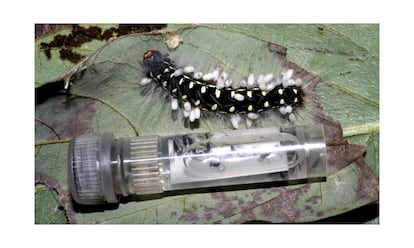

The question of how many insect species exist has been debated for decades. After much discussion, the scientific community settled on an estimate of around six million species. This conservative figure — of which only about 1.2 million have been described, meaning formally identified and named — has continued to serve as the standard reference.
A new scientific study challenges that figure and raises the estimate to between 14 million and 20 million species, more than double and more than triple the currently accepted number. The authors caution that their assumptions are also “conservative,” meaning the true number could be even higher. The research was published on Monday in the journal Proceedings of the National Academy of Sciences (PNAS).
To reach that conclusion, the researchers focused on the Área de Conservación de Guanacaste (Guanacaste Conservation Area), a 169,000-hectare protected area in northwestern Costa Rica. The site has one of the most comprehensive biodiversity inventories in the world, compiled over more than four decades. Drawing on that collection, together with specimens captured in traps, the researchers sequenced the DNA of 1.6 million tropical insects, one by one. This approach enabled them to identify 54,000 species.
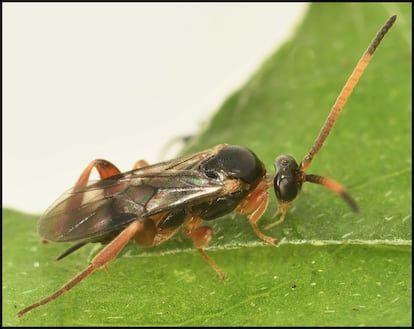
However, even with that enormous effort, the picture was still incomplete: no matter how intensive the sampling, some species inevitably escape detection. To broaden their coverage and estimate the number of species still missing, the researchers incorporated parasitoid wasps from the Microgastrinae subgroup — one of the most diverse insect groups on the planet — into their analysis. By comparing the insect species they found with those that, using Microgastrinae as a benchmark, remained to be discovered, they concluded that the Guanacaste Conservation Area could harbor around 333,000 insect species. That figure then served as the basis for extrapolating the estimate globally, leading to a total of between 14 and 20 million species worldwide.
The traps used to collect insects in Guanacaste and peripheral areas were distributed across different ecosystems. “We set them at sea level, in tropical dry forest, in mid-elevation cloud forest and in humid tropical rainforest, with the aim of making the sample as broad as possible,” Melissa Guzmán, assistant professor of entomology at Cornell University and one of the paper’s authors, said by phone.
Thousands of flies, small wasps and other insects fell into jars with alcohol. Laboratory work followed: the researchers separated them and sequenced a fragment of their DNA to assign each a barcode that identifies the species — their particular identity document.
Robert K. Colwell, a professor at the University of Connecticut, an entomologist at the University of Colorado Museum of Natural History and a co-author of the study, explains that formally describing and naming every species in order to determine how many exist is a near-impossible task. Even if taxonomists were available in vast numbers, “tiny insects are so hyperdiverse that they would have to describe hundreds of new species every day,” he says. That is why DNA is used. Once a genetic fragment is obtained, it is compared with records held in a massive Canadian database containing millions of genetic barcodes. This allows scientists to determine whether a specimen belongs to a known species or represents a new discovery.
According to the Guanacaste Dry Forest Conservation Fund, one of the organizations involved in the research, the study demonstrates that an enormous number of species remain hidden when only a single sampling method is used. But by combining methods and comparing what happens in that area with different biological groups (including trees, amphibians and moths), they find that between 93% and 97% of insects have yet to be described, the organization adds in a statement.
The study comes at a time when numerous investigations are warning of global insect declines, a phenomenon often referred to as the “insect apocalypse.” The main drivers include habitat loss, agricultural intensification, pesticide use and climate change. At first glance, the discovery that there may be millions more insect species than previously thought might seem to lessen the concern. In reality, however, many of these still-undiscovered species could also be in decline.
Guzmán is unequivocal on this point, warning that it is “impossible to protect species if you don’t know they exist,” hence the importance of bringing them to light.
Colwell, one of the study’s 15 authors, adds that the work left him with a sense of “humility” at “how little we know about our planet.”
Sign up for our weekly newsletter to get more English-language news coverage from EL PAÍS USA Edition









































