
In Spain, forensic experts find no trace of alleged baby theft
A new study by geneticists who examined the graves of ‘stolen’ newborns dispels the notion of organized trafficking rings between 1950 and 1990. Instead, they point at Francoist centers for single mothers who pressured them into giving babies up for adoption
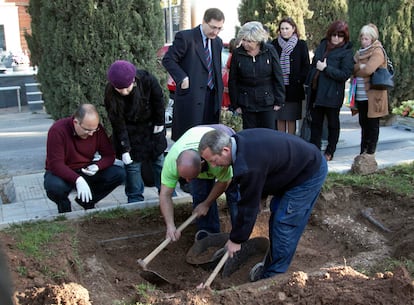

A team of forensic geneticists who examined the graves of newborns allegedly stolen in Spain during the Franco regime has published its findings for the first time in a scientific journal. The five researchers, from the National Institute of Toxicology and Forensic Sciences (INTCF), underscored that their data challenges “the widespread narrative of systematic theft” in hospitals and rejects “the conjecture, by now a hoax, about 300,000 cases of stolen babies in Spain.”
On the other hand, they note, their results do not deny the very real tragedy that unfolded in Francoist institutions such as the residences for single mothers run by the Patronato de Protección de la Mujer (Board for the Protection of Women), where young women, often teenagers, were coerced, sometimes by their own families, to give their babies up for adoption.
The new study sheds light on the so-called case of the stolen babies in Spain, where three separate stories have become intertwined: the 30,000 children who were placed in state care after the 1936-39 Civil War (mostly “war orphans with parents who were dead, imprisoned, exiled, in hiding, or disappeared,” according to a 2008 ruling by Judge Baltasar Garzón); the adoptions of children of single mothers interned in the Francoist Patronato; and the alleged organized theft of babies in hospitals throughout the country between 1950 and 1990. It is this last scenario, the most prevalent in the complaints that underwent investigation, that has been refuted by the team from the INTCF, a technical body attached to the Ministry of Justice.
The five forensic geneticists believe there was a turning point in 2010, when Enrique Vila, a lawyer from Valencia who owned a firm specializing in finding clients’ biological relatives, speculated that there had been “up to 300,000 thefts” of newborn babies in Spain. The figure was immediately picked up by the media, including by reputable outlets such as BBC, Time, Le Monde, The Guardian and Der Spiegel, despite the fact that it would have implied stealing 27 babies every day for three decades.
On January 27, 2011, Vila filed a class-action lawsuit representing more than 250 families. The plaintiffs accused healthcare workers throughout Spain of stealing babies using a similar method: telling the mother that her newborn had died, showing her a different corpse, and then giving the live baby to another couple. Following this initial legal action, Vila’s office began receiving a flood of calls from prospective clients: mothers and fathers whose babies had died decades earlier and who were beginning to suspect that their child had been stolen.
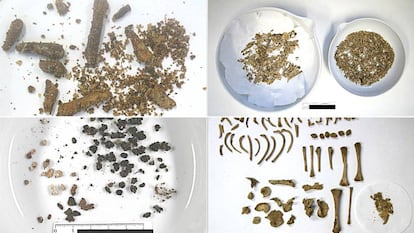
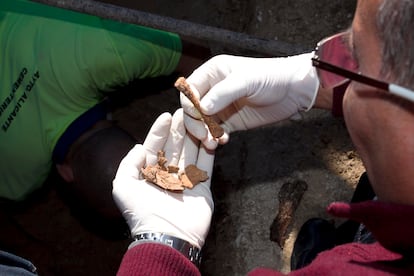
This alleged scheme of continuous thefts in hospitals throughout Spain does not align with the data from the INTCF. Spanish prosecutors have investigated 2,203 complaints to date, of which 537 have gone to court, according to the latest figures from the State Attorney General’s Office. Faced with evidence consistent with theft, the authorities ordered the graves to be opened. Geneticists report finding human remains in 117 of the 120 exhumations. In two other cases, there were no bones, but there were fetal hairs or insects that feed on corpses. The team emphasizes that an apparently empty coffin does not necessarily imply theft, but can be explained by the degradation of the fragile remains of the baby over decades and under certain conditions. The results are published in the latest issue of the journal of the International Society for Forensic Genetics.
Prosecutors issued warnings from the outset. The Castellón Prosecutor’s Office alerted in 2013 about “a certain copycat effect in the media,” after noting that several parents had admitted to reporting alleged thefts “just in case,” after seeing “so much coverage on television.” The chief prosecutor of Granada warned that reports were being filed “by contagion.” The State Attorney General’s Office, in its 2013 Annual Report, stated: “The existence of a nationwide organized network aimed at the abduction and sale of babies appears to be ruled out.” No court ruling has ever confirmed the theft of a single baby in Spain.
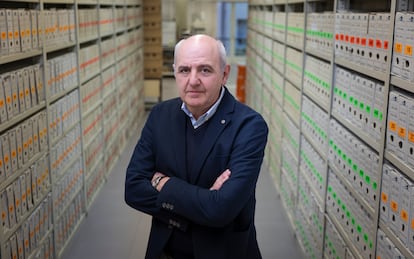
The lead author of the new study, biologist Antonio Alonso, summarizes the official investigation. “The issue of the 300,000 stolen babies is not based on any reliable data. After analyzing reported cases, we have not been able to prove any of them scientifically,” explains Alonso, who was director of the INTCF until his retirement two years ago.
More than half a million babies were stillborn or died in their first hours of life between 1950 and 1990, according to the National Institute of Statistics. The experts at the INTCF lament the anxiety generated by the “misinformation,” which by 2011 had already triggered “profound emotional distress among mothers and fathers whose child died at birth in various Spanish hospitals, mostly public, between the 1950s and 1990s,” as explained by Alonso and his four colleagues: Manuel Crespillo, María José Farfán, Manuel López and Pablo Martín.
In 1981, María Bueno, a 20-year-old student who was single and pregnant, went to give birth at the municipal hospital in La Línea de la Concepción (Cádiz), run by the Sisters of Charity. The gynecologist informed her that the fetus had been dead for some time inside her. Bueno says she has the death certificate, but after reading in the press about alleged baby thefts, she requested more documentation and learned that the cemetery records showed no sign of the burial of her child that the hospital had supposedly arranged. Now she coordinates the International Platform of Victims of Enforced Disappearances of Children, Te estamos buscando (We Are Looking for You.)
“We mothers have been labeled as almost crazy, as people who don’t know what we’re saying, who are uneducated and can’t understand our own life stories,” she maintains. “I’m not saying my daughter is alive or that she’s dead, I’m saying I want them to look for her, because I don’t know if she’s dead. And, if she is dead, I simply want her remains back,” she says. In her opinion, the INTCF sample “is far too small to draw conclusions about a case that has been going on for decades.”
Forensic geneticists do denounce another injustice: irregular adoptions. “Mothers — often young, unprotected and vulnerable — who, either voluntarily or forced by socioeconomic, cultural or religious reasons, were forced to give up their babies against their will, without being able to fully exercise their right to free consent.”
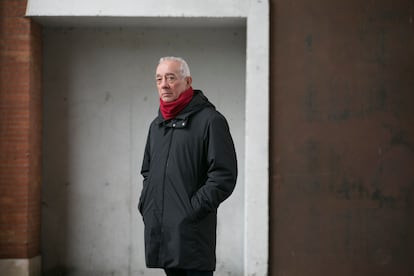
Alonso explains that they are referring, mainly, to the Patronato de Protección de la Mujer (Board for the Protection of Women), a Francoist institution created in 1941 with internment centers in order to confine young women considered problematic and redeem them: prostitutes, runaway girls, homeless women, hippies, pregnant single women or anyone described as “morally deviant” according to the norms of the time.
The historian Carmen Guillén has documented the workings of these centers in her recent book, Redimir y adoctrinar (Redeem and Indoctrinate). “In a society where female virginity was considered a pillar of family honor, any pregnancy outside of marriage, regardless of its cause, was viewed as a problem that had to be concealed,” Guillén recalls. “Most of the internments were not ordered by judges or authorities, but rather instigated by the families, or even requested by the young women themselves,” she emphasizes.
The largest residence for single mothers run by the Patronato, the Peñagrande maternity home in Madrid, housed 120 pregnant women each year until its closure in 1983. The historian denounces “the systematic practice of handing over babies for adoption without sufficient guarantees” for the mothers. “These were young women without any family support and without resources who were persuaded — or directly coerced — to give up their children, under the promise that a suitable family would take care of them,” she recounts. On March 20, the government recognized 53 victims of the Patronato and announced the creation of a commission to investigate the human rights violations reported at these residences, such as forced labor, physical abuse, and the “theft of babies,” as termed by the Minister of the Presidency, Félix Bolaños.
The Catholic Institute of the Evangelical Crusades ran the Peñagrande residence. The young women’s pregnancies might be unwanted or even the result of rape, but in any case, the families themselves and the religious congregations pressured the mothers to relinquish their babies, who ended up being adopted, sometimes illegally registered as the biological children of other people. Guillén gives the example of Loli Gómez, “admitted to Peñagrande after becoming pregnant as a result of sexual abuse suffered at the hands of her father.” In 1987, adoption regulations were reformed because, according to the preamble of the new law, the “lack of control sometimes allowed the abhorrent trafficking of children.”
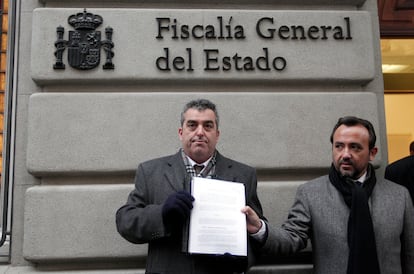
Enrique Vila argues that he was misunderstood. He points to the preface of his book, Historias robadas (Stolen Stories), in which he estimated “300,000 false adoptions,” an estimate that presumably includes irregular adoptions of babies given up knowingly, with or without coercion. “It bothers me that, in the popular imagination, everyone thinks of an empty grave when they hear ‘stolen baby.’ That’s not the case,” he states. “During the Franco regime, and even during the years of democracy, it wasn’t necessary to tell women, ‘Your child has died.’ Because they were told, ‘You’re 16 years old, you’re single, you have no financial means. If you don’t give up your child, you’ll be a prostitute and an outcast for the rest of your life.’ And the woman would give it up. That, legally speaking, is theft,” Vila argues.
His book, with a foreword by television presenter Susanna Griso, inspired the 2012 miniseries Stolen Stories, in which a gynecologist steals a baby from a clinic in 1979, leaving behind an empty grave that is later discovered. Vila, who was president of the SOS Stolen Babies association, acknowledges that in some interviews he granted around 15 years ago he may have spoken of “300,000 stolen babies,” as recorded in newspaper archives, but he maintains that he always tried to clarify that he was referring to “irregular adoptions.”
Until the Civil Registry reform in 2021, those who died within the first 24 hours of life were not considered born persons, but rather “aborted beings,” and could receive either individual or collective burial. Antonio Alonso does not believe this legal nuance provided a loophole for stealing newborns by faking their deaths. The former director of the INTCF explains that these remains often ended up in infant cemeteries, sections of cemeteries where they were buried collectively in several layers, but “with a certain order.” In the judicial investigations in which he has participated, the norm has been to find the sought-after bones.
Alonso insists that the majority of cases in the investigated complaints are different. The geneticist recalls two cases of alleged stolen babies that filled newspapers and television news broadcasts at the time, but were later dismissed by experts. Dr. Alfonso Cabeza, former president of the soccer club Atlético de Madrid, had to testify before a judge in 2013 regarding an incident in 1980, when he was director of La Paz Hospital in Madrid, concerning the alleged theft of a baby belonging to a woman named Petra Gallardo. This mother believed she had found her daughter alive 33 years later, after a preliminary DNA test indicated a 99% probability that she was the mother of a woman adopted in Murcia. After being presented in the media as a possible case of theft, the official analysis by the INTCF ruled out that they were mother and daughter.
The same thing happened with the high-profile case of Eduardo Raya, a lawyer from Granada who on March 23, 2010 became the first person in Spain to report the alleged theft of a baby. He was convinced that his newborn daughter hadn’t died in 1990 at the University Clinical Hospital of Granada, as he had been told, but had been taken alive. The INTCF determined that the DNA from a liver preserved in paraffin in the hospital archives matched his daughter’s. Raya didn’t believe it, Alonso laments. The geneticist also recalls the reaction of two 50-year-old women who looked very similar and presented themselves to the press in 2011 as stolen twin sisters. Genetic tests proved they weren’t related. “Let DNA say what it wants. María José and I are absolutely convinced we are twins,” they explained to EL PAÍS at the time.
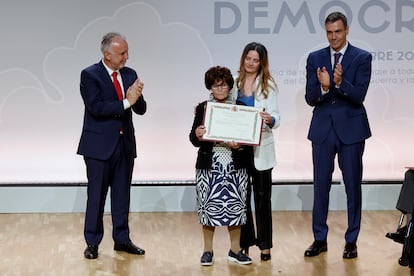
The Spanish government, led by Pedro Sánchez, paid tribute on October 31 to several victims of the Civil War and the dictatorship, including Pilar Villora, a woman who claims that her baby was stolen from her in July 1973 at the Santa Cristina maternity hospital in Madrid. Her daughter Ana Belén Pintado, who was adopted, says she found Villora through a call from an anonymous man who told her who had given birth to her. When she gave birth she was poor, 24 years old, had two other children, and her husband was in prison. Three employees of the maternity hospital, including the midwife who assisted with the delivery, testified in December at Madrid’s Court of Instruction Number 10 that babies were never stolen at their clinic, but that some mothers did knowingly give their children up for adoption, according to judicial sources. The judges will determine who is telling the truth.
In December 2012, EL PAÍS published an article titled “The Stolen Babies Bubble,” after a special task force within the Basque regional police — comprised of judges, prosecutors, and forensic experts dedicated to investigating each case — found “not even reasonable grounds” for suspicion of newborn abduction, after analyzing more than 300 complaints in the Basque Country. Francisco Etxeberria, a professor at the University of the Basque Country, was one of those forensic experts. He himself initially believed there might be a conspiracy, until the graves were opened and the babies were found inside. At the time, he lamented the “genuine psychosis” that had been created, and now he applauds the new study, in which he did not participate.
“The idea that neonatologists in Spain were stealing babies is absurd,” argues Etxeberria, who has worked as an advisor to the Secretary of State for Democratic Memory and headed the effort to recover the remains of people who were murdered during the Civil War and buried in the Valley of Cuelgamuros. Some parents, however, didn’t believe the DNA results, laments Alonso, who calls for understanding their pain and for each case to be investigated thoroughly to dispel any doubts. On a dozen occasions, such as with the liver of Eduardo Raya’s daughter, DNA from newborn biopsies preserved in hospitals was also analyzed. These weren’t stolen babies either, but rather deceased infants, emphasizes Alonso, who has just published the book La huella invisible. Cómo el ADN cambió la historia de la justicia en España (The Invisible Footprint: How DNA Changed the History of Justice in Spain), featuring eight of his most emblematic cases.
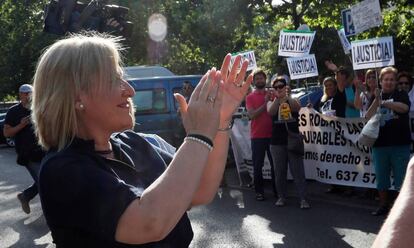
One of the chapters delves into the story of Inés Madrigal, which captured the attention of the press worldwide in 2018. It was, they reported, the first trial in Spain for an alleged stolen baby. Madrigal sued the gynecologist Eduardo Vela, who in 1969 gave her as a newborn to a couple at the San Ramón clinic in Madrid, with a falsified birth certificate. “I would like him to apologize to all those mothers to whom he allegedly showed frozen babies, telling them it was their dead child,” Madrigal declared before the trial.
Finally, in the midst of the legal proceedings, the complainant found her biological siblings through a company that locates relatives using DNA. They informed her that her mother, a single woman at a time governed by ultraconservative morals, had given her up for adoption. In 2020, the Supreme Court criticized the Provincial Court of Madrid for having considered the theft proven in its initial ruling, without conclusive evidence.
Madrigal now recounts over the phone that 200 media outlets were accredited to cover her trial. “I got tired of explaining to them that, until I found my family, I didn’t know what had happened. It didn’t matter; they still called me a stolen baby. I got tired of denying it,” she says. “Vela didn’t steal me, but my mother is one of those women whom society, instead of helping them keep their babies, called them whores for having a child out of wedlock,” she maintains.
Inés Madrigal, who became a symbol of the stolen babies movement, had this to say about the new INTCF study: “I can agree that in Spain there hasn’t been any scientifically proven baby theft, but they can’t categorically tell me that baby theft hasn’t happened, because that depends on more information, which they may not have.” The SOS Stolen Babies Madrid association continues to state on its website that 300,000 children were stolen. The United Left party also embraced this figure when it proposed a bill on stolen babies in Congress two years ago.
Forensic geneticist Manuel Crespillo, director of the Barcelona branch of the INTCF, laments the “very serious errors” made in DNA tests carried out by private laboratories. One of the first victims was Manuela Polo, an octogenarian woman whose baby died at birth in 1968 in a hospital in A Coruña. In 2012, she began to suspect she had been a victim of the mafia that the media had reported on, and thanks to associations, she met María Jesús Cebrián, who had been adopted in Valencia in 1968 and was searching for her biological mother. They had a DNA test done in a private laboratory, and the preliminary result showed a 99.7% probability that they were mother and daughter: “After 44 years, one of Spain’s stolen babies is reunited with her mother,” headlined The Guardian. In 2014, EL PAÍS spoke with the laboratory manager, who revealed that there was no biological relationship. “It was a false alarm. I said so, but by then there was already a huge fuss,” he declared.
Crespillo — seasoned in cases such as the genetic identification of the leader of the 2017 jihadist attacks on Las Ramblas in Barcelona and Cambrils — laments that a study his team published in 2015 with the results of 58 cases of alleged stolen babies went unnoticed. The remains, he recalls, were in their graves or there were other explanations for their absence, such as cemetery renovations or the transfer of bones to ossuaries. “When the issue was at its peak, there was considerable conflict regarding this data; people didn’t want to hear it, but science is telling us what it’s telling us: these are representative analyses,” he says. Crespillo encourages “anyone who may have doubts” to contact the Information Service for Victims of Possible Newborn Abduction, an office of the Ministry of Justice that, since 2013, has provided free access to administrative documents and attempts to centralize the DNA profiles of those involved; 870 citizens have started a search with this service to date.
Sign up for our weekly newsletter to get more English-language news coverage from EL PAÍS USA Edition









































