
Racial animus, digital platforms and the attacks of the right-wing media: In memory of Dr. Jason Arday
The coordinated attacks against him were intended to discredit Black and neurodivergent thought and prevent investment in a more equitable society
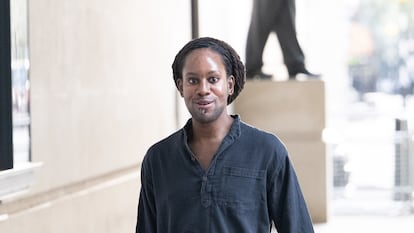
The world lost an important Black educator in August, highlighting the unsettling reality that Black academics continue to face coordinated attacks online with real-world consequences.
Dr. Jason Arday was an education professor at the University of Cambridge, recognized as one of the youngest Black professors to be hired by the school. His work challenged who gets access to elite academic institutions. He authored books about decolonizing the academy, and spoke honestly about the pain of being told you don’t belong there. He published research on the relationships between elite schools and the transatlantic slave trade, and documented the ways Whiteness excludes multicultural scholarship from academic spaces. Importantly, he imagined an inclusive pedagogy, one that celebrated a wider view of knowledge, one that included Black and neurodivergent thought.
Dr. Arday died after facing what he described as unrelenting personal attacks following his appointment at Cambridge. Professor Sir Simon Baron-Cohen, a clinical psychologist and friend, described him as “a kind and gentle man” who was “being subjected to relentless scrutiny, including ridicule, discrediting absolutely every detail of his life.” What happened to Dr. Arday exemplifies the ways political opportunists weaponize the media to target Black thought leaders across the globe through highly orchestrated smear campaigns designed to cause professional, financial, and psychological destruction. This extends tragically to loss of life.
The outrage campaign against Dr. Arday was launched in a Substack post by Nathan Cofnas, a self-described “race realist” who was terminated from Cambridge in July 2024 after students protested his view that meritocracy would remove Black people “from almost all high-profile positions outside of sports and entertainment.”
Dr. Arday’s death illustrates the devastating impact of racial animus when it is amplified using digital platforms. It has been difficult to watch the conversation about Dr. Arday’s life and death unfold as someone who knows what it feels like to be the target of a political lynching campaign. In 2022, I was removed from elected office after a media firestorm was promoted by right-wing think tanks, cryptofascists, and tech-venture capitalists. The smear campaign waged against me involved some of the same political interests and followed similar patterns.
I have since documented these attacks on Black educators in K-12 schools and universities. I built connections with political science researchers like Dr. Walter Greason, an award-winning professor of history at Macalester College, who explained how political outrage campaigns fit into a larger history of racial violence in the United States. Dr. Isaac Kamola, professor of political science at Trinity College, explained how right-wing media use personal attacks against university professors to curtail academic freedom. He has since founded an organization to protect them.
Over the past several years, the right-wing media has waged an escalating war on anti-racist educators, and on education itself. Organizations funded by dark money have published educators’ names and workplaces online; Parents Defending Education and Turning Point USA (founded by Charlie Kirk) published “IndoctriNation Maps” and “Woke Professor Watchlists.” Elon Musk’s removal of online safety policies on X has emboldened paid trolls to coordinate harassment campaigns. White supremacists responsible for creating Q-Anon and Antifa conspiracy theories routinely tweet about educators, parent advocates and their children.
These personal attacks have a broader purpose: dismantling affirmative action, defunding equal opportunity initiatives, and demonizing Diversity, Equity and Inclusion (DEI). This latest version of the long history of racial backlash has also expanded to America’s private sector. Since January 2025, over 600,000 Black women have been pushed out of the workforce.
It is not a coincidence that the people who created the boogeyman of “woke indoctrination” stood on the steps of the U.S. Supreme Court in 2023 with conservative legal strategist Edward Blum in his longstanding quest to dismantle affirmative action. It is not a coincidence that the same year the MAGA political strategist Chris Rufo defamed the first Black president of Harvard, Dr. Claudine Gay, using accusations of plagiarism to ultimately discredit DEI.
There is a reason the media portrayed Dr. Arday as a “diversity poster boy”; his attackers want us to focus our discussion on whether or not he was a token. Yet, Dr. Arday was more than someone who had overcome extreme odds to achieve entry into an esteemed academic institution. He was a threat to the institution itself. His research focused on the ways the British education system reproduces racial inequality and in so doing, defines which bodies of knowledge are considered valid.
In one of Dr. Arday’s last publications, he wrote: “Intellectual authority in its purest form is about establishing grounds to embark on, and have influence through, truth claims; it is also a necessary condition for having a hearing from those in positions to grant justice.” His research examined representation in higher education staffing as a means of surfacing important questions about who gets to decide what is deemed academic knowledge.
Arday’s work raises questions about the negative impact that institutions of higher learning can have on society at large when professors in the U.K. represent such a small portion of the world’s population. If, as he documented, an overwhelming majority of faculty are the descendants of the colonialist project, rather than advancing the good of society by rewarding intellectual “merit,” universities maintain unjust social hierarchies which benefit those who sit at the top.
Search through the mountain of negative press articles about Dr. Arday, and you will be hard-pressed to find any mention of his work. This is intentional, and it is a tell: throw dirt on the person to bury them and their work. Ignore and avoid the uncomfortable questions they ask those in power. Even after Arday’s death, journalists continue piling on the controversy in an effort to erase his impact. We cannot let this happen.
I am grateful for the remarkable body of work that Professor Arday left us, but we will never know what more he could have shared. For those who knew him personally, no amount of books or journal articles will ever make up for his absence as a son, cousin, friend, mentor, or colleague.
We must do better. Dr. Arday is gone, but many educators still face similar attacks. We must speak up to protect those cultivating the next generation of scholars. Contrary to what Cofnas and U.K. media suggest, we all deserve to be celebrated for our perspectives and contributions — especially in academic spaces where diverse voices matter most.
What happened to Dr. Arday is not only a tragic loss of human life; it is a grim warning. The coordinated media attacks against him were intended to discredit Black and neurodivergent thought and prevent investment in a more equitable society.
If we allow this pattern of targeting educators who challenge the system to continue, we will lose far more than a beloved professor. We will be giving up power to a small minority of those who have historically hoarded wealth and power to determine what the rest of us can ultimately read, discuss and learn.
Sign up for our weekly newsletter to get more English-language news coverage from EL PAÍS USA Edition









































