
Daytime, headphones, no booze involved: How a generation is saying ‘no’ to club parties
Faced with an increasingly expensive and homogenized nightlife scene, house parties are reclaiming their place as a refuge to enjoy oneself, build community, and discover music in a much more genuine way
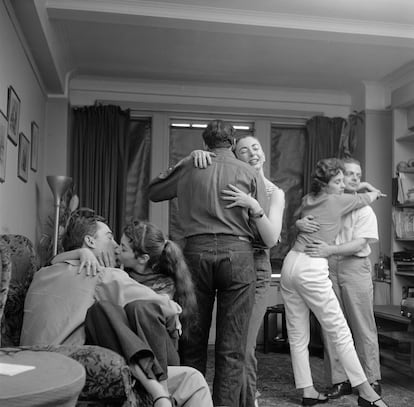

It’s one o’clock in the morning early Saturday in a nightclub. The music, the strobe lights, the people. This is the moment the party really gets going, and control goes out the window — or at least, it should be. The road to getting here has been anything but spontaneous. First, the cover: from $20 to $30 on average, and you’ve got to buy tickets a couple days in advance in case they sell out, or prices go up. Then, you have to create a WhatsApp group for the committed and come to an agreement about the pre-party, normally in a house or bar. And finally, battle with the wait at the door, how sleepy you are, and the cold, in order to actually make it in. At last on the dance floor, it’s time to move, to wait for them to play the song that gets thing going. One drink, two drinks — but things never quite pop off. Inevitably, you ask yourself:
“What are we doing here until five in the morning? Yikes! I want to go home and play my music with my friends.”
At least, that’s what happened to Nicolás A., a 22-year-old student and musician, every time he went to a club. “You pay the cover and when the day comes, you aren’t even in the mood. In my circles, we don’t like being that tied down, or spending all your money on one night,” he explains. “You feel suffocated and like you’re restricted to spending the night in a certain way. I think that nowadays, we like to have the ability to decide what we dance to and what we do. That makes for much more fun nights.”
Nicolás, who came of club-going age during Covid-19 lockdown, is similar to many in Gen Z, who are finding different alternatives to a nightlife industry that feels more and more expensive, homogenized and tight-laced. The latest report from Spain’s National Federation of Leisure and Entertainment Entrepreneurs predicts a 2.6% decline in revenue for the 2024-2025 season, which many attribute to the end of post-pandemic need to go out, inflation and rising prices. Given this panorama, the most common solution seems to be partying at home, a tradition as old as that of drinking itself.
Kikis, cocktail parties, afters, keggers — every generation has their own version of the house party. According to a 2024 survey by the trend analyst firm Ypulse, 63% of young Europeans prefer to organize gatherings at home to going to the club. House parties, or house sessions — in the case of events featuring their own DJ — can vary widely, from more reserved meet-ups to the wildest, Euphoria-like ragers. The key is taking back control over spending and how one gets by during a cost-of-living crisis, not to mention employment prospects that are getting more and more precarious.
The most spectacular example of the house party’s relevance comes from Bad Bunny, the world’s most-listened-to artist this year on Spotify and likely, in a large number of such gatherings around the globe. For his Puerto Rican residency, the performer had a house built onstage in which to dance and celebrate with guests like Austin Butler, LeBron James and Penélope Cruz. “La Casita” has become an emblem of his return to roots, and now, the artist is planning to bring it with him on his tour halfway around the world. But far from the overwhelming success of Bad Bunny’s Debí Tirar Más Fotos tour, house parties are tied to the development of alternative cultural spaces. For DJs in particular, they represent an essential catalyst.
What the room taught me
According to a recent survey published by Alpha Theta, a sound equipment company, one-third of Gen Z and Millennials say the best DJ set they’ve ever heard took place in a house, and nearly half think it is the best place to unhurriedly discover new music. Of all the countries surveyed, Spain had the highest percentage of DJs (28%) who say they got their start at house parties. One such beatsmith is 26-year-old IceSplinter, who rotates between professional venues and houses. “Things that happen there don’t have anything to do with clubbing, where there are more limitations. In houses, the public is much more participatory and as a DJ, you can take more risks. You invent something different at every event,” he explains. He’s also convinced that music has the power to transcend festivities and create more profound experiences. “[House parties] are a refuge for channeling how we are. Every group lets off steam in a different way, and those experiences aren’t just about listening and dancing, they generate more conversations,” he adds.
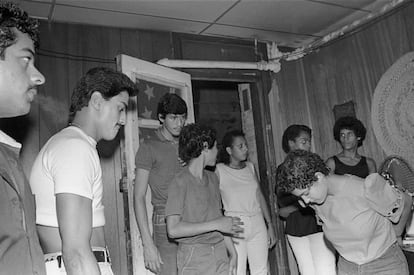
Aïda Camprubí, a critic, cultural curator and co-organizer of the La Cangri party, shares this viewpoint: “They’re like small Edens, designed to fit your closest friends. In this incredibly accelerated and capitalistic system, our moments of healing take place in those houses. It’s the place we take shelter when the economy is bad.” The democratization of technology, she says, has allowed many people to learn to DJ from the comfort of home, out of mere enjoyment — and that fringe DJ communities, like decolonial feminist collectives, begin their careers by seeking such alternatives to professional circuits.
A generational bubble
Beyond the music, house parties break with dynamics that seem to have traditional nightlife in a chokehold. “Many people don’t even know how to go out, or drink, or act right, which is what you see in the mega-clubs. You go outside to smoke and everybody bothers you. They don’t understand where the line is between socializing and intruding,” says Camprubí. But she also warns of the risks involved with house party bubbles. “Mainstream nightlife has always been a bottomless pit for losing money and having experiences that aren’t all that enjoyable. But there is a risk in creating endogamic environments. When you go out, you force yourself to interact with other kinds of realities, environments and kinds of music, and that feeds us as people. Events in the home should be open to friends of friends and people who don’t form part of our everyday lives,” she says.
That kind of encounter with strangers, says Juan Carlos Usó, author of the Spanish-language book Historia del ocio nocturno en España (History of nightlife in Spain; El Desvelo, 2025) , is known as the “school of social fluency”, in the words of his teacher Antonio Escohotado. This “school”, he explains, was previously only located in nightclubs, until marketing turned them into an “imposition of homogenized leisure”. Now, social media has taken on this role — you no longer have to go out to party to meet new people to flirt with — and it has taken with it a large part of the purpose of clubs. Though economic precarity is one of the primary reasons for the rise of house parties, Usó says it’s not the only one. Social media also allows for the diffusion of different ways to party. And a house is a great setting for many of these ways.
There are as many kinds of house parties as there are hosts: daytime or nighttime, with or without a DJ, strict guest list or open invitation, with or without a dress code, and — perhaps most importantly — with or without alcohol. Because these days, it turns out that drinking isn’t a requirement for partying, either. “As an alternative to Saturday night parties, a nocturnal ritual, a symbol of freedom, fun, and chaos, some people nowadays prefer their entertainment in a calmer, safer environment. That idea of ‘live fast, die young and leave a pretty corpse’ or the invitation to “walk on the wild side” has become nearly obsolete. We have gone from cultivating self-destruction to practicing self-care,” says Usó.
You gotta fight for your right
Another enduring question is: won’t someone think of the neighbors? “In apartment buildings, a lot is tolerated and family noise is considered normal: kids, dogs, couples fighting. But when we get together with our friends, our chosen family, and we play music, there are a lot more complaints. Even during the daytime,” says Camprubrí who, on the other hand, also recognizes the responsibility to respect people’s sleep. And although this historic battle with the neighbors seems thoroughly entrenched, new generations are exploring new solutions.
For example: IceSplinter has been employing a strategy of respectful DJ sessions. He bought an adaptor that connects to up to 17 pairs of headphones and, with it, hosts events that are nearly imperceptible to neighbors. “The first time was really special: in the living room of my house, full of blankets, everyone on the floor, ambient lighting and lasers. People took turns improvising on the microphone,” he remembers. “You don’t get that in a club.”
Sign up for our weekly newsletter to get more English-language news coverage from EL PAÍS USA Edition









































