
Not all insomnia is the same: Study identifies five subtypes and paves the way for personalized treatment
To better understand why some people develop the condition while others do not, researchers have worked together to identify distinct patient profiles
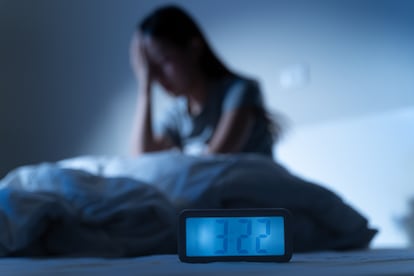

Insomnia has become a major public health problem in Western societies. In countries like Spain, for example, around 43% of the population experiences some symptoms of insomnia. According to data from a study by the Spanish Sleep Society (SES), the prevalence of chronic insomnia has tripled in the last two decades and now affects 14% of the Spanish adult population (around 5.4 million people).
According to the latest 2023 European Guidelines on Insomnia Treatment, cognitive-behavioral therapy for insomnia (CBT-I) is recommended as the first-line treatment for chronic insomnia in adults. Only if this therapy is ineffective or unavailable is the short-term use (no more than four weeks) of certain medications advised, such as benzodiazepines, benzodiazepine receptor agonists, and some antidepressants. In practice, however, many patients spend years taking these medications or suffering from insomnia symptoms that impair their quality of life without finding a treatment that improves their condition.
Chronic insomnia is defined as trouble sleeping that affects daytime functioning at least three times a week, for at least three months, and not explained by other factors. To understand why some people develop it while others do not, researchers in recent years have joined efforts to identify different types of insomnia patients, with the goal of providing more personalized and effective treatments.
There isn’t just one type of insomnia, and therefore it shouldn’t have a single treatment either. “It’s a complex and heterogeneous condition in which different pathophysiological pathways lead to the common complaint of lack of sleep and impaired daytime functioning,” explains Francesca Cañellas, a psychiatrist specializing in sleep medicine and a researcher at the Balearic Islands Health Research Institute (IdISBa).
These efforts have led to two approaches for determining the subtype of insomnia. The first divides patients into those with a short sleep duration (less than six hours) and those with longer sleep duration (more than six hours, the most common), but with a distorted perception of their rest. The second approach focuses on patient characteristics and is led by Dutch researchers Tessa Blanken and Eus Van Someren, who in 2019 proposed five patient subtypes based on life history as well as affective and personality traits. This classification doesn’t require medical tests and is carried out using a 204-question survey completed by the patients themselves.
In a study conducted in the Netherlands, using data from 2,224 participants with insomnia, Blanken and Van Someren identified five patient subtypes, but the majority fell into groups 2, 4, and 5. Subtype 2 — the most common in the general population — includes individuals with moderate levels of anxiety, who experience insomnia in response to stress and exhibit high levels of pre-sleep arousal. These patients typically respond well to cognitive behavioral therapy for insomnia. Subtypes 4 and 5 — who have slightly lower levels of anxiety — suffer from long-term insomnia in response to life events (subtype 4 exhibiting more severe insomnia), and they also frequently experienced childhood trauma. Both subtypes also tend to respond well to relaxation therapies and stress management techniques.
“The results of the study left me with the impression that the patients arriving at our sleep units were the most complex,” explains Cañellas. For this reason, the psychiatrist launched a research project, which received a grant from the Spanish Sleep Society, and involved eight multidisciplinary sleep units across Spain. This study analyzed sleep characteristics, levels of anxiety and depression, family and personal history, the presence of other coexisting illnesses, and the treatments the patients were taking.
Seven years of insomnia
The study’s results support the existence of the five insomnia subtypes and also Dr. Cañellas’s hypothesis: 82% of patients who come to sleep clinics fall into subtypes 1 and 3, the most complex types that have not responded to treatment. As a rule, they seek help too late, after suffering from insomnia for more than seven years.
Patients with subtype 1, the lead author explains, are characterized by significant distress related to their sleep, severe insomnia, and very high levels of depression. “In these patients, insomnia can be the first and most significant symptom of depression, so if the depression is not treated, the insomnia will not improve. Furthermore, more frequently than the other subtypes, these patients have been diagnosed at some point in their lives with anxiety or depressive disorders,” she notes.
Patients with subtype 3 sleep disorder, on the other hand, are moderately distressed about their sleep but do not respond well to treatment. “They are people with a tendency towards negativity. They come to the units frequently because they are the most worried,” explains Cañellas.
She explains that both subtype 1 and 3 patients tend to use more sleep medications (almost 30% were taking two or more drugs) and are more likely to have a family history of insomnia or psychiatric disorders. “We need to continue researching type 3 patients, who represent almost half of the patients seen in sleep units and are the ones who have the worst response to different treatments,” she concludes.
The importance of subdividing patients
“The results of the study allow us to reorient the treatment paradigm somewhat. In other words, we can’t tailor the treatment to everyone with insomnia; instead, we’ll have to modify the treatment based on each of the insomnia subtypes,” reflects Javier Puertas, clinical neurophysiologist at the Hospital de la Ribera in the Spanish city of Valencia and vice president of the Spanish Federation of Sleep Medicine Societies (Fesmes).
Ainhoa Álvarez, president of the Spanish Sleep Society, shares this view, arguing that this classification is a first step toward “more effective and personalized” treatments that can also be implemented earlier, without so much trial and error. For the researcher at the Bioaraba Health Research Institute, the simplicity of the questionnaire used to identify the subtype (the ITQ) means it can be administered in primary care, allowing patients who need specialist attention to be referred more quickly to sleep clinics or psychiatric services.
“Primary care is the driving force behind the management of the healthcare system. If, thanks to this questionnaire, it is possible to effectively screen patients and quickly refer only those who truly need it, this will also have positive repercussions for both the economy and the health of the population,” she adds.
Sign up for our weekly newsletter to get more English-language news coverage from EL PAÍS USA Edition









































