
African Union launches continent’s first credit rating agency to counter what it says is bias inflating borrowing costs
The AfCRA aims to provide an alternative to the Big Three firms that dominate the market and which African leaders accuse of overstating the region’s risk
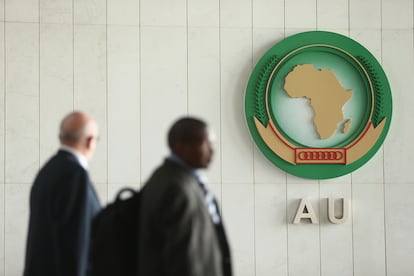

The African Union (AU) on Wednesday launched a continental credit rating agency aimed at providing risk assessments that it says will be more credible and realistic than those produced by the major international rating agencies. The goal is to lower Africa’s borrowing costs and support the continent’s development and industrialization. To that end, the African Credit Rating Agency (AfCRA), which will be headquartered in Port Louis, the capital of Mauritius, will operate as a private and independent entity, with no ownership stake held by the AU or any government.
The initiative has been in development since 2017 and stems from a long-standing argument made by African leaders and economists: that the major rating agencies, particularly Moody’s, S&P Global Ratings and Fitch Ratings, which together dominate the global market, do not fully account for local realities and tend to overestimate the continent’s risk, driving up the cost of borrowing.
As the AU said in a statement, “[AfCRA’s] mission is to strengthen Africa’s financial architecture, close information gaps, and ensure that African sovereigns, sub-sovereigns, and businesses are assessed fairly in international financial markets. AfCRA complements existing global credit rating agencies by offering a perspective rooted in African data, expertise, and realities.”
According to the AU, payments on the continent’s external debt nearly tripled over the past 15 years, rising from $61 billion in 2010 to $163 billion in 2024. In many countries, spending on debt repayment and interest has exceeded public expenditure on healthcare and education. The new agency’s stated objective is to help reduce those burdens by improving investor confidence and increasing market transparency. The expectation is that more favorable credit ratings would translate into lower borrowing costs.
Carlos Lopes, an economist and professor at the University of Cape Town, welcomes the creation of the agency. In his opinion, what matters is that “for nearly a decade, the African Union has been building the capacity to challenge, understand and ultimately intervene in a field with enormous economic consequences.”
For Lopes, “Africa has decided to stop being merely the subject of assessment and to develop its own capacity to produce knowledge about its risk and solvency. AfCRA can bring more information, local knowledge, competition and plurality to an extraordinarily concentrated market, and that is healthy.”
The major rating agencies have repeatedly rejected accusations that their assessments are shaped by a negative bias against Africa. But many experts on and beyond the continent are convinced otherwise.
“Africa pays four times more for its debt because of excessive risk assessments,” says economist Jason Braganza, founder of Fikra Collective, a platform focused on economic governance and financial vulnerabilities. “That means the cost of capital is very high. This is not a minor problem. Four countries have recently defaulted, and 22 are at risk — nearly half the continent. That is why the creation of AfCRA is a very significant step for the continent.”
In fact, the notion of an “African risk premium” has gained traction in recent years. It refers to the bias that leads companies and governments to be charged more for capital simply because they are based in Africa.
“That premium cannot be explained solely by economic fundamentals: opaque methodologies, qualitative variables with considerable room for subjectivity, questionable international comparisons and a historical perception of the continent as exceptionally risky all translate into a disproportionate cost of capital,” Lopes stresses. “The problem, therefore, is not the passport of whoever issues the rating but the quality of the thermometer. What Africa needs is a far more sophisticated African risk-assessment framework, built on data and fundamentals, that can show where perceptions diverge from the evidence. If AfCRA helps achieve that, its impact could extend far beyond its own ratings.”
The main challenge facing the new agency is credibility. Although its capital is privately held and it operates independently, it was championed by the African Union, an organization made up of African governments. On that point, Ainhoa Marín, an economist at Madrid’s Complutense University and a specialist in sovereign debt, says: “It is too early to know what AfCRA’s credibility will be, although I do not think its genesis within the AU is a problem; I see it more as an asset. One can expect its assessments to be more closely aligned with reality. Producing objective evaluations from the United States is more difficult than doing so from within Africa itself. But the balance will be delicate.”
“I think it is important not to accept a double standard: it would be curious to automatically view an African agency with suspicion because it was born with AU support while treating the methodologies of the big international agencies as if they were completely neutral. They are not,” adds Lopes. “All assessments incorporate assumptions, models and judgments, and that is precisely where much of the subjectivity we have challenged for years enters the picture.”
The long-term aim is to facilitate foreign investment and fairer access to international capital, helping lay the foundations for the industrialization and development that African countries have long sought.
Lopes is realistic: “A rating agency does not industrialize a continent, but it can contribute indirectly if it helps correct risk perceptions and, through that channel, reduce the cost of capital, because at present this is one of the biggest obstacles to financing infrastructure, energy, regional value chains and productive transformation.”
Sign up for our weekly newsletter to get more English-language news coverage from EL PAÍS USA Edition









































