
Hidden debt is strangling Senegal
The government is raising taxes and cutting public spending to address a $6 billion shortfall left by the previous administration
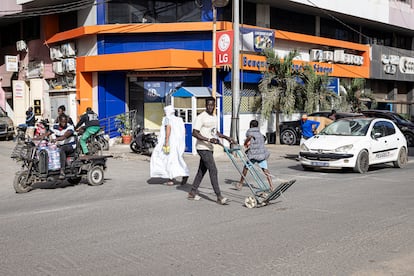

To take a break from the heat, Abdoulaye Ba sits on one of the benches that adorn Dakar’s West Corniche. The promenade is just a few feet away from the sea. Over the past two decades, this coastal avenue, where thousands of young people play sports in the evening, has been a symbol of the dynamic construction industry in Senegal’s capital. Dozens of half-finished buildings rise here and there, from the Plateau administrative center to the Almadies nightlife district. However, lately, all construction work has come to a standstill.
Ba, who runs a family-run ironworks company, laments: “I used to have 20 workers. And now, they’re all sitting at home, idly. And here, you know, people live day to day. On top of that, I have a debt that I don’t know how I’m going to pay. It’s a disaster.”
This young entrepreneur’s small company is just one of hundreds currently suffering from the construction standstill, a symbol of the slowdown in the country’s once-booming economy. And “debt” is precisely the word that has been popping up for months in every conversation, every televised debate and every news commentary. Not surprisingly, the appearance of a staggering $6 billion hole in the public accounts has officially made Senegal the most indebted country in Africa. Specifically, the country owes 119% of its GDP. This has caused its credit rating to plummet to B-, just one step away from the abyss of default.
On August 1, President Bassirou Diomaye Faye and Prime Minister Ousmane Sonko appeared before the nation to deliver a difficult message. The duo – propelled by an overwhelming popular tsunami – came to power in March 2024 with the promise of turning the country around for the benefit of the Senegalese people. In a televised address, they announced an ambitious plan to tackle the debt that includes numerous austerity measures, increased taxes, as well as the sale of public land that used to be occupied by French military bases. The idea is to raise more than $6 billion without resorting to international financial institutions or private loans. “We expect almost nothing from anyone, [except] from the Senegalese people themselves,” Prime Minister Sonko emphasized. Even so, this summer, the country awaits an IMF mission to renegotiate a new aid program.
Senegal’s enormous hidden debt came to light in September 2024 as a result of an audit of public accounts commissioned by the new government. To date, nobody has been able to offer an explanation to the Senegalese people regarding what was done with all that money, nor any information about who the creditors are. But the poisoned legacy left by former President Macky Sall’s regime (2012-2024) has become a heavy burden.
From the outset, the IMF suspended the $1.8 billion credit facility signed in 2023, demanding that the authorities adopt governance and transparency measures to ensure that something like this doesn’t happen again. But trust had already been broken. All donors and funders followed the lead of international organizations.
Bond issuance
Over the past year – in an attempt to meet current expenditures – the government has turned to regional markets and issued sovereign bonds worth around $3.5 billion. These amounts will have to be repaid within about three years, and Senegal will also have to pay interest rates of up to 10%, much more onerous than the 0% to 3% rates required by concessional loans from the IMF and other international organizations. It’s a vicious spiral that the authorities intend to end by reducing public spending and tightening the revenue-collection system, with new taxes on mobile money transfers, tobacco and gambling.
Abdoulaye Ba, like many young Senegalese citizens, doesn’t trust the government. “What they’re telling us – perhaps in different words – is that we have to tighten our belts. But you can’t ask anyone who’s already at the limit to do more. They were elected because they said their main concern would be the citizens. How are they going to do it?” he asks. The question remains hanging on the Western Corniche of Dakar.
Translated by Avik Jain Chatlani.
Sign up for our weekly newsletter to get more English-language news coverage from EL PAÍS USA Edition.









































