
Life in the dark: The daily agony of Venezuela’s power crisis
Energy rationing is crippling businesses and leaving entire families trapped in despair

Sonia Soto’s days are six hours shorter. Those are the hours she spends without electricity. During them, all she wants to do is lock herself in her bathroom and cry.
“It is very hard. It’s something that causes anguish and depression. It’s a mental breakdown,” the 62-year-old woman says by phone from Maracaibo, the country’s main oil city and one of the engines of the national economy. For years, the city has endured relentless power rationing caused by a grid crippled by corruption, underinvestment, and a lack of maintenance.
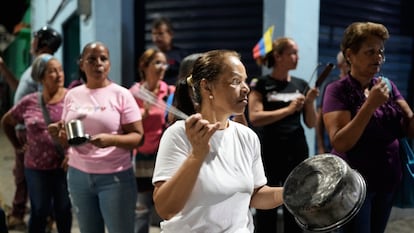
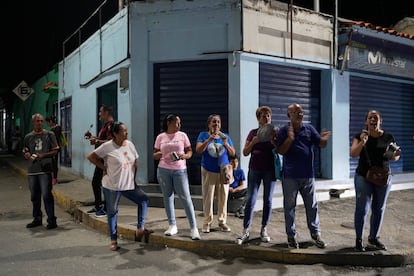
As bad as the outages already were, this year has shown they can get even worse. They have become longer, spread to more regions, and grown increasingly unpredictable, all in a country that is more exhausted than ever. On several nights this month, residents in towns such as Turmero and Valencia, industrial cities in central Venezuela, took to the streets in the dark to protest and block roads.
The problem is structural, but the government has argued that the El Niño weather phenomenon, which began in August and has brought severe drought conditions and unusually high temperatures to Venezuela, has forced it to take extraordinary measures. Daily power cuts have been extended, averaging between six and 11 hours in several regions of the country. Reduced working hours have been introduced for public-sector employees in some cities, and this week authorities reached an agreement with shopping malls to implement two daily rationing periods.
The situation recalls Hugo Chávez’s electricity emergency in 2009, when water levels at the Guri reservoir, whose hydroelectric dam supplies 70% of the country’s electricity, fell sharply because of a severe drought. The crisis was addressed at the time through the purchase of thermoelectric plants from businessman Alejandro Betancourt and his company Derwick, which has since re-emerged as a government partner in the oil sector. Betancourt secured 11 contracts that were later accused of being overpriced and brought in equipment that failed shortly after being installed.
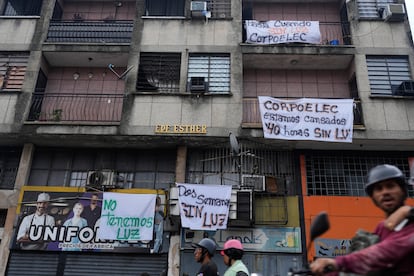
That was how blackouts became part of everyday life, and the low hum of generators became the soundtrack of many Venezuelan cities. During that earlier crisis, the Chávez government required shopping malls to generate their own electricity and reduce their operating hours. Today, many of those establishments have their own generators. Those that do not will be subject to eight hours of daily rationing, from noon to 4 p.m. and from 6 p.m. to 10 p.m. Those that do have backup power will remain open, but without air conditioning and with escalators shut down. The energy-saving plan is expected to remain in place for at least two months.
Back in 2009, authorities also ordered the lights and illuminated advertising signs in the capital to be switched off. Today, however, Caracas is filled with LED screens used by the government to broadcast its propaganda.
Although the capital is usually spared scheduled power cuts, voltage fluctuations affect everyone and occur several times a day. The 2025 Venezuelan Living Conditions Survey found that living without power outages is a luxury enjoyed by only 10% of Venezuelans. In the rest of the country, the problem has become chronic.
Nearly ten years ago, Sonia quit her job managing a pharmacy in Maracaibo. The blackouts made it impossible for her to work. She set up a small convenience store in her home, selling soft drinks and shaved-ice treats known locally as cepillados zulianos. In one of Venezuela’s hottest cities, she struggles to keep the icy refreshments people rely on to cool off from melting every time the power goes out.
More recently, she opened an arepa restaurant and now performs a constant balancing act to keep ingredients frozen, while nearly 40% of businesses in her city have shut down this year because of blackouts and the economic crisis, according to the Maracaibo Chamber of Commerce. Yet that is not what worries Sonia the most. During the day, while working at her restaurant, she is constantly asking relatives back home whether the power has gone out. It is at night that the outages take their greatest toll.
“The worst part is getting home ready to rest and finding there’s no electricity,” Sonia says from her darkened house. “You can’t sleep because of the heat; if you open the windows, the bugs come in. You don’t want to complain, but what you feel is despair.”
A few days ago, Climate Central, a research organization focused on climate change, published a report ranking Maracaibo among the Latin American cities where residents lose the most sleep because of extreme heat, a total of 91 hours a year. The situation is also linked to the constant blackouts and electrical failures that prevent people from using air conditioning and disrupt their nighttime rest. Sonia, for example, takes sleeping pills because, she says, her sleep cycle has been thrown off.
In the rhetoric of acting president Delcy Rodríguez, megawatts have replaced barrels of oil. The major oil-sector investments touted since the U.S. military intervention on January 3 and the start of Washington’s oversight have yet to gain traction because of the burden imposed by the power system. Oil fields operate amid constant outages. A Chevron manager acknowledged to the media a few months ago that restarting a well after even a brief power interruption costs both time and money.
The same problem affects Keiner Nava, who works at a business that bottles and sells filtered water in Puertos de Altagracia, another city in Zulia state on the oil-producing eastern shore of Lake Maracaibo.
“Even though we have a generator, it’s hard to get fuel, and filtering water becomes very difficult when the power goes out because the plant can’t run for long,” says Nava. “We never know when the electricity will be cut. That makes it hard to plan our routine. And sometimes we get hit with two rounds of rationing.”
In June, the government signed an agreement with U.S.-based General Electric to restore 1,000 megawatts of generating capacity over two years, with an additional 5,000 megawatts to follow within four years. Venezuela has an installed generating capacity of 30,000 megawatts, but produces less than half that amount and falls short during peak-demand periods.
A week ago, authorities signed another agreement with Argentina’s Impsa to complete the Tocoma hydroelectric plant, a project launched in 2007 and left unfinished amid allegations of cost overruns and corruption. The company is now U.S.-owned, and the State and Energy Departments are closely involved in the plan.
“Today we understand the impact that the condition of our national power system is having, and that is why we are working tirelessly on its recovery,” Rodríguez said at the Miraflores presidential palace during the signing ceremony with Impsa.
While those investments gradually take shape in the form of infrastructure projects aimed at stabilizing the power grid, Corpoelec, the state-owned electricity company, has begun sending text messages in some regions to notify residents of outages, or what it calls the Load Management Plan, including their expected duration. In many cases, however, the alerts arrive well after the lights have already gone out.
“ALERT: Due to HIGH demand, load-management outages have been scheduled for the afternoon shift, with a maximum duration of six (6) hours,” reads the message Kellys Gallardo receives on her phone every day.
Gallardo lives in Maracay, a city in central Venezuela. The 50-year-old, who works for a company that manufactures printer ink cartridges, vents her frustration by replying with complaints to the automated number that sends the messages.
“I insult them digitally because all it does is make me angry,” she says.
Gallardo experiences the outages both at work and again when she gets home. If night falls while the power is still out, she cannot sleep. Her children are also affected by rationing at school, and on those days, their education effectively goes dark as well.
Sign up for our weekly newsletter to get more English-language news coverage from EL PAÍS USA Edition









































