
US launches new strikes against Iran in retaliation for attacks on tankers in the Strait of Hormuz
The Trump administration has also revoked Tehran’s authorization to export oil
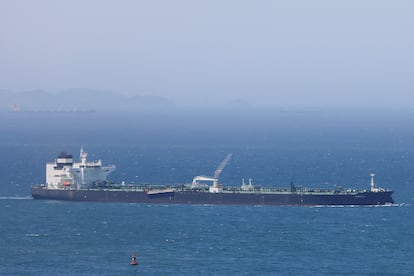

The United States confirmed a series of major new attacks against Iran in retaliation for recent attacks on oil tankers in or near the Strait of Hormuz. The strikes were announced just hours after Washington also revealed that it had revoked the authorization it had granted Iran to export oil under the terms of the countries’ provisional peace agreement.
When announcing the revocation of the export permits, a senior official warned that Washington considers the attacks on oil tankers in the Strait of Hormuz — attacks for which it blames Iran — “wholly unacceptable” and would retaliate accordingly. Negotiations for a permanent peace agreement will continue as planned, the official said. Immediately following the announcement, crude oil prices rose by more than 5%.
In a statement, U.S. Central Command (CENTCOM), which oversees U.S. military operations in the Middle East, said it had launched the strike “to impose heavy costs for targeting and attacking commercial shipping crewed by innocent individuals in an international waterway.” CENTCOM said Iranian responsibility for the attacks on the tankers had been established and described the incident as “unwarranted, dangerous, and a clear violation of the ceasefire.”
According to the U.S. Treasury Department, Iran will have until July 17 to complete sales that had been authorized under the permit issued by the United States following the signing of the provisional peace agreement with Iran last month.
An announcement by the Office of Foreign Assets Control (OFAC), the Treasury Department division responsible for administering and enforcing sanctions, stated that no new transactions involving the sale of Iranian oil may be initiated after Wednesday. The permit issued last month had authorized such transactions through August 21, the date marking the 60-day period the two countries had set aside for negotiations.
The U.S. measure came after three oil tankers were struck by projectiles in or near the Strait of Hormuz in recent days, according to the U.K. Maritime Trade Operations (UKMTO), the British Royal Navy’s maritime security agency. Iran has not acknowledged responsibility.
The attacks, and the subsequent U.S. retaliation, have once again underscored the fragility of the peace agreement between the two adversaries and renewed concerns that the 60-day negotiating process aimed at reaching a final settlement could collapse. The talks are intended to address the future of Iran’s nuclear program and the status of the Strait of Hormuz, the two principal obstacles standing in the way of a comprehensive agreement between the countries.
The provisional memorandum of understanding provides for the United States to allow Iran to sell oil. It also outlines the gradual lifting of economic sanctions, the release of Iranian assets frozen in foreign institutions, and the creation of a reconstruction fund worth at least $300 billion. Washington has stressed that these benefits will be implemented only in stages and only if Tehran demonstrates a willingness to cooperate.
The senior U.S. official reiterated that position. “Iran will only reap benefits if they exhibit good behavior,” he told CBS. “Iran’s actions in the Strait were wholly unacceptable to the United States and will be met with consequences. Our negotiators continue to work in good faith towards a final deal.”
The Qatari government had declared Iran “fully responsible” for an attack on a merchant vessel identified as the Al Rekayat near the Strait of Hormuz. Meanwhile, Saudi Arabia accused Tehran of attacking its tanker Wadyan, arguing that such actions “are an assault on the security and safety of international navigation, and the energy of global energy supplies.”
Sign up for our weekly newsletter to get more English-language news coverage from EL PAÍS USA Edition









































