

Cabrero Segundo’s exchange
In 2022, traffickers from the Lacandona area in southern Mexico negotiated an extraordinary deal with the Army: the return of 100 kilos of cocaine in exchange for 33 soldiers they had kidnapped. EL PAÍS reconstructs the episode — a window, in reality, onto a 50-year conflict in one of North America’s natural jewels

Everything in this story comes back to El Cabra. Everything leads to him, Cabrero Segundo, the “famous Lacandón,” the boss, a man of average height, about five foot five, brown-skinned, with a paunch, a goatee and tattoos: a cross on his left shoulder and a jaguar on his right. An eccentric character. In the film he had made about his life, he cast a hulking actor who was eight inches taller. At the height of his power he built a clandestine airstrip two minutes from his house to receive drug shipments. The night he kidnapped 33 soldiers, disarmed and stripped them — no one in the jungle forgets that — he spent the final hours before dawn snorting cocaine in front of them, using a banknote. El Cabra, a man with ambition.
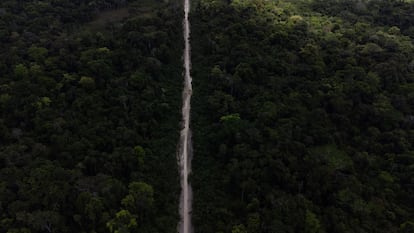
Moist and dense, the Lacandon Jungle surrounds the figure. It is his home. He has always lived there, quite humbly, neighbors and longtime acquaintances say. At least at first, when he earned a living cutting xate, an ornamental palm sold by weight. Then everything changed. An arrest for carrying an unlicensed firearm, followed three years later by an encounter with the Chiapas police… and then, success. Some kind of local street wisdom reached the young Cabra, who in 2015 was barely 32. Some say that even back then, he was controlling migrant smuggling in the region — the strip of jungle that juts into Guatemala from Mexico. Others put the beginning of his dominance a year later. None place it beyond three. From that point on, his life becomes a long, drunken spree of power that at times descends into chaos.
There is a window that opens precisely onto the peak of his reign: a day in late 2022. That is when El Cabra appears, omnipotent. No one contradicts him except some of his old neighbors, who know him, who know he came from nothing. “You are very powerful now,” one will tell him, “but even the tallest buildings fall if you knock out a support.” A grim prophecy. The police obey him; the prosecutor’s office does too. The military do not dare challenge him. And that is exactly what can be seen through the glass: the exercise of unlimited power. Faced with all that, the question is how he did it. How did a Lacandón hustler, who once owned nothing but a machete, make a fortune by trafficking people, and later drugs, without anyone doing anything to stop him? The answer is the landscape, and a day on the calendar.
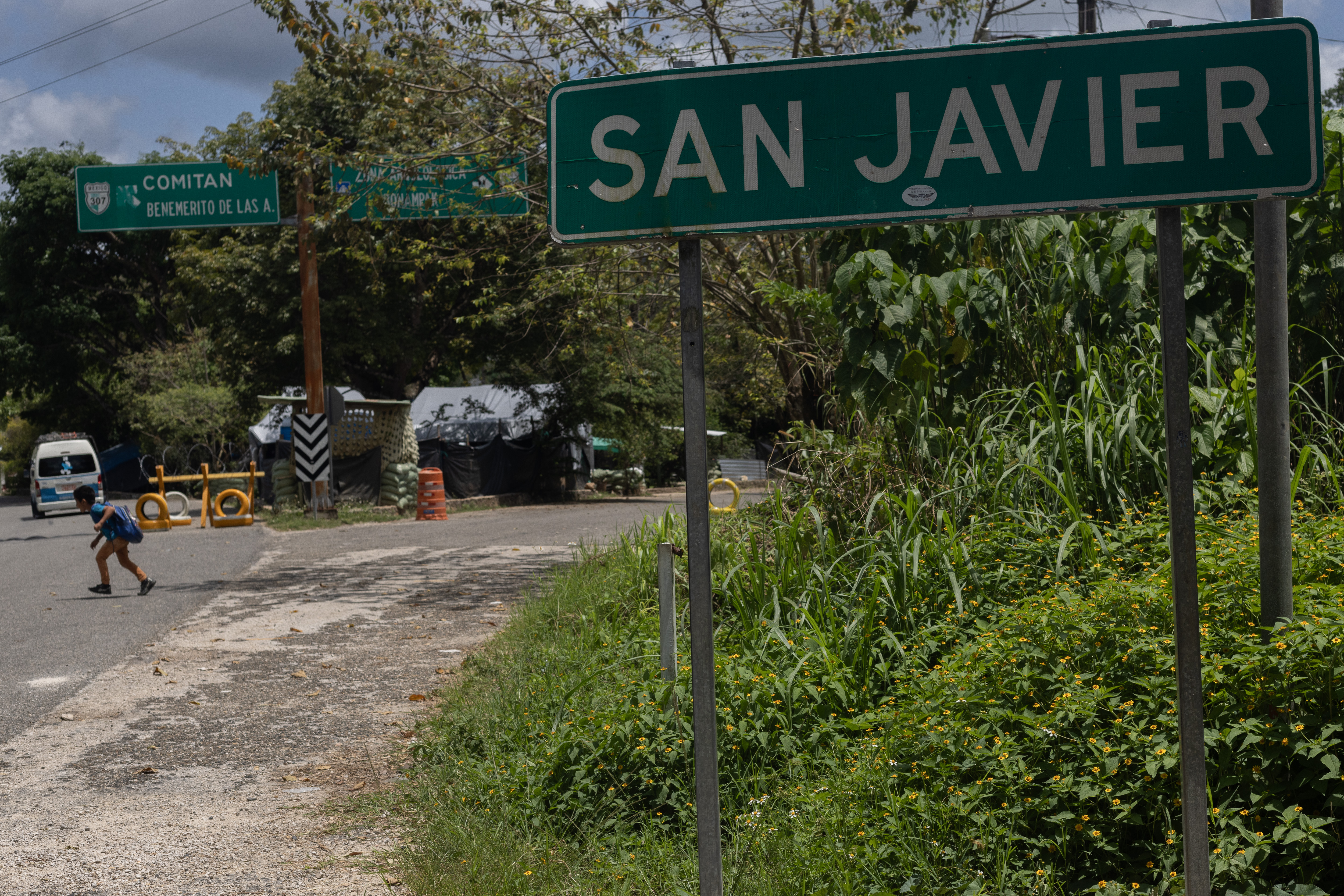
The window: December 15, 2022. Minutes after noon, the headquarters of the Mexican army’s 38th Military Zone, based in Tenosique, Tabasco, records an aerial alert. An unidentified light aircraft is entering national territory. It is coming from Guatemala and before that from Puerto Lempira, Honduras. It circles, passing El Ceibo in Tabasco; it is looking for its landing strip. After several hours, it finds it. The plane lands on a path cut by machetes in the middle of the Lacandon Jungle, near the village of Crucero San Javier. The Air Force mobilizes. Shortly after 6.00 p.m., two helicopters leave from two different bases heading for the clandestine strip. It gets late; night approaches. Unaware, the military do not realize that El Cabra and his people are rushing to unload the cargo: five bales, each 31 inches high by 16 inches wide, each weighing around 20 kilograms.
It is snow-white cocaine, one of the most profitable products in the history of the Americas, almost a cliché in the jungles of Mexico and Central America. In Colombia or Peru, producing a gram costs less than $3. On the streets of New York its value is multiplied by 20, 30, 40… There are collection points along the entire route, and Chiapas stands out among them. In 2022, this southern state tops the list: nowhere else in Mexico do authorities seize more cocaine, surpassing 10 tons. The next state, Michoacán, does not exceed four. Experts use those figures to project total quantities trafficked, which are always higher.
El Cabra moves through that booming economy and has built two airstrips in the area, one a stone’s throw from his home. Until a few years earlier he used the strip at the beautiful Bonampak archaeological zone, the ancient Maya city famed for its mural paintings. Built decades ago for archaeologists and other specialists, El Cabra used that runway to bring down the bales of cocaine. Residents say he even maneuvered to expel workers from the National Institute of Anthropology and History (INAH) from the site to avoid uncomfortable witnesses. INAH said it was because of crime in general. The reality was that El Cabra did not want onlookers. Asked about it, INAH preferred not to comment.
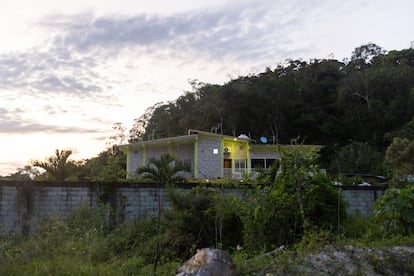
Darkness is nearly upon them. In two trucks, El Cabra and his men speed off from the landing strip carrying the sacks of drugs. One of the helicopters pursues them. The vehicles flee along jungle tracks. Minutes later they split up. The helicopter follows the vehicle carrying the bales, visible in the bed. Shortly after, the truck stops. The traffickers unload the cargo and hide it among the trees, then flee. The helicopter, which had flown from Tenosique, descends slowly. A group of soldiers lower themselves on a rope. It is almost pitch dark, but there are the bundles, which they locate and hoist into the aircraft. The lack of light plays a dangerous trick: the pilot descends too low and strikes a tree stump with the belly of the chopper. A scare. With all the bales aboard, they rise again and return to Tenosique. It is 8.15 pm.
In the opening scene, a gun fires in close-up. Then the film title appears, Hombre de Valor (Man of Courage), with a subtitle: “The jungle makes you a warrior.” An aerial shot of the Bonampak ruins follows the intro. And then there is El Cabra, fictional, six foot one, all muscle, with his wife and two children in the archaeological zone. The children run up the pyramid and the fictional Cabra says, “I don’t know if I should accept, it’s not an easy decision.” The couple keep talking, then a flashback, and only at the end does the film return to the initial Bonampak scene. El Cabra accepts: he will be a municipal auxiliary officer. In other words, the chief of police.
Hombre de Valor premiered at one of El Cabra’s ranches in the Lacandon Jungle one day in October or November 2022. For a time it was available on the video-on-demand platform Canela TV, and later it made it onto the Cinelatino cable channel. No one in the jungle had a copy of the film, although many said they had seen it. The idea of a Lacandón with his own movie fed an odd legend. In a digital world of omnipresent stories, El Cabra was the dark reverse of entrepreneurial success. He attracted as much as he repelled.


“Do you know who I am?”
From 7.00 pm, several army convoys hurry to the incident, coming from the south, from different bases, moving in a rather disordered way. Communications are difficult in the jungle; there is no signal and some commanders must stop at shops to buy internet credit. The first to arrive come from the community of Frontera Corozal, one of the three most important towns in the Lacandon area, along with Nueva Palestina and Lacanjá Chansayab, very near where El Cabra lives. There are only six soldiers in a Humvee and, according to what they will later say, their orders are simply to get to the village mentioned earlier, “Crucero San Javier,” on an “aerial alert.” Nothing more. Shortly after 8.00 p.m., the soldiers approach the site. They quickly discover it is a trap.
The sound of helicopters is noticeable on the road. Two kilometers (1.2 miles) from Crucero San Javier, next to a power station, the Humvee’s soldiers see 15 vehicles parked at the side of the road. Immediately, they start to follow them. The Humvee moves on and when they reach Crucero San Javier they see a crowd, including prosecutors’ office police. The Humvee stops; they exchange a few words with the officers. “They told us to keep going because they were following us,” one of the soldiers will later explain. They obey and continue, somewhat by inertia, because their real objective is to reach where they have just arrived, Crucero San Javier. But there is no one from their side there — only the din of the helicopter and a growing threat. It is hard to understand what is happening, but if there is one thing they grasp, one thing they sense, it is that they should leave.
The Humvee drives on for a few more minutes. They do not know where they are going: escape becomes imperative. But the retreat ends quickly when a patrol from the “San Javier police” blocks the road and cuts them off. The Humvee stops. The 15 vehicles that had been following them catch up. More than 30 people get out and approach them. They surround them, menacing, and then one of them, in a worn T-shirt, shorts and cheap flip-flops, speaks. It is El Cabra. He asks only one question; the rest of what comes out of his mouth are orders. The question is directed at the soldiers: who is in charge? The sergeant leading the squad identifies himself. El Cabra looks at him. It is impossible to tell whether he feels contempt, rage, or mere annoyance. He immediately orders him to return to the crossroads, saying they will put them in the “chicle,” a communal jail. Outnumbered, the soldiers obey.
In Crucero San Javier, the exchange continues briefly. El Cabra orders the sergeant to call his superiors and tell them to withdraw the helicopters. They are bothering him. Taking advantage of the one place with a signal, the sergeant complies. El Cabra also orders them to hand over their weapons, which the sergeant and his men refuse to do. It does not matter: El Cabra’s people easily overpower the commander. They strike him a couple of times, hold him down and take his rifle. The others, indoctrinated, lay their weapons on the ground. The soldiers are held by a swelling crowd. El Cabra climbs into a car and leaves. He still has another open front with the bales the helicopter is about to take.
The situation becomes even more complicated. Another contingent of soldiers, ignorant of what is happening, approaches Crucero San Javier. They come from Benemérito de las Américas, beyond Frontera Corozal. There are 22 of them, in two vehicles, under the command of a lieutenant colonel, commander of the largest barracks in that zone. Like those from Frontera Corozal, they arrive in San Javier because of the aerial alert. It is after 8.30 p.m. when the 22 reach the crossroads, where a growing crowd holds captive their six colleagues. There are shouts and oaths. Darkness and the feeling of power fuel a progressive change. The people are no longer people: they are a mob. When the two vehicles reach Crucero San Javier, a Nissan Versa crosses in front of them on the road. They will now not leave.
By that time, El Cabra’s bales are flying by helicopter back to the Tenosique base, the army headquarters for that part of southern Mexico. Fired up, El Cabra’s people want vengeance. They shout at the newly arrived soldiers that they are not welcome, that they already know the rules there, that they are governed by their “customs and traditions,” and that no army matters. They force them to pull over and insist they disarm. The lieutenant colonel tries to reason. He lies. He says they were only passing through, but the others do not listen. They beat them, disarm them. One of the detained soldiers later counts and says the locals number more than 90. Of course, 22 trained and armed soldiers could impose themselves, but it would be madness. If they fired a few warning shots into the air, the mob might scatter. But what if it did not?
Crime in the Jungle
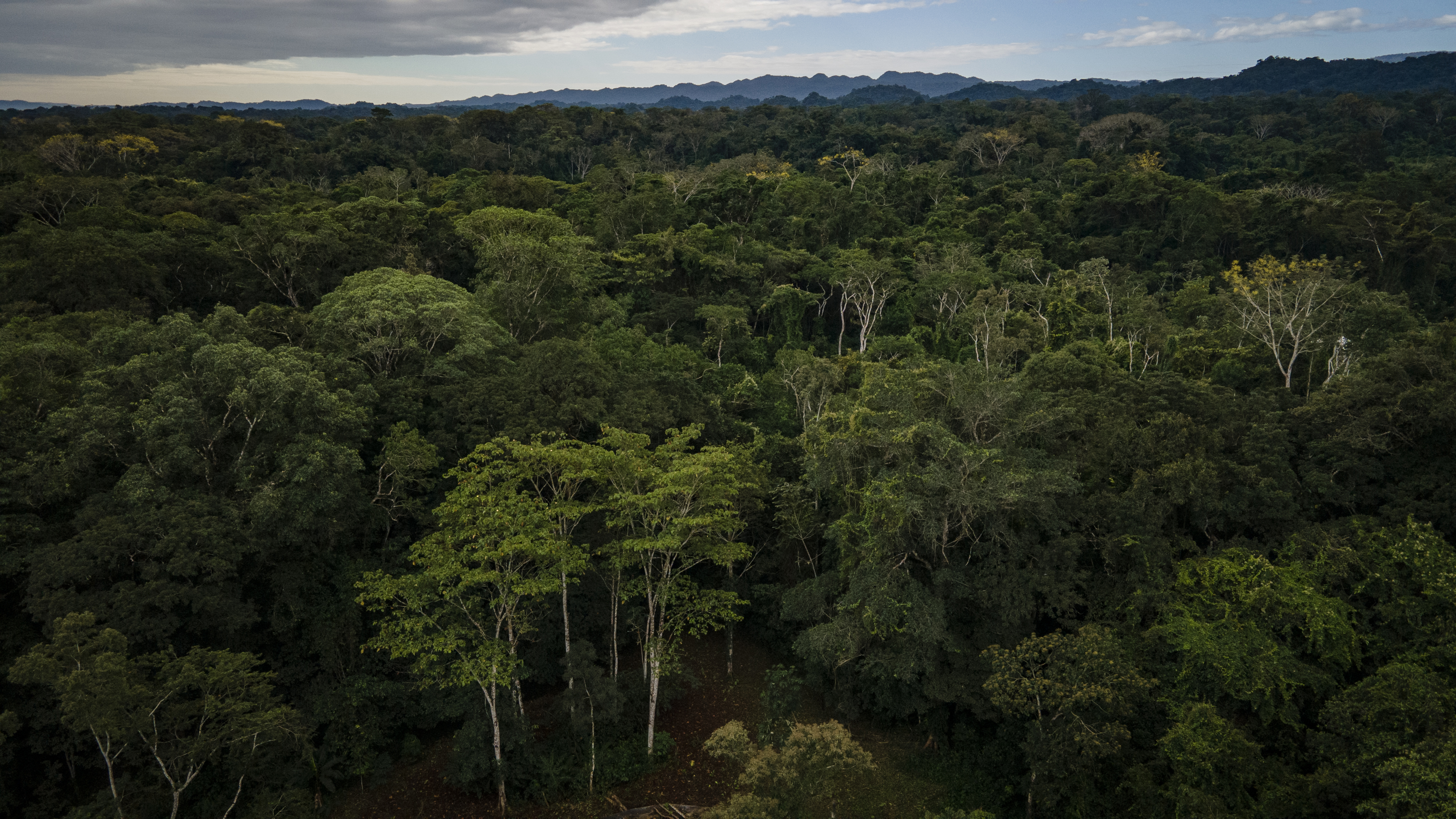
On the eastern side of Chiapas lies the Lacandon Jungle, and at its heart, the Montes Azules Biosphere Reserve, one of North America’s natural treasures. Since the late 1990s and early 2000s, the part of the jungle bordering Guatemala has become a major logistics hub for local organized crime.
The three communities
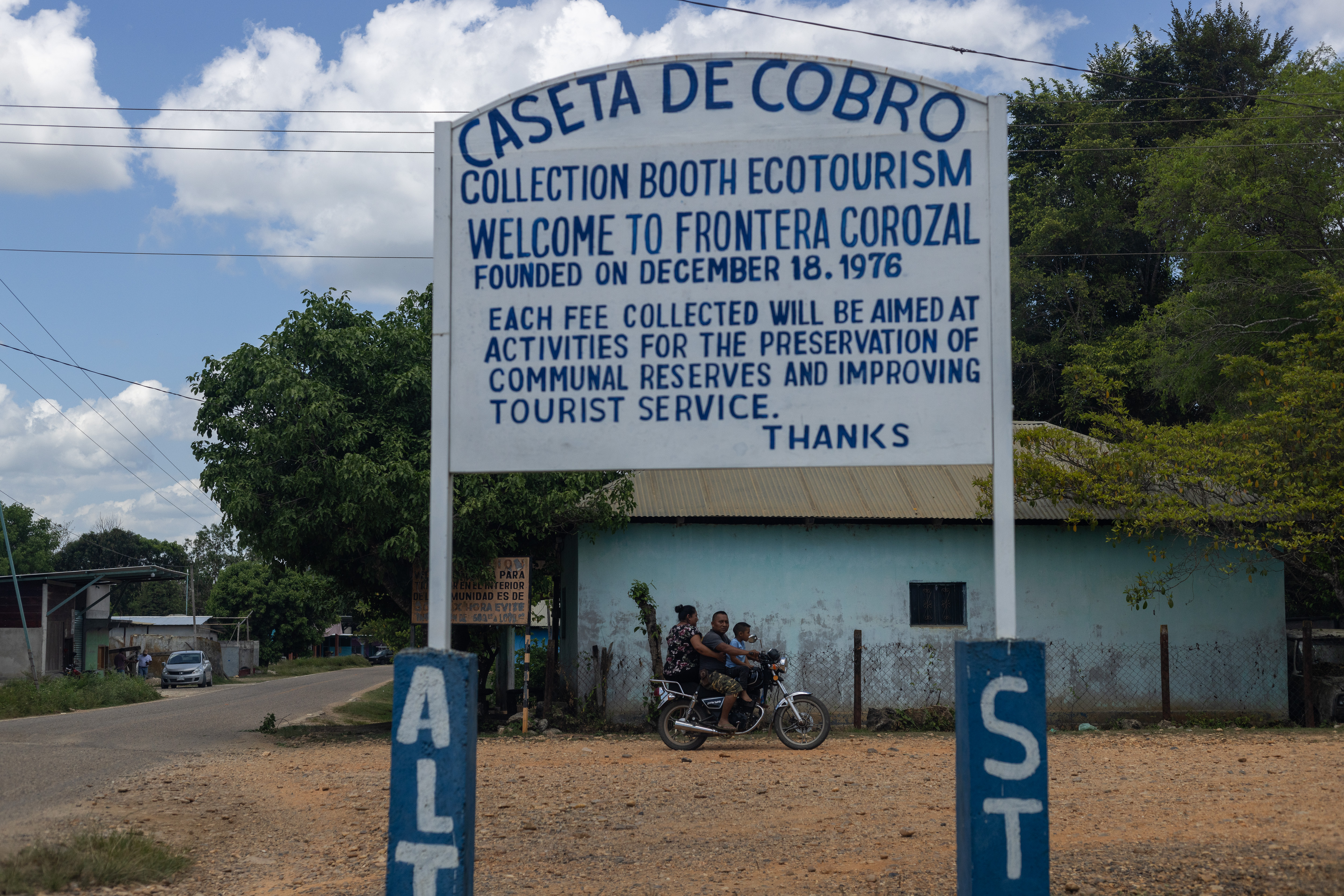
Lacanjá Chansayab, a Lacandón community, is the spiritual heart of the jungle. Lacanjá, Corozal, and Nueva Palestina have been organized for decades into a community assembly, which in recent years has been somewhat dysfunctional. The community government is suffering from the impact of crime and the interests of various public and private actors.
The coordinates
These are the key points of the event described in this report. Above, next to Crucero San Javier, is the clandestine airstrip where the small plane landed in December 2022. The drug traffickers loaded the cocaine into a pickup truck and drove to the location marked below, in the community of Lacanjá. El Cabra built another clandestine airstrip in Bethel.
After 9.00 p.m., a white GMC truck arrives at Crucero San Javier. In it, once again, is El Cabra, now with his praetorian guard. He is enraged, blood boiling. Again he asks a single question before launching into a tirade of orders and beating the detained soldiers. “Who is in charge here?” he shouts. The lieutenant colonel raises his hand. El Cabra approaches and says: “Do you know who I am? I am Cabrero Segundo, the famous Cabra!” He then slugs him in the head so violently his glasses fly off. Encouraged by their leader, his henchmen start bludgeoning the others. They grab one soldier by the ankles from behind, lift him up and smash his face against the ground. Amid the chaos, some soldiers manage to escape and take refuge in the jungle, where they will spend the night.
El Cabra continues his tirade, ranting and raving. He shouts that they shot at them from the helicopter, that they took his packages of cocaine, and demands they be returned. One of the detained soldiers recalls one of his lines: “Now you’re screwed, you made me crawl like a worm, you took my drugs, now we’re going to kill you!” Another hears him shout: “They damaged our houses, made me roll around, humiliated me, we’re going to burn them alive!” And one of his henchmen voices one last threat: “We must strip them and burn them, make them sit on the ants!” He proposes placing the soldiers on a mound of harvester ants so they will sting and bite them, and then burn them.
The film sometimes resembles a musical, like La La Land, but set in the jungle, with corridos instead of ballads, and with human traffickers and trafficked migrants instead of actresses and pianists chasing stardom. The plot in fact resembles a corrido because it glorifies El Cabra’s path: a man of courage forced by circumstance to be a warrior; just with the righteous, merciless with traitors — indeed, the fictional Cabra kills the main traitor with a shot after he has surrendered and is unarmed.
A doubt nags from the start: how does a criminal commission his own film? The investigation yields answers: the venture began with a corrido. Singer-songwriter Jerónimo Aguilar, leader of Jerónimo y su Sentimiento Norteño, learned of El Cabra at some point five or six years earlier when he was at the height of his power. He contacted him and proposed writing a corrido. El Cabra said yes. Then they suggested making a video for the song. Cabra agreed. And then, why not, they proposed making a film. El Cabra said yes.
Three communities
In 2011, the year El Cabra joined the Chiapas state police, the communal lands of the Lacandona Zone — the vast polygon of jungle and farmland the Mexican state had granted a handful of families 40 years earlier — began to implode. Or rather, its governance model did: an assembly of communal members mired in many conflicts — mainly invasions — beset by countless internal disagreements and pressured by numerous outside actors, each with their own interests. The zone covered more than 600,000 hectares and, since 1977, the state had raised protection over more than 300,000 hectares with the creation of the Montes Azules Biosphere Reserve, the Lacandon Jungle’s largest green swath.
After the turn of the century, the assembly began to show signs of fatigue. When the state granted the lands, the idea was that the Lacandónes living in Lacanjá Chansayab would manage and protect them. In fact, despite being a minority compared with other Indigenous peoples, they held the communal government presidency for decades. But over the years two other settlements in the area — Frontera Corozal, majority Chol, and Nueva Palestina, predominantly Tzeltal — grew and far outpaced the Lacandónes. Boundary and border disputes among the three communities, invasions of the polygon, and questions of assembly representation converged into a time bomb ready to explode.
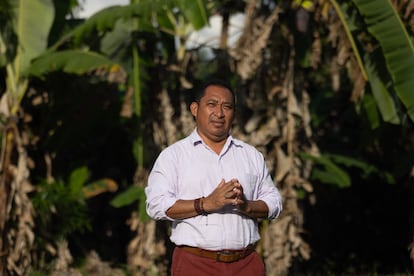
In Lacanjá Chansayab itself, the spiritual heart of the communal lands, years of intrigues and pressures had led to a rift between residents, something common in dozens of ejidos (government-managed communal farmland) across the country but especially serious in the Lacandon region because of its natural wealth. In 2011 the assembly of all communities, still respecting the initial agreements, elected a Lacandón — Chankín Kimbor I — as commissioner, a kind of mayor. His three-year mandate would aim to define once and for all the limits of each community, mark the communal boundary, and prevent new invasions. “What happened is that the environmental sector didn’t like it,” says Kimbor, who has lived in exile for several years in Nueva Palestina.
Kimbor uses this term to refer to a tangled web of environmental organizations and government agencies that, according to him and other residents consulted, undermined the goal of his term in office. Not only that: they tried to paint an alternate reality in which Kimbor and other assembly officials wanted to destroy the forest for some hidden interest. Kimbor also says his administration had decided “to renounce the privileges granted by the government to the Lacandón Indigenous people in exchange for their submission,” which, in his view, threatened the interests of the administrations and organizations they worked with. Without the leverage that grants provide, Kimbor explains, their ability to exert influence was at risk. And they didn’t like that.
That tangled web — including, Kimbor says, officials from then-governor Manuel Velasco’s administration (2012–2018) and the association Natura Mexicana — brought some Lacanjá residents to their side. They bought them off, the community leader says. They gave them jobs, distributed subsidies, and supported them with development programs. Kimbor’s decisions did not please them: sabotaging him was their way of maintaining control. Thus Lacanjá split into three. On one side were those who supported Kimbor’s team; on another, those aligned with the government and environmental organization network. And then there was a more or less heterogeneous group that floated between the two but was mostly preoccupied with surviving.
Kimbor also supported the idea that Choles and Tzeltales should have access, like the Lacandónes, to leadership positions in the communal government. For the Lacandón opposition, that was the final straw. In their eyes, Kimbor and his people immediately became traitors. They began to treat them as such. To complicate matters further, the authorities of Nueva Palestina and Frontera Corozal — communities focused mainly on cattle ranching, unlike Lacanjá, centered on ecotourism — also viewed the government and environmental organizations with suspicion. If in mid-2011 the situation was delicate, within two years everything had exploded.
From 2013 to 2016 threats against Kimbor, his family, and the Lacandónes who supported him intensified. Organizations that had supported them over the years, such as Serapaz and the Fray Bartolomé de las Casas Human Rights Center, began to refer to the opposing group as a “shock group” because of its growing violence. The harassment included death threats, patrols near their homes shouting “we must burn them!”, thefts, and sabotage of their vehicles… Over time, that shock group became the cohort serving El Cabra, who had left the state police in September 2013. Beyond communal disputes, El Cabra would become the main criminal leader in the Lacandon Jungle.
EL PAÍS contacted Natura Mexicana to ask about the allegations in which it is implicated. Although an association executive spoke with this newspaper, she preferred not to include any comment because “the narrative [that has been] constructed is far from reality.”
“They told me he liked the film very much, that he was very happy and that some of his family even cried when they saw it,” Arnulfo Reyes, the fictional Cabra, recounts one hot afternoon in Mexico City. The meeting is held at a chicken-wing franchise on Avenida Patriotismo, an emblem of the impersonal, homogeneous world proffered by shopping malls. “Apparently at the presentation on his ranch he suggested making a sequel, but then they caught him,” he explains. In other words, they arrested him.
Stocky and affable, black shirt open at the last button, dark glasses, a fanny pack strapped to his right leg, Reyes remembers El Cabra as “polite and friendly” during filming. “Of course, with the four or five who came with him it was another story… They used drugs all the time, but we never saw anything violent,” he recalls. In practice, El Cabra acted as the production manager during filming. “If there was no gasoline, food, or [I needed a] shirt, he sent his men,” he says. “He also had a small role as a hitman, from the group opposing mine.”
The “chapinazo”
In the late 2010s increasing numbers of Central American citizens began to take the route north, fleeing lack of opportunity and violence in their countries, especially Honduras and Guatemala. Intermediaries like El Cabra navigated the murky river of illegal economies on the southern border of Mexico, reflecting what had been happening on the northern border for decades. The federal government, then led by Andrés Manuel López Obrador (2018–2024), concentrated its efforts in Tapachula and the Pacific corridor. But in the jungle, opportunists did as they pleased.
Using family ties, Frontera Corozal became one of El Cabra’s operational centers: his wife was from there. He and his people waited for migrants coming from Guatemala on the banks of the Usumacinta River, loaded them into vehicles and took them along the route to Palenque, the region’s largest city to the north. “Around 2018–2019, I estimate that just through Frontera Corozal more than 3,000 to 4,000 migrants passed a day,” says Esquivel Cruz, a resident of the community and councilor in the municipality of Ocosingo. “And people were already saying El Cabra was the boss, the owner of the route,” he adds. “They divided the route: for example, the Choles from Corozal worked with the Lacandónes and moved migrants to the highway; from there the Lacandónes took them to Chancalá; and from there to Palenque, others,” a Lacanjá resident who preferred not to be named says.
Meanwhile, planes loaded with cocaine routinely arrived in the Lacandon Jungle and landed in Bonampak. Residents remember, in fact, a landing in May 2021 similar to the one in December 2022. The plane arrived at dawn, in front of the impressive ruins. An army helicopter arrived immediately, but El Cabra’s people removed the cargo and detained at least four soldiers. In the end, El Cabra released them but kept half the drugs. “Then the Tenosique general came to offer food parcels, doctors, and dentists in exchange for them returning it,” one resident says. The general in question, who arrived by land, sought the mediation of the commissioner at that time to access Bonampak, but it was not a good idea… “They told me, ‘what do you want, life or lead?’ That’s what they told me. I told the general, ‘if you can’t, I can’t either’,” the commissioner recounts.
In Lacanjá some did not approve of El Cabra using Bonampak’s runway to unload cocaine, nor to his using the regional road to traffic migrants. But those were resistances he soon broke down. “He convinced many it was better to get in on it,” a resident remembers. “He brought artists to win over the community, those who performed his corridos. More and more planes arrived; there was a lot of cocaine use in the community. But people would say, ‘the government doesn’t give us anything, it makes us feel important.’” With a growing business, El Cabra needed to control everything, turning residents into lookouts and helpers. He was ruthless with those who refused, with anyone who opposed him.
The Lacandóna community government annoyed El Cabra. Although in theory the assembly of the three communities — Lacanjá, Nueva Palestina and Frontera Corozal — still functioned, in practice each went its own way. By 2022 one of El Cabra’s men became Lacanjá’s deputy commissioner and the trafficker himself ended up serving as an auxiliary officer, thus controlling the communal police force. “They perverted community elections… [El Cabra] forced people to sign the minutes electing authorities,” the resident says. In 2020 the pandemic arrived, a disaster for an area once tourist-oriented with jungle tours, rafting and visits to archaeological sites. “That forced many people to work with him as carriers or lookouts… And those who didn’t want to, he economically strangled,” she adds.
At the end of 2022, shortly before the plane incident, El Cabra showed up at the assembly one day and said the state was going to send a new police force. He gave no details, but days later “a number of suburban trucks full of armed people” arrived, the same resident says. “And at a meeting in San Javier they said, ‘here we will collect the ‘chapinazo’ from everyone,’” referring to migrants coming from Guatemala, where people refer to themselves as chapíns. Esquivel Cruz from Frontera Corozal recalls a meeting of those people with taxi drivers in the area: “They said every journey through San Javier would be charged 700 pesos.” A tour guide says: “I don’t know how it happened, but the northerners arrived and started charging. They asked tourist societies for 1,500 pesos each.” In their own ways, everyone links this group to the Sinaloa Cartel. “You saw them in San Javier with their cartel patch and their vests!” Cruz says.
Pressure increased and increased. Residents who did not help El Cabra had to take refuge. Extortion became the norm. Drivers who transported tourists to Bonampak could no longer work because they refused to be El Cabra’s lookouts. For the same reason, craft vendors could not set up their stalls, and ordinary residents were not allowed to ride their bicycles… Strengthened, El Cabra tried to impose his law in Corozal and Nueva Palestina as well — communities where he had expanded his network but that still retained some autonomy from crime. “In Corozal he forced taxi drivers to sell cocaine in little bags with drawings of a hat and a macaw,” Cruz says. In all the communities people recall that punishments for dissenters worsened: no longer just threats, but beatings.
Between late 2023 and early 2025 the situation only worsened. In October 2023 thousands of residents of Corozal and Nueva Palestina protested several times against organized crime with long marches. Lacandónes close to Kimbor, for whom the risk was higher because of El Cabra’s proximity, publicly denounced that the narco had taken the Lacandon Jungle. But no one acted. Cruz recalls that in Corozal there was a National Guard detachment that asked them for help against the threat of a possible “invasion” by El Cabra’s group and their accomplices. Again, maybe some 20 armed agents could have defended against an attack, but what would have happened if a confrontation had left dozens dead in the legendary Lacandon Jungle?
Beyond the specific events of December 15, 2022, the account of this episode and the preceding chapters on the context of the Lacandóna communal lands is based on extensive interviews with eight people — residents of Lacanjá, Frontera Corozal, and Nueva Palestina — plus spontaneous conversations with other residents during a weeklong trip through the area in April. Quotations that appear in this report without specific attribution correspond to interviewees who expressly asked that their names not be used and that no identifying details be published.
During the final days of filming in early 2022, El Cabra and one of his sons — Arnulfo Reyes believes it was Agustín — were involved in a traffic accident in the jungle. “After that you didn’t see them; I know El Cabra recovered because later he wrote me occasionally, very kindly, saying ‘friend, I hope you are well’... I did see [him as] a noble person,” the actor says.
It is not that they became lifelong friends, but Reyes retains a good memory of him. “When we were filming he was watching, happy. If he liked a scene he applauded. Afterwards he asked about microphones and such,” he says. At the end of filming, El Cabra and the fictional Cabra took a photo, the real one holding a huge rifle. Arnulfo Reyes says El Cabra — not a man given to ostentation — told him the weapon cost 200,000 pesos. Later, when he was arrested, Reyes deleted the photo.
The corridos dedicated to “El Cabra,” the crime boss of the Lacandon Jungle
Dawn
There they are: around 20 soldiers — it’s never clear how many escape or whether they actually do, but never more than five — inside a wooden jail, in their underwear, kneeling. Meanwhile their commander speaks with his superior, General Erwin Solórzano, commanding officer of the 38th Military Zone in Tenosique. According to the general, between 9.30 p.m. and 6.00 a.m. the next morning, he and El Cabra — via the lieutenant colonel’s phone — held no fewer than 50 conversations. Beyond details, the content of the calls is always the same: a proposal to exchange the kidnapped soldiers for the five bales of seized cocaine. Solórzano manages the situation from the jungle, having moved there from Tenosique. Aware his personnel has been kidnapped, in the following hours he musters almost 200 soldiers in the area, ready for anything.
Meanwhile El Cabra and the mob carry on: the shouting and threats continue. There is a video from that night recorded by the criminal group in which the lieutenant colonel begs Solórzano for help. “We ask that they return the bundles that were taken,” the lieutenant colonel is heard saying, referring to the cocaine, “if not, they will burn us. I request my general to have that merchandise returned to the San Javier personnel here,” he adds. In the background, the troops can be seen in their undergarments, kneeling, eyes on the ground — humiliated. The situation worsens because between 10.00 p.m. and midnight another group of soldiers arrives at Crucero San Javier from an even more distant base beyond Benemérito de las Américas. There are six soldiers, like those from Frontera Corozal, and upon leaving they only knew they had orders to support the lieutenant colonel. On arrival they too are beaten and put into the chicle.
The night becomes hell for the troops waiting in that strange jail, unaware of their fate. From midnight and in the hours that follow, some of El Cabra’s men enter the chicle and taunt them. They insult them. One of the soldiers, a lieutenant, even says he was sexually assaulted. According to his account, El Cabra’s men behave like all-powerful gods in the communal jail. One of them approaches, touches his buttocks and says: “I like this blondie.” Six men hold the soldier by his legs and shoulders, push him against the wooden door and pull down his underwear. Then they insert “an object into his anus, removing it and inserting it about three times.”
Negotiation continues between General Solórzano and El Cabra. At some point during the night the general’s superior, the commander of the 7th Military Region, orders him to go to Crucero San Javier to “peacefully dialogue with the townspeople.” But there is no room for that. Solórzano knows that going to San Javier without an agreement is suicide. And the agreement involves returning the 100 kilos of seized cocaine. That decision — more a capitulation than anything else — finally occurs after 6.00 a.m. At 6.40 a.m., the general and his superior discuss where the exchange might take place. They think of Bonampak, on the airstrip. Shortly afterward, Solórzano confirms the agreement to El Cabra.
On the road to Bonampak
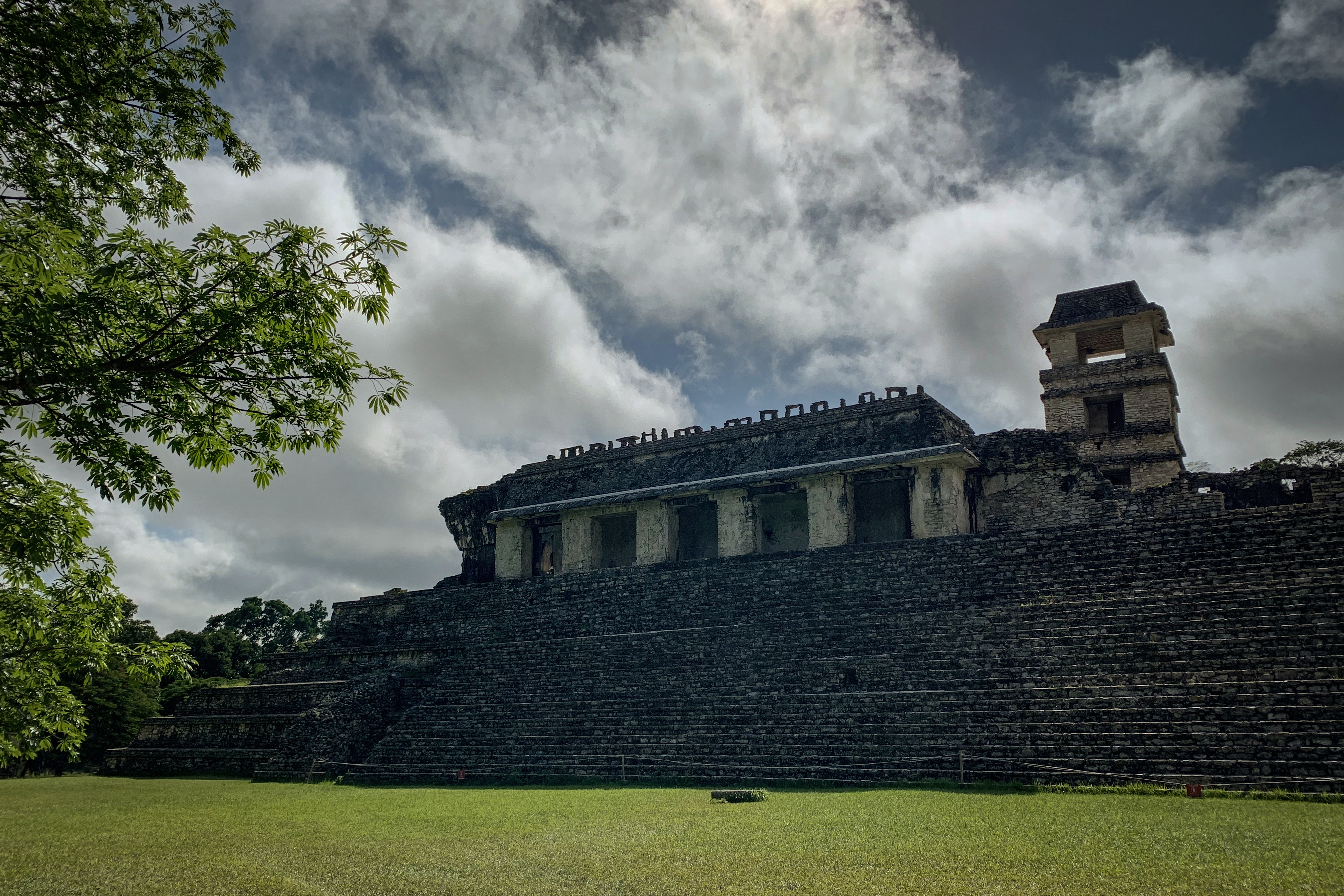
The Bonampak archaeological site is located about a 20-minute drive from Lacanjá. It can only be accessed with certified Lacandón guides. The airstrip next to the ruins — which was once used by specialists studying the area, by tourists, and later by El Cabra and his people — was the site of a military-for-drugs exchange.
With the deal arranged, El Cabra’s people begin to adopt a more solemn tone. Around dawn they remove the soldiers from the chicle, put them into two minivans and take them to a house in the jungle on the road to Bonampak. The agreement deflates the mob’s adrenaline high; their energy wanes. While waiting in that house around 7.00 a.m., El Cabra orders one of his men to fetch a kilo of cocaine from his stash. The man returns with a roll of brown packing tape. The criminal leader offers it to the soldiers, but they refuse. He insists, telling them, “there is enough for everyone.” Then he takes out a banknote, rolls it, and snorts it.
He then tells the soldiers to get dressed, except for their boots. While they are doing so, El Cabra begins handling the weapons he had seized. Then he tells one of his henchmen, “I’m going to see what solution they give me.” If things go well, he adds, they are to be put in the minivans awaiting orders. If not, he concludes, “spray them all with gunfire inside the room.” El Cabra leaves. At 7.30 a.m. General Solórzano meets him to finalize the details of the exchange. Both agree on Bonampak, and El Cabra more than anyone: after all, it is his territory. There is even a certain poetry in holding the exchange where the plane landings began years earlier.
With everything arranged, Solórzano orders the Tenosique base to send the helicopter carrying the bales to Bonampak. Both parties move there. Dawn has just broken and the sky, swathed in green, forms an unreal mosaic of leaves, shadows, and bird tails. In front of the mountain the Maya people turned into a temple 1,300 years ago, El Cabra’s people hold their prisoners awaiting the exchange. It is unlikely they have time to think about the famous mural paintings of the temple, which ironically depict a group of captives of the ancient local ruler. The aircraft arrives at the archaeological zone at 9.56 a.m. The soldiers prepare. Their colleagues unload the bales from the helicopter and El Cabra’s people approach to verify it is cocaine. No further problem: El Cabra frees the soldiers, returns their weapons, and everyone leaves.
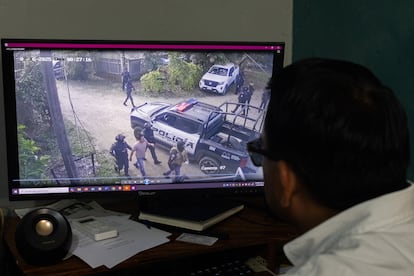
The account of the exchange is based mainly on the file opened by the Attorney General’s Office in October 2023, following a complaint filed by the kidnapped soldiers. The case was forwarded to the Special Prosecutor’s Office for Organized Crime. EL PAÍS requested comment from the Secretariat of National Defense but received no reply.


These images, included in the case file, show the exchange of the kidnapped soldiers for the seized cocaine.
“Pure theater”
On February 17, 2025, over 30 police and prosecutor’s office agents from Chiapas went early to Lacanjá Chansayab to arrest El Cabra, but he escaped. The agents then launched a sweep in the community to capture his main collaborators. They detained 20 people, but the operation soon became a problem for state authorities because of the number of irregularities they committed.
“It was pure theater,” says Rufino Gómez, lawyer for several of the detainees. Although there is footage of the agents that day in the community, in addition to videos of the arrests, the agents told a different story. According to their report to the judge, they found the 20 on the road in several vehicles firing into the air. In the report they gave the judge they said nothing about El Cabra, only that they had arrested those people — who, coincidentally, they identified as part of the criminal group — because they had found them all together committing a crime.
Still detained, among the 20 are four communal police officers who obeyed El Cabra’s orders, Lacanjá’s deputy commissioner — also part of his criminal group — and another individual several witnesses identify as a member of the criminal network. According to lawyer Gómez, witness statements, and residents interviewed, the others at most “worked under coercion as carriers or lookouts.” In some cases authorities even confused a father with his identically named son. The same sources indicate that other implicated individuals were never arrested, primarily one of El Cabra’s sons, Agustín.
Months later two of the 20 detainees were charged with aggravated kidnapping for the case of the 33 soldiers abducted in 2022. The two, Moisés and Frankly Chankin, father and son, were taken to the maximum-security Altiplano prison in the State of Mexico, where their legal process continues. Frankly is accused by soldiers of perpetrating the sexual assault of the lieutenant. For the other 18, the Chiapas prosecutor’s office sought a deal with their lawyers to reduce the charges — attacks on public peace for firing in the air — to lesser offenses that would allow them to leave prison. But the rumor spread in Lacanjá, many residents protested, and the deal fell through, Gómez says. Negotiations continue to this day.
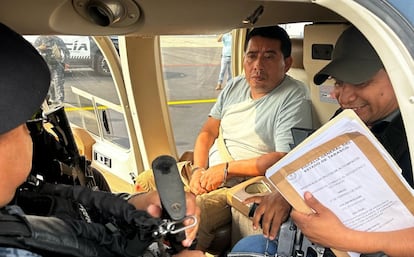
El Cabra was arrested in Tabasco, where he had been hiding, at the end of March 2025. Shortly afterward he was transferred to the Altiplano prison, which has housed prominent organized-crime figures, such as Joaquín “El Chapo” Guzmán. He has been held there since, accused of kidnapping. In recent months he has been preoccupied about his wealth, now under scrutiny by the authorities. Among other things, he worries about the future of 130 cows he once had on a seized ranch in Frontera Corozal. He wants to know if there is any way to fight it with the prosecutor’s office: “What can I do? Is there a way to contest it? Sincerely, Cabrero Segundo.”
EL PAÍS contacted the Chiapas prosecutor’s office to ask about allegations of irregularities in the arrests of the 20 people allegedly linked to Cabrero Segundo in February 2025, but received no response.
Credits:
Sign up for our weekly newsletter to get more English-language news coverage from EL PAÍS USA Edition