
A podcast against obscurity: Radio Venceremos once again defies the silence in El Salvador
Director Andrés Torres Checka and Mexican actress Eréndira Ibarra tell the story of the FMLN’s legendary station at a time when Bukele is imposing fierce historical revisionism

When the bloodthirsty Atlácatl battalion of the Salvadoran army massacred Jesuit Ignacio Ellacuría and seven others on the campus of the Central American University (UCA) in San Salvador on November 16, 1989, the news exploded like a bomb on the clandestine frequency of Radio Venceremos, the military command’s nightmare: “The assassination confirms that the regime has collapsed,” declared the station of the Farabundo Martí National Liberation Front (FMLN). That insurgent echo, which set the tone for a decade of war, became a voice of information and agitation, but it fell silent for decades. Until now, when it has been revived in a podcast that not only recounts its history but also confronts the historical revisionism of Nayib Bukele, the president intent on erasing the scars of the civil conflict that bled the Central American country.
That now‑legendary station broadcast from the heart of the Salvadoran mountains, dodging bombs and army sieges. A group of young people armed with microphones, recorders, and a bulletproof ingenuity, led by Venezuelan Carlos Henríquez Consalvi (alias “Santiago”), fought one of the most singular battles of El Salvador’s civil war (1980–1992). The radio station emerged in 1981 after the assassination of Óscar Arnulfo Romero, archbishop of San Salvador, and became a priority target for the military, which sought to silence it because of its propaganda and agitation role in a country mired in a deep political crisis and under military violence determined to root out any sign of insurgency.
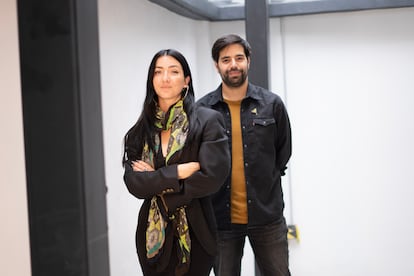
The podcast that now rescues its story, titled Venceremos, is the result of a partnership between Casa Centroamérica, Ibero 90.9 (a station of the Jesuit Universidad Iberoamericana in Mexico) and the production company Tanto que Contar. For Andrés Torres Checka, the podcast’s director, the spark was lit in 2016 during a chance visit to the Museum of the Word and the Image (MUPI) in San Salvador, where he bought the book Las mil y una historias de Radio Venceremos by broadcaster José López Vigil. The seed germinated years later amid an undeniable regional crisis. “This is a context in which the media is under siege across Central America. Many Salvadoran, Nicaraguan and Guatemalan journalists are now in exile. Talking about what it was to have a radio under a dictatorship and with limits on freedom of expression resonates inevitably with today,” the director reflects.
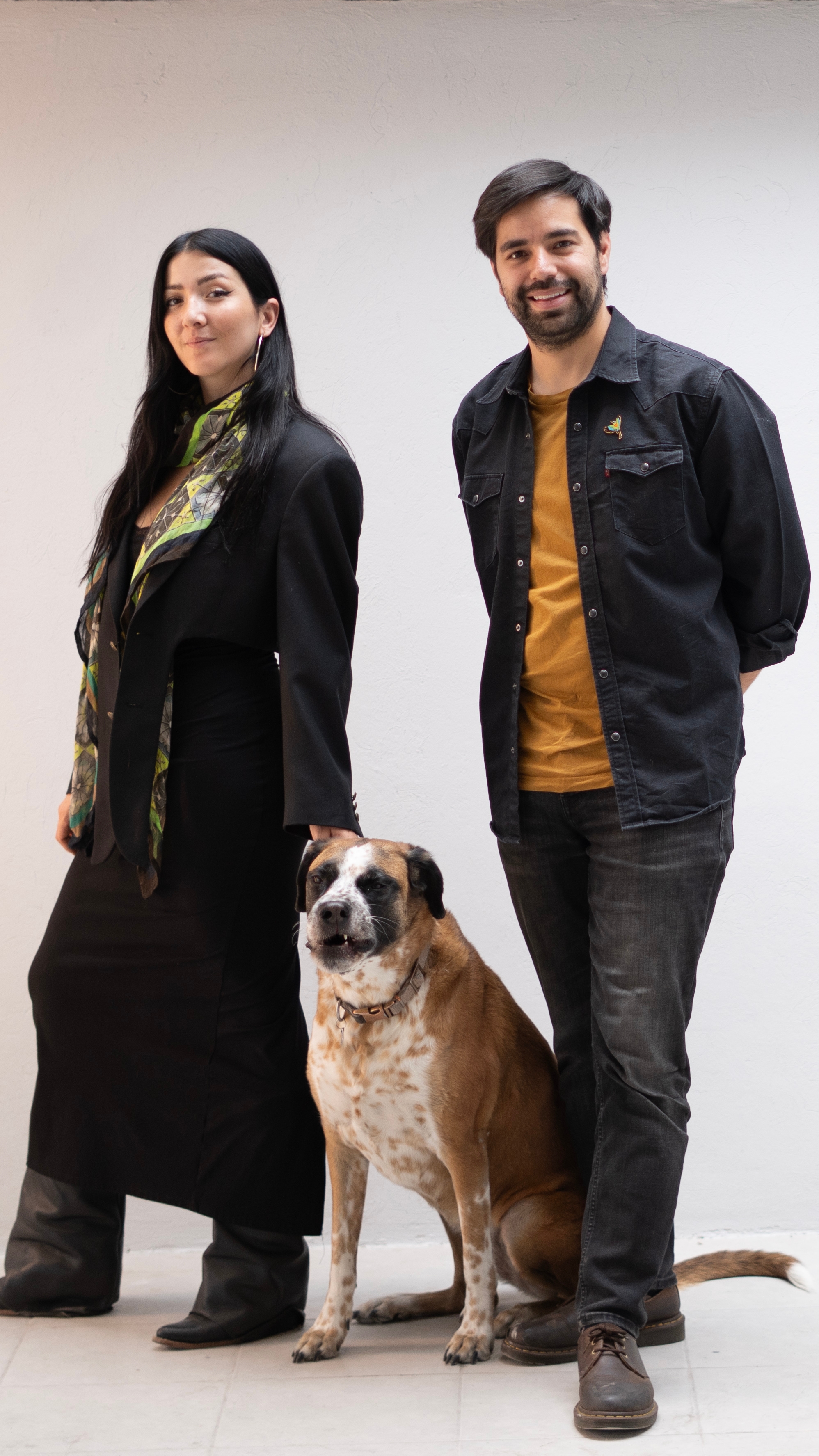
The narrative soul of the podcast resides in the voice of Mexican actress Eréndira Ibarra. For her, lending her voice to this story was not just another professional assignment but a journey to the roots of her own childhood. The actress is the daughter of noted producer and journalist Epigmenio Ibarra, who was a war correspondent in El Salvador for 12 years, accompanying Radio Venceremos.
“I grew up surrounded by these people, but in a different context. They were my uncles, they were the reason for my father’s absence,” the actress says emotionally. Among those “uncles” was Hernán “El Maravilla” Vera, the iconic voice of Venceremos, and the Venezuelan Henríquez Consalvi. “When I read Las mil y una historias at 14, I understood why so many things happened. Listening to the podcast now has been magical, cathartic and healing. It has created conversations I thought I would never have with my father and my sisters,” the actress adds. Guided by director Tamara Mazarrasa, Ibarra moved away from neutral journalistic narration to seek an intimate, vulnerable tone. She defines that tone as a conversation “in the ear,” an “intimate call to action.”
The first episode of Venceremos begins precisely on the day tens of thousands of Salvadorans gathered in the capital’s central square to bid farewell to Romero. Thousands tried to enter the cathedral to see the coffin, but a shower of lead rained down on the crowd, causing a stampede and showing that the soldiers were capable of the worst. Although those wounds remain open, in Bukele’s El Salvador memorials to victims are now being removed, the official narrative reduces a decade of blood and utopia to a mere act of corruption, and even the commemoration of the Peace Accords that ended a civil war that left more than 70,000 people dead has been suppressed. Amid this historical revisionism, the four‑episode podcast not only seeks to rescue the guerrilla radio frequency but also to confront collective forgetfulness.
To reconstruct the story, the team — which included a quartet of writers to sift through hundreds of hours of archive donated by the Museum of the Word and the Image — had to turn to exile, a specter once again sweeping the region. Bukele’s government forced former officials and ex‑FMLN combatants to flee to Mexico. Key voices for understanding the context of the 1970s and 1980s, such as ex‑guerrillas in exile Douglas Santa María and Felipe Dubón, were recorded in Mexico City, which, thanks to refuge provided by Casa Centroamérica, became the podcast’s operations hub.
The series does not remain solely in the guerrilla trenches. In an effort to build a full memory, the producers traveled to San Salvador to interview retired army captain Herard Von Santos Méndez, who now documents confrontations minute by minute. “He told us: ‘If we don’t tell our story, it’s as if we never lived it.’ They are also silencing the voices of the soldiers who took part,” Torres Checka says.
The podcast chronicles painful moments such as the Ellacuría massacre and Romero’s assassination, delves into the traumas of the war, and examines the insidious and infamous U.S. intervention under Ronald Reagan, who was willing to erase the Salvadoran guerrillas, whom he regarded as a “terrorist” group. So much so that, according to one interviewee, Washington provided the Salvadoran army with $1 million per day for training and supplies. It also recounts moments of international solidarity with El Salvador — a Cold War battleground — and actions the FMLN hailed as victories in its liberation struggle. One such episode was the killing of Lieutenant Colonel Domingo Monterrosa Barrios — brutal and, in a dark way, farcical.
Monterrosa Barrios hated the radio not only because of the propaganda that seeped into homes nationwide, but because a comedy program called La guacamaya subversiva ridiculed him and portrayed him as a murderous thug. One episode claimed he had an affair with the military chaplain and that the two spent passionate nights at San Salvador’s most famous hotel, a spoof the colonel could not ignore.
In his effort to eliminate Radio Venceremos, Monterrosa fell into a guerrilla trap. On October 23, 1984, the army’s most emblematic soldier believed he had finally silenced the insurgent voice after capturing a transmitter in Joateca, in the country’s north. He called the press to display the device as a trophy of war symbolizing the FMLN’s definitive defeat. But nothing was as it seemed. Monterrosa and six of his men loaded the transmitter onto a helicopter, not knowing that the guerrillas — those young film and journalism students who had made the radio iconic — had turned the equipment into a deadly booby trap loaded with explosives. Shortly after takeoff, the device detonated in the air, wiping out the military leadership in the area. The chaplain was among the dead.
Debate and remembrance
The impact of Venceremos has gone beyond the classic podcast format on platforms such as Spotify. By uploading episodes to YouTube (accompanied by visual work from Oronda Studio), the project pierced an unexpected generational gap, reaching hundreds of Salvadorans aged over 55. In the comments section, war veterans from both sides, exiles, and civilian survivors have begun to debate and remember. “There are very moving comments from people who remember listening to the radio very quietly,” Checka recounts. Others, from the opposite side, the director says, insist the guerrillas also committed abuses against civilians. For the creators, this clash of opinions reinforces the project’s relevance: the past is not dead, it is only waiting for a frequency to speak again.
Thirty‑two years after the Peace Accords that demobilized the guerrillas and silenced the guns, the echo of that radio that broadcast from the trenches of the mountains in northern Morazán is sounding again. This time the signal does not dodge machine‑gun bursts but a modern authoritarianism that seeks to rewrite history by decree. But as Venceremos shows, memory always finds a frequency through which to filter. In an El Salvador determined to look toward a future without memory, this podcast forces an inward look. As Ibarra says: “I’m going to tell you a story of how we can defeat the monster, because we have done it before.”
Sign up for our weekly newsletter to get more English-language news coverage from EL PAÍS USA Edition









































