
When the BBC tricked Princess Diana into giving them the scoop of the century: ‘She was made to believe she was surrounded by spies’
British journalist Andy Webb, who revealed that the broadcaster knew about Martin Bashir’s deceptions to get Lady Di on ‘Panorama,’ has published ‘Dianarama’ on the 30th anniversary of the controversial interview
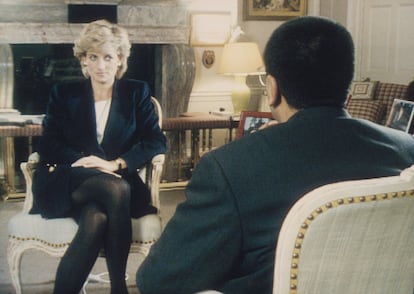

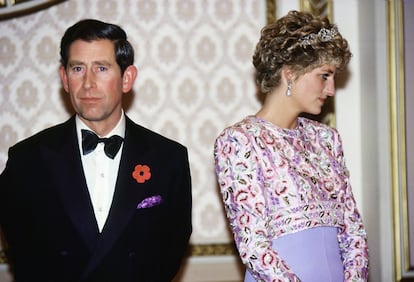
“There were three of us in this marriage, so it was a bit crowded.” That’s how Diana of Wales described her relationship with the then–Prince Charles in the historic interview broadcast on November 20, 1995, on Panorama, a BBC program. Nearly 23 million viewers followed a conversation that would mark a before-and-after not only for the British royal family, but also for Princess Diana.
Lady Di hid from everyone — even those closest to her — that she was going to be interviewed by Martin Bashir: she sent palace staff home and did not bring in stylists or makeup artists. She faced it on her own, alongside a three-person recording team — including the journalist — who entered Kensington Palace discreetly. She spoke about everything and everyone, shaking the monarchy to its core.
But what was hailed as “the scoop and interview of the century” was revealed 25 years later to be a textbook case of journalistic malpractice: the deceitful methods Bashir used to get Princess Diana in front of the camera came to light. A 2020 documentary titled The Diana Interview: Revenge of a Princess, aired by ITV, confirmed the suspicions; and in 2021, an independent investigation led by former judge Lord Dyson uncovered all the deceptions. Former BBC journalist Andy Webb was the one who, anonymously, alerted the British media about what had happened in 1995 — and the one who investigated and revealed that the public broadcaster had covered up Bashir’s misconduct for years.
Coinciding with the 30th anniversary of that interview, Webb has published Dianarama: The Betrayal of Princess Diana, the result of years of investigation, the BBC’s repeated refusals to release more information about the case, and the Spencer family’s long struggle to learn a truth that forever changed their lives.
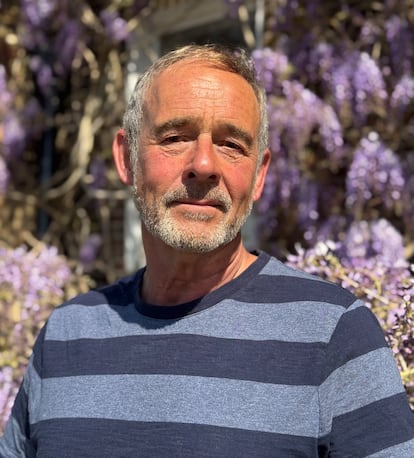
Although it took 25 years to come to light, Webb began this work in 2006. “I didn’t know something was wrong, but when I began to research, I put in requests for the BBC for information and it was very unusual because they said they had no information. That sounded really suspicious. The further I went on researching, the more aware I became that all the rumors were true — but for years I only had little bits of information from here and there,” he tells EL PAÍS over a video call.
Everything changed in 2020, when he was given the green light to make a documentary about the interview for Channel 4. “During filming, the BBC sent me some documents under freedom of information laws, and one of them made certain accusations about Charles Spencer [Diana’s brother]. When I shared this document with him, he was outraged and angry that he shared with me all the information he had kept over the years. We tried to get the BBC to listen to and take action, but they ignored it,” Webb recalls during the conversation.
Bashir’s first step in securing the interview was a meeting with Spencer to get closer to his target. The journalist showed him bank statements suggesting that people close to his sister were receiving payments from British security services, that the princes’ nanny, Tiggy Legge-Bourke, had had an affair with Prince Charles and had an abortion, and that her eldest son wore a watch with a device that recorded all his conversations. Spencer would pass all this information on to Lady Di (and years later to Webb), and weeks later, the “People’s Princess” appeared on television.
Princess Diana never learned that all these documents were fake. She would die two years later in the tragic car accident in Paris, believing that those closest to her had betrayed her.
“Bashir came as a representative of the BBC, with a very good reputation, a strong background, and documents that pretend to support the lies,” Webb explains. “He was trying to terrify Princess Diana, to make her believe that she was surrounded by people whom she could not trust — people who were spying on recording her, following her, surveilling her. And he was, Martin Bashir, the only person who could reveal all these horrible things. He quickly became very important to Princess Diana because he was the one who could get the right of this terrible situation.”
Another false claim was that Patrick Jephson, Diana’s private secretary, “was taking large sums of money — £40,000 [$52,900] in just one payment — to spy on her,” Webb notes. “That’s how Bashir gained her trust: he was efficient and skillful.” “Jephson had been working with her for eight years; she trusted him, he advised her, he managed her life,” explains Webb. “He resigned six weeks after the interview, in January 1996. From that moment on, he never saw or spoke to Diana again. She believed he had betrayed her, that he was a spy being paid to work against her interests. She died feeling that way.” And Jephson, who spoke with the journalist for the book, wondered for 25 years why she had turned against him overnight.
According to the information Webb obtained, BBC executives learned about the manipulation months later, but too much was at stake, and they chose to keep the secret. “If this information had been made public, the consequences would have been catastrophic. This interview had become the most famous, the biggest news story in the world, and they sold it to countries that bought it for more than a million pounds. If it had been revealed that it had been obtained through lies, the senior executives would have been fired. The BBC covered it up, and the one person they didn’t tell was Princess Diana,” says the journalist, who had access to thousands of emails that confirm this part of the story.
“Her brother believes that the BBC’s failure to tell her had a profound effect on her life,” continues Webb, who denounces the BBC’s “lack of transparency.” “If they had told her, then her life would have unfolded in a different way. That’s a really tragic realization. She died in a very short time, in circumstances that her family feel just would have been different: she wouldn’t have been where she was.”
Webb prefers to let those closest to the princess express their views on what happened in the book. “Her family is heartbroken because they feel that if Diana had been told what had been done to her, she wouldn’t have got rid of all of these trusted people, and might not have been in the situation where she died in Paris. When I asked her brother if there is a link between Panorama and Paris, he said yes, that the consequences were lethal and deadly,” says Webb. “What I think as a journalist or writer is one thing; but you have to take into account what the people close to Diana think.”
Even Prince William, heir to the throne, has spoken about the Panorama interview on more than one occasion. “It brings indescribable sadness to know that the BBC’s failures contributed significantly to her fear, paranoia and isolation that I remember from those final years with her,” he said in a video posted on Kensington Palace’s social media channels in May 2021. “But what saddens me most, is that if the BBC had properly investigated the complaints and concerns first raised in 1995, my mother would have known that she had been deceived. She was failed not just by a rogue reporter, but by leaders at the BBC who looked the other way rather than asking the tough questions.”
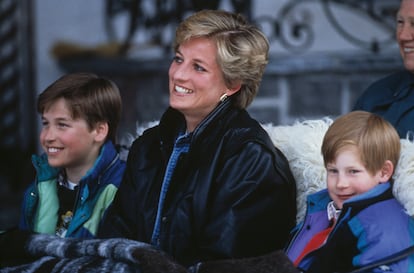
“William is very clear that her life was very much affected by the interview,” says Webb. “He’s 43 now, seven years older than Diana was when she died. He wants questions that he has had for years to be answered. He wants the BBC to come clean about everything that went on because the BBC have certain critical documents that have been removed from the archives.”
The life of Prince William and the rest of the family was profoundly affected by what happened in the 1990s. “Both William and Harry went through the most terrible trauma, like any teenager dealing with their parents’ divorce and the horrible death of their mother. How does one gauge the effect of that trauma? If their mother were still alive, she would be Granny Diana. Their lives would be a lot happier,” says Webb.
What Webb wants to show with this book is that it is not a chapter that can be closed just yet: “It’s not going to disappear. Kings and princesses are part of history, and people return to those stories again and again.” Especially since Prince William has such a clear opinion about what happened in that interview. “It’s a curious situation that a king wouldn’t trust the organization he’s being asked to underwrite with his own royal seal or approval… They should do the right thing, because they are legally obligated to be transparent.”
In recent years, in an attempt to quell the controversy, the BBC has donated nearly two million pounds ($2.9 million) to the Diana, Princess of Wales, Memorial Fund as compensation for the damages caused. “I don’t believe for a moment that this is a question of money reparations. The BBC is not a commercial company. They don’t have their own money; it’s taxpayers’ money. The issue can’t be solved by paying money,” says Webb.
For the journalist, publishing this book 30 years later does not mean reopening old wounds (which, in reality, never fully closed), but clarifying the last years of Diana’s life, marked by paranoia, distrust, and deception. What was once celebrated as an act of courage now appears as the only way she could tell her truth from the vulnerable position of someone who felt betrayed.
Sign up for our weekly newsletter to get more English-language news coverage from EL PAÍS USA Edition









































