
How a Spanish teacher convicted of abusing a 12-year-old student reinvented himself in Havana
From the time he fled Spanish justice until his arrest, Martiño Ramos Soto presented himself in Cuba as a businessman traveling as a tourist. He frequented cultural circles, where he connected with young people through photography
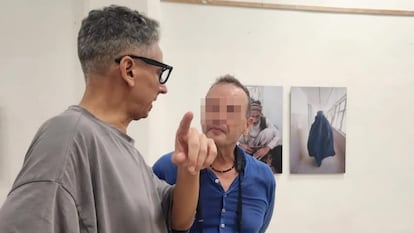
Martiño Ramos Soto — known as Martín Soto to the Cubans who met him on the island — had been moving through Havana like a fish in water since he arrived in the Cuban capital last summer, on the run from Spanish justice while serving a 13-year-and-six-month prison sentence for sexually abusing a 12-year-old student in the Spanish region of Galicia. He lived in Havana quietly until his crimes became public, and it was announced on Monday that he had been arrested by the Revolutionary National Police (PNR).
Those who knew him during his months in hiding in Havana knew nothing of his legal status or criminal activity until the news broke this weekend. To everyone, he was just another Spanish tourist in the city, a businessman taking a break, always with his camera in tow, strolling through exhibitions, chatting with artists and young models, amid drinks, smiles, and music.
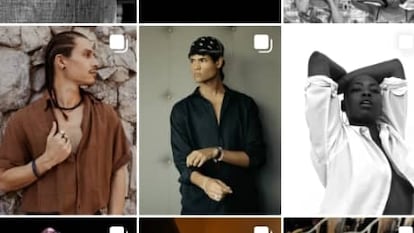
The Cuban art community has been in shock since the news broke. WhatsApp groups have been flooded with photos of Soto at public events, with the people who met him expressing their surprise at the revelation. Just a few weeks after settling into a rented house in Havana’s Vedado neighborhood, very close to the central 23rd Avenue, the fugitive began to build a network of contacts within the Havana art scene through his presence at cultural events, both institutional and independently organized. He created an Instagram profile under the name Martín Soto, using his mother’s maiden name. Through this account, he contacted young artists and models, followed accounts of cultural projects, and shared the photos he took at these events. He tried to make himself indispensable.
On October 31, he arrived at the Nodo Habana cultural center, at the intersection of Malecón and Lealtad streets, to attend a poetry event held on the last Friday of each month. It is a space open to the public, and Soto stood out, camera in hand, as he was the only foreigner present that day. According to the institution, he offered to take photographs of the poetry gathering, which he would later email so they could serve as a visual record of the event. Those who were there remember his cordial manner.
Adolescent behavior
Among the attendees was Iré Lázara Goitizolo Rodríguez, a young visual artist and poet who was photographed by Soto. She recalls finding it strange to see him photographing and filming the young women for so long. The next day, at another event, they ran into each other again. He approached her. He was with a couple of young women who looked like models.
“His behavior was adolescent, and it surprised me to see him, so grown up, involved with so many young women. He even asked me if I was going to a listening party in El Vedado for Rosalía’s new album. He seemed very interested in knowing about the events happening in Havana,” recounts the young woman, who shared screenshots of her WhatsApp conversations with Soto with EL PAÍS, where they discussed art-related topics. “He gave out his contact information very readily,” she affirms.

No news of Martín Soto since Friday
Martín Soto would take photographs and then contact the subjects, either in person or via Instagram, sending the images to the young artists. He did this throughout his four months in hiding, attending events in the Cuban contemporary art scene, such as the Post-It modern art competition; Noviembre Fotográfico, a photography festival that takes place in November; and the tribute exhibition to Belkis Ayón, Mi alma y yo te queremos (in English, My Soul and I Love You). The testimonies collected describe Soto as a very sociable person who shared little about his life, merely saying that he was a businessman, ran a consultancy in Spain, and had taken some time off for a vacation, without offering further details.
Soto had several plans this week with acquaintances in Havana, but those who knew him had not been able to contact him since Friday morning. They even went to the house where he was staying, but no one answered the door. He also stopped responding to phone calls. A young model who had posed for him learned his true identity only after people began leaving messages on an Instagram post they shared. She tried to reach him, but by Friday she had received no reply.
Another young Cuban photographer, who wished to remain anonymous, had interacted with Soto several times after he contacted her through Instagram. She is dismayed by the news. “He was an intelligent guy, a good conversationalist, and it’s shocking when you find out what a monster he is. Why did he want to meet so many people? Why did he take so many photos and expose himself so much here?”
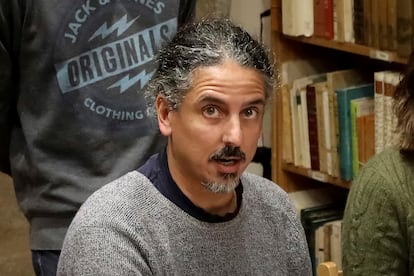
During his time in Cuba, Martiño Ramos was constantly in the public eye and acted with astonishing impunity. A worker at the Fototeca de Cuba, the official cultural institution that organizes the Noviembre Fotográfico series of events, claims to have seen him at practically every gathering that season. It was thanks to the images of the event that the fugitive’s whereabouts became known.
“This man, it must be clarified, did not participate in Noviembre Fotográfico as an artist. He was merely posing as a photographer and attended as just another spectator. He infiltrated our community,” explains the specialist, who briefly encountered Soto around November 6, during an exhibition.
She thinks it’s telling that Soto disappeared on Friday morning, two days before it was first reported in the media that he was in Havana, and believes he was warned before the news broke. After hours of uncertainty, it was revealed on Monday afternoon that he had been detained by Cuban authorities, although by Monday night the government had not yet issued an official statement on the case.
“The stereotype of the older foreigner with young Cuban woman”
Martiño Ramos was walking along Havana’s Malecón one day in September 2025 when he met a 23-year-old woman. “He took some pictures of me there and we started talking. I liked the photos, so I gave him my phone so he could send them to me. He seemed like a nice person and I had no reason to distrust him at that moment,” the young woman, who asked to remain anonymous, told EL PAÍS.
From that day on, they stayed in touch. “He seemed like a very well-educated, intellectual, empathetic, and very feminist person, with a rather sweet voice, appearing harmless,” she recalls. Days later, they met in Old Havana for another photo shoot and continued talking, even going out alone together on other occasions, as friends. “I thought he could be a good guy, because it’s rare to find a man who is knowledgeable about so many topics and empathetic. Now I realize he was just using that rhetoric to flirt.” After that day, they spoke daily for a few weeks. One day, Soto invited her and a friend to a party at his house, where several people were invited. The young woman found it strange that most of them were young women, between 18 and 29 years old. “That struck me as very odd, so I started to distance myself.”
A young man — also speaking to EL PAÍS anonymously — says the fugitive was also at another party, following Silvio Rodríguez’s concert on the steps of the University of Havana on September 19. He recounts that he attended the gathering with his girlfriend, and during the evening Soto, who had arrived with one of his very young female friends, approached them to chat. “At first, the couple struck us as the stereotype of the older foreigner with the young Cuban woman, and we didn’t like it.”
The next day, their discomfort turned into suspicion when they noticed that Soto had started following his girlfriend on Instagram, something he hadn’t done with the accounts of other photographers at the event. “We ran into each other at other events, but he wasn’t someone I was interested in getting to know better,” he concludes, recalling Soto’s image as someone who wanted to portray himself as a supporter of the feminist movement.
On Monday, Andy Martínez was shocked to learn Soto’s true identity. He had barely exchanged words with him, but had seen him on four occasions: first, at a concert at La Bombilla Verde, a popular bar in El Vedado, and last, at an intimate party at a bar called La Azotea de la India. “He always had his camera up,” he adds.
With Martiño Ramos Soto now in custody, those who had met him in Havana have been left with a feeling of having been deceived, mocked, and wronged. “It’s a mixture of disgust and fear,” confesses one of the young women who interacted with him. “I feel disgusted for having been around someone like that and for having cared for him, even just a little. And afraid, because knowing he deceived us makes you feel vulnerable. I’m glad to know he’s been arrested.”
Sign up for our weekly newsletter to get more English-language news coverage from EL PAÍS USA Edition









































