
The mystery of the boat pulverized by a missile in the middle of the Caribbean
Most of the 11 occupants of the vessel — which departed from Venezuela and was blown up by the United States — came from a small coastal town taken over by drug trafficking
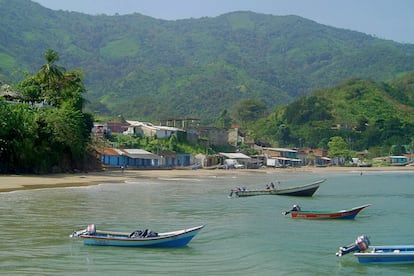
San Juan de Unare was a small fishing village where people would rise in the middle of the night to haul their boats to the shore and head out into the calm Caribbean Sea. Their fathers had done the same, and so had their fathers before them. More than 20 years ago, however, it became a transit point for drugs, and everything changed. Disputes arose, rivalries between clans emerged, and death followed. First one killing, then two, and then, in two unforgettable days, 78 all at once. Earlier this week, according to Venezuelan media reports, a group of young men from the town boarded a boat and never came back.
The fate of the residents of San Juan de Unare and nearby towns has heightened tensions between the United States and Venezuela, two nations that now speak to each other in the language of war. The White House used its military force deployed in international waters, near Venezuelan territory, to launch a missile at the boat and kill the 11 people on board.
According to U.S. authorities, they were transporting drugs bound for Trinidad and Tobago. U.S. President Donald Trump insists this is a new way of confronting drug cartels through the use of weapons of war, but Venezuelan President Nicolás Maduro is convinced it is nothing more than the prelude to an invasion of his country. He claims he will rally eight million Venezuelans to take up arms and join the armed forces.
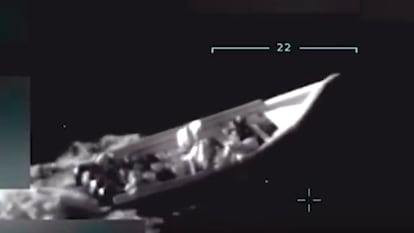
It all happened in an instant. The boat was cutting through the sea when something unidentified targeted it from above (some experts believe it was a drone). Seconds later, a projectile obliterated it. The United States has declassified the video but has offered few other details. The Chavista government initially claimed it was an AI-generated video, but nothing suggests that is the case. In private, a Chavista leader close to Maduro calls Trump’s government “criminal.” “They want to destroy this country with missiles,” he adds.
Washington’s theory is that Maduro is a narco-president who leads the Cartel of the Suns, a local criminal organization (there is no evidence to support this). On top of that, Maduro refused to accept his defeat in last year’s presidential election to the opposition, which in the eyes of Washington and much of the international community makes him an illegitimate president. U.S. Secretary of State Marco Rubio insists daily that he is a drug trafficker who must be brought to justice in his own country.
The crisis has put San Juan de Unare on the map. It is the last town accessible by land via a battered road dotted with military checkpoints, leading toward the Paria Peninsula. Beyond lies the tropical forest — almost Venezuela’s last frontier. Here are some of the most beautiful beaches on the planet. But often, it looks more like hell. The state of Sucre is among the poorest and most violent in the country. Videos from this crime-ridden area have flooded TikTok in recent days, since the attack took place.
“San Juan de Unare in mourning, may those fathers who entered that world out of necessity, so their families can live a little better, rest in peace” reads one video. In the comments, users insist the attack was real, not AI-generated. The victims are real.
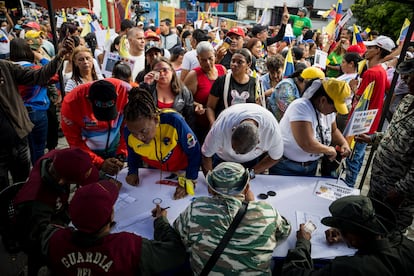
The Venezuelan government has now reacted as this information comes to light and has militarized the town, according to witnesses interviewed by this newspaper. El Pitazo, a Venezuelan outlet, reports that the 12-meter-long speedboat, carrying 11 men and a cargo of narcotics, departed on Sunday, August 31, bound for Trinidad and Tobago, and was destroyed in the early hours of Monday. According to this account, two other drug-laden boats had set out earlier, but were not intercepted. The prime minister of the Caribbean nation, Kamla Persad-Bissessar, praised the operation: “The pain and suffering the cartels have inflicted on our nation is immense. I have no sympathy for traffickers; the U.S. military should kill them all violently.”
Drug trafficking gangs have operated in this region for two decades. In recent years, as the Venezuelan exodus intensified, criminal groups also moved into human trafficking. Shipwrecks of Venezuelan migrants attempting to reach Trinidad and Tobago became common.
Journalist Ronna Rísquez, author of the book Tren de Aragua: La banda que revolucionó el crimen organizado en América Latina (Tren de Aragua: The Gang that Revolutionized Organized Crime in Latin America), notes that the presence of this gang has been identified in the area. She herself conducted investigative work in San Juan de Unare, material she later used in her book. “I saw with my own eyes that it was a town taken over by drug trafficking,” Rísquez says by phone.
The organized crime research outlet Insight Crime revealed in 2019 the rise of ship piracy in eastern Venezuela as a strategy to clear trafficking routes for cocaine and marijuana produced in Colombia en route to the Caribbean, particularly in the maritime corridor between Venezuela and Trinidad and Tobago. A year earlier, just a few miles from San Juan de Unare, in San Juan de las Galdonas — one of the major drug-trafficking hubs — a deadly clash broke out between rival gangs. According to residents and witnesses in the area, as reported by local media, 78 men were killed and dismembered during two days of gun battles. Venezuelan police authorities denied the massacre. Back then, artificial intelligence did not exist.
Sign up for our weekly newsletter to get more English-language news coverage from EL PAÍS USA Edition









































