
Berta Cáceres and the resistance that was born under an oak tree
EL PAÍS travels to La Esperanza, the town where the Honduran activist was murdered on March 2, 2016, for opposing a hydroelectric project that threatened the resources of Lenca communities. A decade later, her legacy of justice remains alive as her family and colleagues continue fighting to ensure the crime does not go unpunished

In the early hours of March 2, 2016, two men crossed the threshold of a house in the small city of La Esperanza, in western Honduras, and opened fire. Ten years later, the Central American country has still not stopped hearing the echo of those shots. The murder of Berta Cáceres has marked the recent history of Honduras, one of the most dangerous places in the world for human rights defenders. The Lenca leader turned the defense of the Gualcarque River into a showdown with business interests, the military, and international banks. A decade later, the crime stands as both a symbol of judicial progress and a reminder of persistent impunity.
I. The scene of the crime
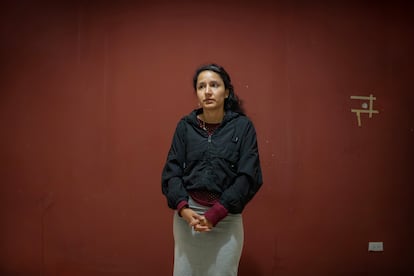
Three bullet marks on the bedroom walls recall the nightmare Berta Cáceres suffered in the early hours between March 2 and 3, 2016. “This was her home during the last days of her life. And it was here that she was murdered,” says Bertha Zúniga Cáceres, the activist’s daughter, pointing to the holes in the walls of the room — the scene of a crime that shook the world.
The house is small, with walls painted green, the same color that dominates the forests and mountains surrounding La Esperanza. Where the dining room once stood — Zúniga remembers — they celebrated their last Christmas dinner in December 2015. “We shared many warm moments here,” she says, gesturing toward the space that also served as the living room. The kitchen, small and now almost empty, will be renovated as part of a project meant to honor the memory of the Lenca defender and the struggle of her people.
At the back of the house there is a door that is not the original. “This is where the hitmen came in,” explains Zúniga, who is the coordinator of the Civic Council of Popular and Indigenous Organizations of Honduras (Copinh), the organization Cáceres founded. The current door replaced the one that was kicked down that night. The original remains in the custody of the Attorney General’s Office as part of the case evidence. After the murder, the house was kept under police protection for several months before being returned to the family.
Mexican activist Gustavo Castro, the only witness and survivor of the attack, says that at least two armed men entered through that door. One of them went to the room where he was sleeping — he was staying in one of Cáceres’s daughters’ bedrooms. On one of the walls, the mark of a bullet can still be seen. It was the shot that struck him, and which he survived. He recalls that after a long day giving workshops with the environmentalist — whom he had not seen in five years — they went out to dinner that night and then drove back in a gray Volkswagen to Cáceres’s home, which was deserted that evening.
They talked for a while on the porch and, around 11 p.m., decided to go to bed. A few minutes later they heard a loud crash, and Berta Cáceres shouted, “Who’s there!” One of the gunmen entered the environmentalist’s room, while the other headed toward the Mexican’s, surprised to find someone else in that unprotected house — despite the Inter-American Commission on Human Rights (IACHR) having ordered the Honduran government to guarantee Cáceres’s safety. The hitman pointed his weapon at him and fired to kill. Castro survived the attack with a minor wound to his ear, by pretending to be dead. Then he heard several shots in the other room. When the killers left, he ran to his friend, who asked him to call her ex‑husband. There was no time. Cáceres’s life slipped away in his arms.
Castro says the Honduran government tried to frame him for the crime. “They couldn’t fabricate any evidence, although they set many traps for me,” he says from San Cristóbal de las Casas, where he now lives.
In the main bedroom, where Cáceres slept, traces of that early morning still remain. The doors were replaced by the Attorney General’s Office, which collected ballistic evidence and other materials. Even so, visible marks endure: holes in the walls, impacts in the bathroom, and a small bloodstain that time has not fully erased.
The family was unable to enter the house during the days after the crime. Only two months later, once the official custody ended, were they able to walk through it and reconstruct what had happened based on Castro’s testimony, which he shared with them during the wake and burial of the leader.
Eight men have been convicted for the crime. A senior executive was sentenced as a co‑conspirator. The Agua Zarca hydroelectric project was halted. But those identified as the masterminds — the shareholders who, according to the trial, discussed the “Berta problem” in board meetings — have yet to face a court. “Berta’s case is a crack in the wall of impunity,” says Camilo Bermúdez, Copinh’s lawyer. Ten years later, the crack remains. Now, the place will cease to be only a crime scene. It will be transformed into a space of memory to honor Berta Cáceres and keep alive the defense of the territories and rivers she fought for. “We continue to demand justice,” Zúniga says.
II. The resistance that was born under an oak tree
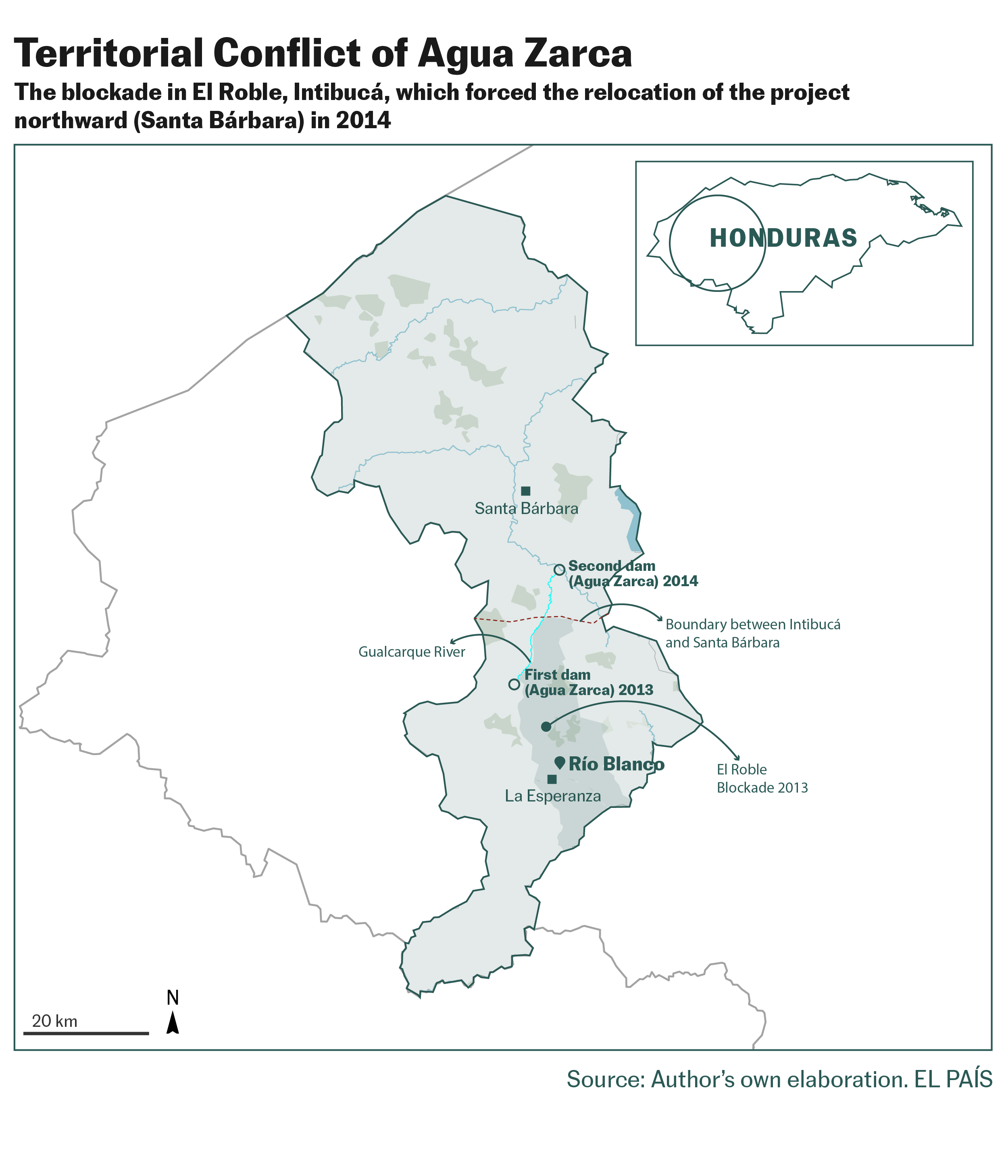
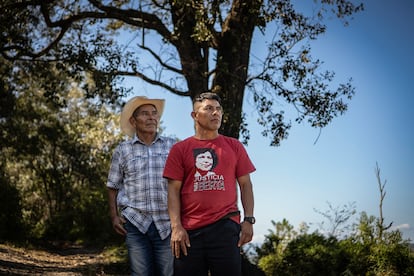
Felipe Gómez is 68 years old and has spent his entire life in the Lenca community of Río Blanco, in western Honduras. Standing before a leafy oak tree, he points to it as if presenting a monument. “This oak is a symbol for us. We leaned on it to carry out the struggle against the company,” he says. The company was the hydroelectric project that sought to dam the Gualcarque River, sacred to the Lenca people. The resistance formally began on April 1, 2013, when the community decided in an assembly to take control of the path leading to the river — the route the machinery would have to use to enter.
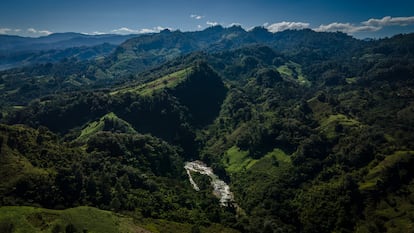
The village lies four hours from La Esperanza, along unpaved roads that jolt and rattle the pickup truck and are crossed by streams of crystal‑clear water. At the edge of these roads lies an abyss of green mountains and vast tropical forests that shelter one of Honduras’s greatest reservoirs of biodiversity — the very thing Berta Cáceres sought to protect.
Adolfo Gómez, 41, also stands at the foot of the oak tree, recalling the details of that movement as if he were living them again. “We formed four groups. Twelve hours for one group, twelve for another. During the day we were 25 people, and at night another 25.” They dug a trench to block the vehicles, stretched a cable across the road, and built makeshift shelters to protect themselves from the sun and rain. They slept on mattresses laid over wooden tapescos (a rustic bed made of branches and wood), while water ran beneath them. “We were here day and night for months, until July, without missing a single hour,” he says.
The company in charge of the project was Sinohydro, the Chinese state‑owned engineering giant contracted by the project developer. When the workers tried to pass, the community stopped them. “We wanted the river to run free. The river has no price — it’s a source of life,” Adolfo says.
Tensions escalated. Police and soldiers arrived. They threw out the community’s food and water, but the residents reorganized. Religious leaders held services under the oak tree. The camp became a space of permanent resistance.
In July 2013, during a protest at the company’s camp, the repression left one man dead: community leader Tomás García. “They didn’t give them time to speak. They greeted them with bullets,” Adolfo recalls. García’s son was wounded. Other demonstrators were also hit by gunfire.
The violence didn’t end there. There were threats, attacks, and stigmatization. “They call us enemies of development,” Felipe says. “But that project was going to enrich the company, not us. There was already damage to the soil, landslides, springs drying up.”
The Gualcarque River feeds multiple water sources in the area. “All this wealth is here,” Adolfo says, pointing to the mountains. “That’s why they wanted this land.”
The resistance was supported by Berta Cáceres, coordinator of Copinh. Although she was banned from entering the community by car, she arrived on foot along narrow paths. “She put on rubber boots and walked just like we did,” Felipe remembers. “She told us we were fighting a huge, multimillion‑dollar monster.”
Cáceres rejected offers and pressure. “They offered her money to stay quiet. She didn’t accept,” Adolfo says. After her murder in 2016, some thought the project would move forward. It didn’t. The company withdrew.
“It was a painful loss,” Felipe admits. “But also a victory, because the struggle didn’t die. Those who die for a just cause cannot be called dead.”
In Río Blanco, at least five people linked to the resistance have been killed. Even so, the community maintains control of the territory and continues to face land conflicts and reports of evictions. They distrust local authorities and point to political and business sectors that, they say, grant concessions without prior consultation.
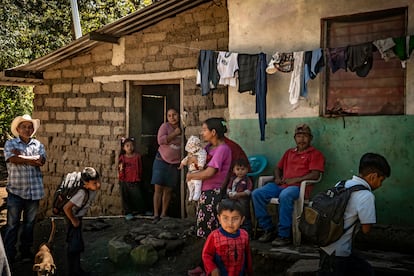
More than a decade after the resistance began, the oak tree still stands. Under its shade, the defense of the river was organized and an experience took shape that went far beyond the community itself. “We were born here,” Adolfo says. “It’s up to us to defend what we will leave to our children and grandchildren.” For them, the struggle in Río Blanco is not just a local episode but a precedent. “It’s an example for other communities,” Felipe adds. “Because what is sown with tears will one day bear fruit.”
III. A crack in the wall of impunity
The crime against Cáceres has become an international symbol of the violence faced by environmental defenders, but justice in Honduras is still unfinished. Camilo Bermúdez, a member of Copinh’s Executive Commission and head of strategic litigation, argues that the judicial process represents an unprecedented step forward in the region, yet still falls short. “There is impunity, but it is also one of the few cases in Latin America where progress has been made. Berta’s case is a crack in the wall of impunity,” he says.
So far, eight people have been convicted, including the gunmen and the former manager of Desarrollos Energéticos S.A. (DESA), the company behind the project. However, for Copinh, the top perpetrators — the masterminds — have yet to face justice.
Bermúdez points directly to members of the powerful Atala family, the main shareholders of the Las Jacarandas business group, the majority investor in the Agua Zarca project. He explains that during the trials it was documented that executives internally discussed the so‑called “Berta Cáceres problem,” closely monitored Copinh’s actions, and financed surveillance and intelligence mechanisms targeting the leader.
“Agua Zarca wasn’t just any business deal. It was their flagship project,” he says. According to information presented in court and in independent investigations, it involved an investment of nearly $60 million, financed by international banks and routed through offshore jurisdictions such as the British Virgin Islands and Panama.
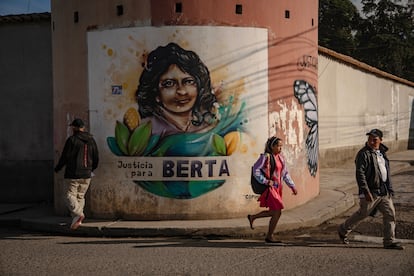
A report prepared by the Interdisciplinary Group of Independent Experts (GIEI), which investigated Cáceres’s murder, concluded that there is evidence linking other business, military, and financial actors to the chain of responsibility. The investigators note that the criminal network used funds from European and Central American development banks to pay the hitmen who killed Cáceres. The GIEI traces the path of the money — the convoluted network created to disguise its origin — until it was withdrawn in three checks totaling more than half a million lempiras, about $25,000, and ultimately distributed among the hitmen, who are now in prison.
The hydroelectric project has been paralyzed since 2016. Part of its environmental permits have been annulled and its power‑supply contract canceled, although administrative acts still exist that could be challenged. For the community of Río Blanco, the threat hasn’t gone away.
Meanwhile, there is an outstanding arrest warrant for Daniel Atala Midence, a former DESA executive charged in connection with the murder, who is now a fugitive. In addition, there are ongoing corruption and criminal‑association complaints against members of the business structure linked to the project.
Beyond the criminal proceedings, Bermúdez argues that the case exposes an economic model based on extraction without consultation and on the lack of protection for land defenders. “This is not only about criminal responsibility. It’s about changing a way of doing business where money is placed above life,” he says.
As for the new Honduran government, led by President Nasry Asfura — a conservative, pro‑business politician — expectations are limited. “There have never been favorable conditions. What there has been is work, documentation, pressure, and alliances. Nothing has been handed to us,” he says.
For Copinh, the crack opened in the wall of impunity is still fragile. But it exists. And, Bermúdez says, it can widen if society continues to demand justice. “The struggle doesn’t end with a sentence. It ends when all those responsible face justice and when defending a river no longer amounts to a death sentence,” the activist says.
IV. The utopia made real
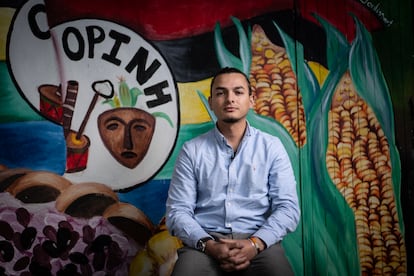
Catalina Hernández, head of organizational coordination at Copinh, welcomes EL PAÍS to the grounds of Utopía, the community project brought to life with Cáceres’s drive. It is a large tract of land located about 10 minutes by car from La Esperanza. Here there are vegetable gardens, classrooms for training farm workers, and new barracks where they rest when they attend the assemblies where Copinh’s work is decided. On March 2, around 800 people will gather here to honor Cáceres in a ceremony full of syncretism, blending Indigenous traditions with Catholic liturgy. Copinh members call it “the planting,” because, they say, Cáceres’s death has been a seed that has sprouted into a struggle that remains alive. Utopía is a commune that defends the idea of equality and fraternity through the defense of the land.
Hernández reflects on the more than three decades of Lenca resistance. From the defense of the forest in the 1990s to the murder of Berta Cáceres, her account is also the story of an organization born amid persecution and war. “Copinh emerged in 1993, when in Intibucá — the department that is Lenca territory — there were many sawmills devastating the forest. The communities didn’t know what to do,” she recalls. In addition to the deforestation, there was the impact of the armed conflict in neighboring El Salvador. “We were a border zone, and the army persecuted Indigenous people and those who showed solidarity with the Salvadoran struggle. There was torture and human rights violations. We had no organization, and we needed to defend ourselves.”
Out of that need, Copinh was born. Over time, the organization achieved something fundamental: the recognition of the Lenca people by the Honduran state. “In those years we weren’t even recognized as an Indigenous people. Through Copinh we managed to have our existence acknowledged in Intibucá, Lempira, and La Paz.”
Hernández worked with Berta Cáceres from the beginning. “We walked together visiting communities, house by house. We spoke with women, young people, elders. We said that organization was the first step to defending our rights. Without organization, no one was going to listen to us,” she recalls. She describes Cáceres’s work as “ant‑like”: constant, patient, pedagogical. “She was like a voice that opened our eyes, a light that illuminated the path. She taught us that we had to educate ourselves, to know our rights in order to demand them.”
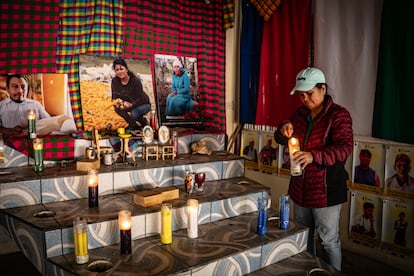
The murder, she says, was a devastating blow. “It was shocking and infuriating. We couldn’t believe that defending water, the forest, the land could be treated as a crime punishable by death.” She received the call in the early hours of the morning. “It seemed impossible that something like that had happened.” But the crime did not paralyze the organization. “They wanted to silence Copinh’s voice, and they couldn’t. They thought that by killing Berta the struggle would stop, but we’re still here.” Hernández speaks of “the planting”: “We buried her body, but her spirit is with us. The seed grows every year.”
Ten years later, she acknowledges that it hasn’t been easy. “It has been a hard period, full of threats and stigmatization. They call us troublemakers, stone‑throwers. But when the authorities don’t listen, we have to take to the streets to make our voices heard.” Despite fear and pressure, Copinh remains active in defending Lenca territory. “We can’t stay silent. The struggle continues because our rights continue to be violated.”
Epilogue. A saga of strong women
María Austra Bertha Flores López was born in 1933 in La Esperanza, at a time when women in Honduras could not vote and politics was an exclusively male domain. Decades later, she became the first woman to lead a municipal government in the country. “They thought we were only good for giving birth and cooking,” she recalls. “We proved we could do much more.”
We are in her home in La Esperanza, a corner building now guarded by police. The authorities even ordered a booth to be built for the officers right in front of the house. The guard on duty receives us and opens the door to a porch with a garden. Inside, María Austra waits, smiling, ready to tell the story of a lineage of women fighters.
She organized a women’s front at a time when political participation by women was seen as an act of defiance. She traveled through communities, rallied other women, and, together with a group of six or seven, managed to win the mayor’s office in La Esperanza. She was re‑elected and later became a member of the National Congress. Her leadership was not born in political halls but in community work. She was a nurse and midwife — the first in the province. She says she assisted more than 6,000 births. That closeness to the families of Intibucá gave her a symbolic authority that broke down resistance. “The men accepted me because they knew my work,” she says.
Among the little girls who accompanied her on those political trips was her youngest daughter: Berta Cáceres. “She always came with me to the communities. I think that’s what led her to become a leader,” she says.
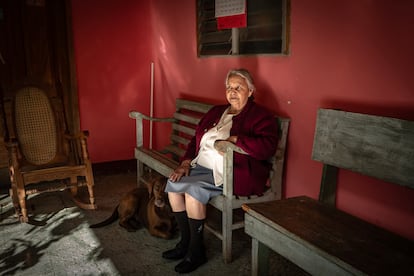
Ten years after Cáceres’s murder, the Lenca leader has become a global symbol of environmental and Indigenous rights defense. But in her mother’s home, memory is far less abstract. “For me, Berta didn’t die. Berta multiplied,” Flores says. “She defended Mother Earth and the rivers, especially the Gualcarque, which is sacred to our people,” her mother adds from the small living room of her house in La Esperanza — a space filled with memories and portraits of political ancestors, where she keeps the prestigious Goldman Environmental Prize (known as the “Green Nobel Prize”) that Cáceres received in 2015 for her fight against the Agua Zarca dam. In 2021, she was also posthumously awarded the Sakharov Prize for Freedom of Thought.
There is one place in this house, however, where Flores refuses to go: across a beautiful interior garden lies the activist’s bedroom, which her mother has not entered since the day of the crime. “I can’t go in there,” she says, her voice breaking. “It’s inconceivable that those who planned that murder are not in prison,” Flores insists. “Only the ones who carried it out.” For María Austra, her daughter’s greatest victory was helping isolated Indigenous communities organize and recognize their rights to land, water, and education. “They weren’t beasts of burden. They had rights,” she says.
The story of these two women spans nearly a century of struggle: from women’s political exclusion to Indigenous territorial defense; from the first woman mayor in a conservative country to the activist who confronted business elites and the military. “What matters,” the mother insists, “is that the struggle continues.”
In Intibucá, where María Austra shattered the first glass ceiling with her election as mayor and Berta challenged a national extractive model, the legacy is not only familial. It is political. And 10 years after the murder, it remains unfinished. Bertha Zúniga — daughter and granddaughter — keeps it alive. “For us, this crime represents the persecution and violence faced by those who defend territories and rivers, especially Indigenous peoples in a country where racism and discrimination are deeply rooted,” she says. “If there is no accountability, even in such an emblematic case, the criminal structures continue to operate.”
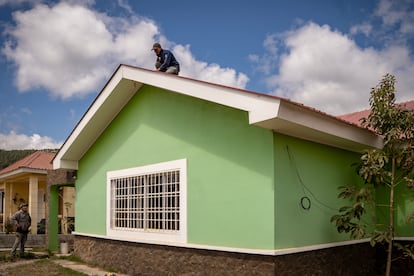
A decade after the crime, Zúniga says they do not live paralyzed by fear, but they do live with indignation at democratic backsliding and the rise of narratives that deny the climate crisis and environmental rights. “We continue to demand justice. Honoring my mother’s memory is also defending the right of our peoples to a dignified life,” concludes the heir to a lineage of women who have fought for justice.
Sign up for our weekly newsletter to get more English-language news coverage from EL PAÍS USA Edition