
The battle of the Chilean farmer who swears he won a multi-million lottery in 2018 — but then ruined his ticket
Javier Zapata stars in the upcoming Netflix documentary ‘Millionaire,’ which tells the real-life tragicomic story of Kino No. 2049
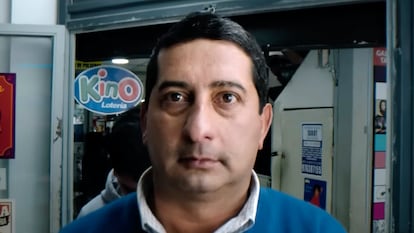

It was the end of March 2018 and the news was spreading throughout Chile. Someone had won the Kino lottery, one of the most popular betting games in the South American country — but no one knew who. The prize was enough to change anyone’s life: a number of Chilean pesos equal to $2.5 million at the time. Days passed and anxiety mounted in local coverage of the matter: “Search for Kino winner: they’re a month away from losing their prize”, ran one headline. Then, on April 6, 40-year-old Javier Zapata, a farmer from Los Ángeles, a city located 310 miles south of Santiago, said he had the winning ticket. Only, when he went to claim the money, the stub was in such bad condition — it had wound up in his wood stove, and then his daughter had thrown it out — that he was unable to prove its validity. In fact, he’s still trying.
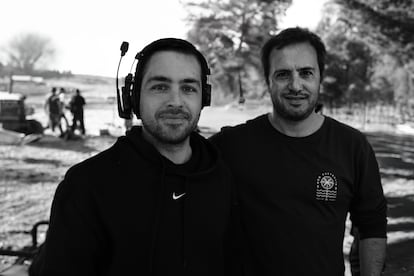
This journey from joy to anguish of seven years ago, as well as the legal battle that continues in Chilean courts, is the focus of Millionaire, a documentary directed by brothers José and Felipe Isla and produced by Gran Montana and the Kumelén Foundation. It stars Zapata, plus his family, friends and acquaintances from Los Ángeles. It premieres on Netflix on August 28, and tells of Zapata’s odyssey to recover his prize, even as he continues laboring as a farmer, rising at dawn every day.
Zapata filed a lawsuit with the city of Concepción’s civil court in 2022 and it was dismissed two years later, in July 2024. That failure, at first, was devastating. “While the claimant states that the accompanying ticket corresponded to the Kino No. 2049 lottery on the date of March 4, 2018, the accompanying ticket is an illegible, partial, and deteriorated document that at first glance, does not allow for verification of the circumstances attributed to it, those being that it is a bet attached to the No. 2049 lottery.”
The decision was covered by the Biobío province newspaper La Tribuna, which had followed the ups and downs of Zapata’s quest, in an article titled: “The dream is over: Court rejects farmer’s claim for millionaire Kino prize.”
Still, the case is under review at the Concepción appeals court, a fact that Kino underlined on Tuesday in a public statement published on the eve of the premiere of Millionaire. That statement was accompanied by an image of Zapata’s ticket to make clear that its combination of numbers is not visible, nor are its security code, ticket number, lottery date, bar code, and the value of the bet that was placed.
“They said he was living large”
The story of Zapata, who was not the only one to attempt to claim the 2018 prize, attracted the attention of José and Felipe Isla four years later. Previously, they’d seen the story on TV news programs, where the farmer had often been interviewed about his version of the story. At the time, Zapata had also spoken of related misadventures, such as having found the lottery office closed the first time he brought his ticket in.
But it was during the Covid pandemic that José and Felipe were able to take a step back and consider the case objectively. The farmer had continued to appear in the media, every time reiterating his claim that he was the true winner of the lottery.
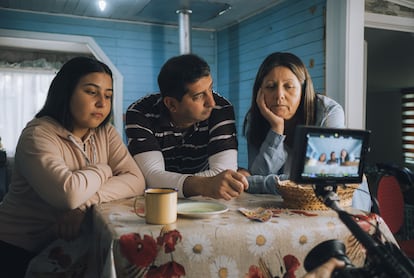
Contacting Zapata turned out to be challenging, the Isla brothers told EL PAÍS in a video call. It took a month and a half to meet him. In Los Ángeles, Zapata’s story is very much alive, and several of the town’s inhabitants and his friends shared their impressions with the documentary team. There was also no lack of rumors about what had happened to him. “A few journalists were saying that he was living large in Puerto Rico, like a millionaire,” says Felipe with a smile. He adds, “We said, ‘OK, the documentary is going to be more expensive to make.’” But the true story turned out to be much different. When they finally arrived at Zapata’s farm, he received them alongside Blanca Vásquez, his wife, and their daughter Mariela, with meat on the grill. He began to tell them of his journey.
José says that at this point, they weren’t just getting to know Zapata, their film’s lead, but also “a rural story that represents that of thousands of Chileans. That world of sacrifice, where one gets up early to get to the end of the month, of working with animals, of milking the cows and going out to sell cheese. It’s something that you don’t see here in the city: these are people who get up every day at 4:30 a.m.”
The documentary, whose executive producers are Daniela Valenzuela and Ainara Aparici, follows Zapata’s legal battle for the prize he never received. “This is a universal story. Who hasn’t dreamed of waking up one day, winning a prize and forgetting all their problems, being in good health, having access to housing and maybe taking a trip? It’s something we all fantasize about,” says Valenzuela.

In seven years, much has happened to Zapata, which he relates in Millionaire. At one point, under financial pressure, he had to sell his cows, close down his dairy farm, and start over. “We were seeing how the way he worked changed,” says José.
The team spent three years on the documentary, filming testimony from the farmer’s family, his childhood friends, a former Kino administrator, and others, like a former co-worker of Zapata from back when he was a security guard. “They’re people from his environment who are related to what happened to him because of Kino,” says Valenzuela.
Their stories speak to the initial joyful moment, and of what happened afterwards in Zapata’s life, all of it tied to that lottery ticket. “The story also has the component of having taken place in the countryside, where everyone has their own version of what happened. Everybody puts their own spin on what they say, and sometimes, they exaggerate. That’s very Chilean, very rural,” says Felipe. He also mentions the tone in which the interviewees speak: “Given that it’s a tragedy, they tell it with a lot of grace.” José adds, “And that tone was what guided us. Sometimes they speak in a joking manner, and at a certain point, it becomes a tragicomedy.”
Sign up for our weekly newsletter to get more English-language news coverage from EL PAÍS USA Edition









































