
Europe seeks to open a new era for antibiotics 80 years after industrial penicillin production
The Sandoz plant in Kundl opened the era of mass production of these drugs in 1946; today this manufacturing is at risk on the continent because of the low prices of Asian competition
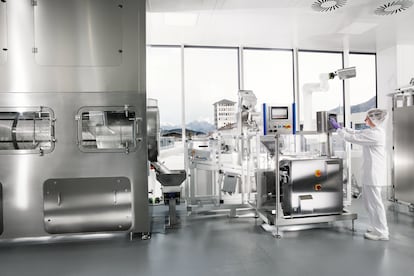

In 1946, in a Europe devastated by World War II, a small, abandoned brewery in a valley of Austria’s Tyrol region was converted into an antibiotics factory. Michel Rambaud, a chemist and French officer with the Allied occupation forces, devised the project based on the fact that the fermentation process by which yeasts make beer is, in essence, the same process that Penicillium fungi use to synthesize the active ingredient in penicillin. The change of use for the facilities opened a new era: the start of industrial penicillin production saved millions of lives and helped drive a rapid economic recovery across the continent, powered partly by the pharmaceutical sector.
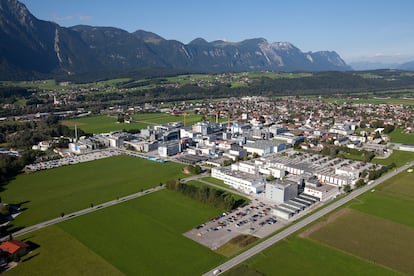
Eight decades later, Sandoz’s factory in Kundl, located 80 miles west of Salzburg, illustrates the new historical dilemma facing the European Union. The continent’s embrace of free-market policies has largely shifted drug production to Asia, and dependence on imports — cheaper but often supplied through fragile chains — has produced crises such as the supply problems seen during the COVID-19 pandemic and a shortage of pediatric antibiotics three winters ago.
“This is the last major vertically integrated antibiotics manufacturing center in Western Europe. We control the entire process, from the active ingredient [produced by Penicillium strains] to the finished product. If this plant disappears, once it’s gone it will be gone forever,” warns Richard Saynor, the company’s chief executive. Sandoz specializes in generics and biosimilars.
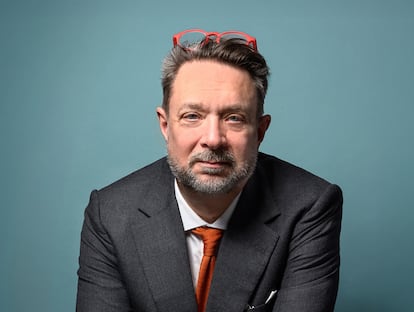
The company’s CEO spoke with EL PAÍS at the Kundl facilities on the day the firm held an event to mark the plant’s 80th anniversary last Thursday, to which this newspaper was invited. The message Sandoz and the rest of the sector have been sending for years is clear: either governments are willing to pay more for off-patent medicines — making their production viable on the continent — or Europe risks forever losing its strategic autonomy over a product that is key to citizens’ health.
Jaume Puig Junoy, a professor at UPF Barcelona School of Management and a leading academic in the sector, admits the debate is profound and without easy solutions on the horizon: “Greater independence is a desirable objective. But it has major implications for key policies such as industrial policy, the sustainability of health systems, procurement systems, and free-market and competition laws... If we want to preserve these pillars while also justifying public support and promoting local production, we face seemingly contradictory goals. It is very complex to define the criteria that make them compatible and under what conditions.”
There is an example Saynor and other companies repeatedly use: today it is cheaper to buy an essential generic medicine at the pharmacy than to buy a coffee at a café. “We invest hundreds of millions of euros in facilities so that these products continue to be made here, and yet governments only want to spend pennies to buy cheaper. Those are two things that are incompatible in the long term,” he laments. The example of Roche, which has closed its historic production lines in Basel, Switzerland, to replace them with offices and research labs, is the most recent episode of the “silent flight” of manufacturing from European soil.
Differences in labor and environmental legislation, as well as energy costs, are the main reasons why producing a box of amoxicillin in Europe is substantially more expensive than buying it in Asia. Although companies do not provide concrete data, industry estimates range from 20% to 40%, and in some cases even higher. The EU’s new Wastewater Directive, which under the principle of “the polluter pays” places much of the cost of new purification systems on pharmaceutical companies, is the latest initiative angering the sector. The industry also points to the “state subsidies” that allow China to flood the market with cheap raw materials that India then processes and sells to Europe as active pharmaceutical ingredients, against which European industry can barely compete.
Beatriz González López-Valcárcel, a specialist in health economics and a full professor at the University of Las Palmas de Gran Canaria, describes how these differences lead to the key question: “Competition drives prices of antibiotics and other off-patent medicines toward marginal production cost, which is lower in Asia. So, without other measures, the final options would be two: either bar Asian products at the cost of higher prices in Europe, or accept that the European industry stops producing them.”
The ongoing overhaul of EU pharmaceutical legislation, the largest in its history, seeks formulas to avoid having to face that dilemma. All this is happening in a complex, changing international context in which Donald Trump’s presidency in the United States has shaken the sector with protectionist proposals.
The challenge is enormous, admits Nicolás González Casares, a Socialist member of the European Parliament and member of the Public Health and Industry committees. “On the table are proposals such as introducing public procurement requirements that prioritize security against shortages and compliance with certain environmental standards,” he explains. One way to secure supply would be to reserve part of public tenders for companies with integrated supply chains on European soil. Another is the so-called ‘Netflix fee,’ a kind of subscription that would pay companies for having production capacity and stock available, regardless of the number of units ultimately sold. All this would allow companies manufacturing in EU countries to compete on better — or, as Saynor puts it, ‘fairer’ — terms against Asian producers.
“The ultimate goal is to have secure supply chains at prices that remain affordable. Manufacturing in Europe should be recognized and linked to incentives, but always taking into account the sustainability of national health systems,” González Casares continues.
Putting these measures into practice without causing unwanted side effects is another difficulty the EU faces, experts warn. “It would make no sense, and would contravene European law, to allocate public resources to measures that prove merely protectionist and create an oligopoly controlled by local companies,” they say.
Another area requiring surgical precision is procurement. After all, globalization has gone far beyond active ingredients, and even the Kundl plant uses precursors from Asia in some of its products. These raw materials are sometimes no longer produced in Europe, often because of their enormous environmental impact. In supply chains that are so long, complex and interrelated, “it is often difficult to know where the boundaries are” between genuinely European production and just another link in the chain, Puig Junoy concludes.
Sign up for our weekly newsletter to get more English-language news coverage from EL PAÍS USA Edition









































