
US redefines the food pyramid in line with the ‘Make America Healthy Again’ movement
The Department of Health, headed by Robert F. Kennedy Jr., has introduced new dietary guidelines that prioritize the consumption of protein, fruits, and vegetables
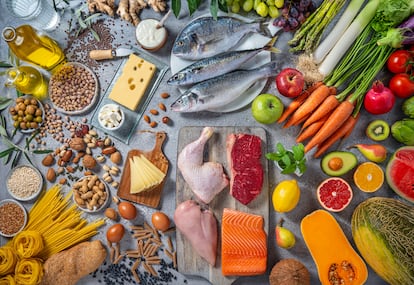

The Department of Health and Human Services has unveiled a new food pyramid that aligns with the ideals of the Make America Healthy Again (MAHA) movement, a variant of President Trump’s agenda, which has gained new political weight under the leadership of Secretary Robert F. Kennedy Jr.
As part of the Eat Real Food campaign, the government updated dietary guidelines to prioritize protein, healthy fats, fruits, and vegetables, and reduce consumption of ultra-processed foods, which Kennedy has previously identified as a leading cause of chronic disease.
In 2011, the U.S. Department of Agriculture replaced the traditional food pyramid with a plate divided into portions. The agency has now opted to return to the pyramid format, this time inverted, featuring an equal distribution of proteins, fats, fruits, and vegetables, and a smaller section for grains and cereals. “Thanks to the bold leadership of President Trump, this edition of the Dietary Guidelines for Americans will reset federal nutrition policy, putting our families and children first as we move towards a healthier nation. At long last, we are realigning our food system to support American farmers, ranchers, and companies that grow and produce real food”, Secretary Brooke Rollins said.
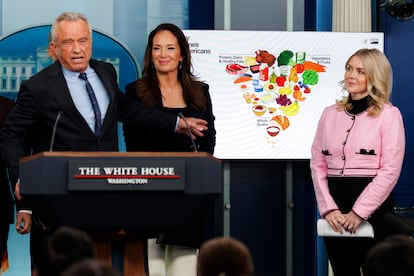
The Department of Health’s statement also pointed to past administrations for presumably prioritizing low-quality, highly processed foods and pharmacological interventions over prevention strategies. The shift in dietary guidelines consolidates the political relevance of the MAHA wave, a movement promoted on social media by mothers and wellness activists who have embraced causes such as “clean” eating, reducing ultra-processed foods, skepticism about mandatory vaccines, and distrust of the pharmaceutical and food industries.
Following the announcement, influencers aligned with the MAHA movement, such as Vani Hari — who has 2.3 million followers on Instagram — celebrated the new measure taken by the U.S. government. “The new food pyramid. WOW. It’s like it was made for us”, she wrote on her account, The Food Babe.
New US Dietary Guidelines recommend:
- Prioritizing the consumption of high-quality, nutrient-dense proteins at every meal. Between 1.2 and 1.6 grams per kilogram of body weight per day is recommended, whether from animal sources — such as eggs, poultry, fish, and red meat — or plant-based proteins, including legumes, nuts, seeds, and soy.
- Avoid ultra-processed foods, especially packaged, prepared, or ready-to-eat products high in salt or sugar, as well as sugary drinks such as soft drinks, fruit drinks, and energy drinks.
- Avoid added sugars and non-nutritive sweeteners, and eliminate their consumption in children under four years of age.
- Prioritize fats from foods such as meat, poultry, eggs, fish, nuts, seeds, whole dairy products, olives, and avocados, and cook with natural, nutrient-dense oils such as olive oil.
- Prioritize the consumption of fiber-rich whole grains and significantly reduce highly processed refined carbohydrates such as white bread, flour tortillas, and cookies.
- The guide also suggests that people with certain chronic diseases “may experience improvements in their health” by following diets lower in carbohydrates.









































