
From Synanon to influencers: The dangerous return of humiliation as a cure for drugs
The vulnerability of addicts makes them easy targets for recruitment by cult-like organizations

In 1958, Charles Dederich, a recovering alcoholic, launched a program for addicts in Santa Monica, California, based on the Synanon Foundation. Those admitted had to cut their ties with family and friends and faced shock therapy that included public humiliation. “The idea was to destroy people in order to rebuild them, and in the 1950s and 1960s, it was very successful,” says Jaime del Corral, director of the Addictions Unit at the San Juan de Dios Clinic in Madrid.
Initially, the plan was to prepare people to return, cured, to society. But Dederich decided that healing was impossible and that members should never leave the program. Synanon gradually became a cult, separating children from their parents and providing millions in profits to its founder, who began to view his organization as a tool for changing society and encouraged violent activities. Scandals, legal issues, and bankruptcy led to the organization’s dissolution in 1991.
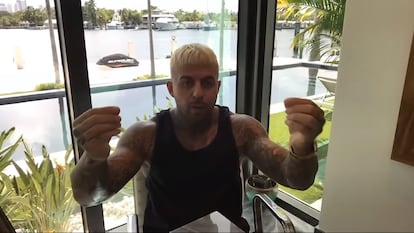
In the age of social media, the humiliation techniques popularized by Dederich are back in fashion. Amadeo Llados, a former cocaine addict, is one of the most famous exponents of these confrontation techniques. In his videos, he encourages people to abandon their friends because they’re trash, calls those who attend his talks useless, and recommends his followers abandon their children. His histrionic and self-parodic style is imitated by other influencers — former addicts like himself — who seek to confront drug addicts, blaming them for their own problems and selling them their services to help them break free from their addictions.
The idea that overweight people or addicts lack willpower, through their own fault, is so deeply rooted that it seems immune to the vast amount of information that refutes it. In the case of addictions, the majority of people decide when to consume and when to quit, but for some, the choice is not possible. “Eighty percent of people use drugs or alcohol, but few become addicted — only between 5% and 10%,” explains Pablo Vega, director of the Tetuán Addiction Help Center in Madrid. “Addiction is a brain disease like any other, like anxiety or psychosis, and you can’t blame a person for having a vulnerable brain or attack them, because that increases the likelihood of relapse.”
Vega also recommends that addictions, like other illnesses, be treated by specialists and in interdisciplinary groups. In the late 1980s, in response to the crisis caused by heroin and AIDS, a parallel network emerged through NGOs and associations with former addicts, but, as Vega explains, the context has changed, and there is a healthcare network that can address this problem. “We need to normalize addictions from a health perspective, and it wouldn’t occur to us that the best idea for treating a diabetic is to go to a person with diabetes,” he explains. “Self-help associations are another matter, and they help us understand the process with people who have suffered from the disease, but that’s not the treatment.”
Whatever the initial intention, the discourse of humiliation against addicts can become, as Dederich found, a successful recruitment system for clients and followers devoted to a cause, vulnerable due to feelings of guilt, isolated, and completely devoted to the leader. “There’s a rhetoric of us versus them, with repetition of simple ideas, with a lot of emotional weight, which are easily assimilated and which we can see in cult narratives,” says Miguel Perlado, a psychologist specializing in cults. “In groups dedicated to rehabilitation, there’s a risk of cult drift because these are very vulnerable people, who put themselves in the hands of others, who help them break their addiction with powerful discourses, group work, and 24-hour assistance,” he points out. “I’ve treated cases of alcoholics and people with similar problems who have ended up chained to the organization,” he emphasizes.
“When a person is humiliated, it can create an attachment to authority, something similar to Stockholm syndrome or the trauma-based attachments suffered by some victims of gender violence,” says Del Corral. “People with addictions develop a high vulnerability to rejection and sensitivity to acceptance, and they form quick connections that some organizations or individuals take advantage of,” the psychiatrist continues. “In a drug unit, what we do is distance you from anything that reminds you of drugs and then empower your life, each person’s own life, so that they can make peace with their surroundings, not get hooked on us. There are people who are so unwell that it’s enough for them to simply not consume, even if they haven’t rebuilt anything and are hooked on a person or an institution.”
The road to overcoming addiction is long, and relapses, as with other disorders like depression, are very likely throughout life. Therefore, the aggression or stigma caused by assigning blame can have harmful effects in the long run, even if it may work for some at first. “One way to detect proposals that aren’t going to be helpful is maximalism and simplification. The indicators for addiction rehabilitation are modest, so be careful if they offer very high success rates,” Perlado points out. “When you’re feeling bad because of addictions and the anxiety and depression they trigger, when you see an open door, you go in, but it may be the wrong one.”
Sign up for our weekly newsletter to get more English-language news coverage from EL PAÍS USA Edition









































