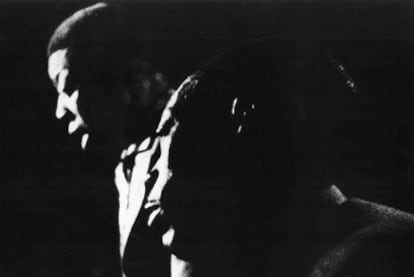
Catalyst for a cultural clampdown
Now 50 years old, the legendary Cuban short film 'PM' incensed Castro and triggered the beginning of artistic repression
A 14-minute movie so infuriated Fidel Castro that it triggered cultural repression in Cuba, where anything that displeased the Comandante was simply eliminated.
It happened half a century ago. The documentary was entitled PM and it dealt with Havana's nightlife. It was made by Orlando Jiménez Leal with support from Saba Cabrera (the younger brother of Guillermo Cabrera Infante, author of the celebrated novel Three Trapped Tigers and a renowned film critic.)
Both men worked in television. The Revolution had raised the alarm ahead of an imminent US invasion of the island, and Orlando, then an 18-year-old cameraman, was sent out on assignment to get shots of people patriotically readying themselves to defend their land against the invader.
Orlando was sent out to get patriotic shots, but returned with the exact opposite
Cameras were left rolling on scenes filled with rumba music and drinks
"Here is a Cuban short that is a real jewel of a film," wrote one critic
After admiration came censorship, which already had its finger on the trigger
Orlando returned with four minutes of footage that showed the exact opposite. Havana had not been taken over by fear or by patriotic feeling, the filmmaker recalls. "In fact, a black woman suggested, 'Hey boy, instead of [the Revolutionary motto of] "Homeland or death," why don't we say 'Homeland or minor wounds' instead?'"
The material went straight into the trash can, but it gave Orlando an idea for a longer piece on Havana's true nightlife. At the time, the cultural climate in Cuba was dominated by Lunes de Revolución, a literary supplement that came with the Communist newspaper Revolución and was edited by Guillermo Cabrera Infante.
With support from Cabrera Infante's brother Saba, the cameras were left rolling, with no lights, in the middle of night scenes filled with rumba music and drinks. It was December 1960. The following month, both men edited the footage, and noticed that "somebody was spying on us."
It was Alfredo Guevara, who remains the strongman of Cuban cinema to this day. PM (short for Pasado Meridiano or, post meridiem) was released on television to good reviews, says its director. The cinematographer Néstor Almendros wrote in the magazine Bohemia: "Here is a Cuban short that is a real jewel of an experimental film. [...] The working method could not be any simpler: it is spontaneous cinema, the kind of free cinema that is on the rise everywhere in the world."
But admiration was followed by a bullet of censorship, which was ready to be fired. In order to get the film released in theaters its authors needed approval from a commission that still followed laws passed under the former dictator, Fulgencio Batista. And that is where they were stonewalled.
"The movie is not only banned, but it is also being seized," said an official who was following orders from Alfredo Guevara. The ensuing commotion swept away any dreams of freedom that the group led by Guillermo Cabrera Infante might have entertained.
But it was a long and rocky road before the fledgling culture born out of the Revolution was effectively quashed. One of the most noteworthy moments came during the trial at the National Library, where Castro pronounced a speech that included the famous line "Con la Revolución todo, contra la Revolución nada" (For the Revolution, everything; against the Revolution, nothing).
PM triggered the exile of Guillermo Cabrera Infante, his brother Saba, Orlando Jiménez Leal and Néstor Almendros. Miriam Cabrera Infante, Guillermo's widow, recently said: "It was done in order to put an end to Guillermo and the group behind Lunes de Revolución."
And why? Orlando Jiménez Leal believes that their own persecution was used to send out a message: everything had to be revolutionary, or at least apparently so. This movie "did not glorify man according to the esthetics of Socialist realism; instead, what we were doing was a kind of Socialist surrealism. They found it irreverent. PM simply could not be." In a way, considering later events, this early episode of cultural censorship was a dress rehearsal for things to come.
"What happened to Heberto Padilla [a poet who was jailed for criticizing the regime] was, so to speak, a remastered, color version of what happened with PM. That was the beginning of the Diaspora."