
Wanted: Oil tankers at any cost as tensions in the Gulf trigger a global scramble
The closure of the Strait of Hormuz and soaring freight rates have intensified competition among countries and shipowners to secure their own tanker fleets. A second-hand vessel can now cost up to 40% more than a newly built one
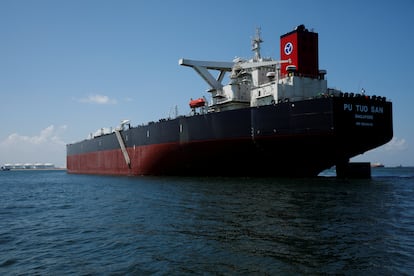

The war in Iran is reshaping global shipping, as the closure of the Strait of Hormuz, a vital artery that until March carried 20% of the world’s hydrocarbon supply, forces the industry into uncharted territory. Oil and gas are still trickling out of the Persian Gulf, but only through tactics that would once have been unthinkable, such as switching off supertankers’ satellite tracking systems or transferring cargo at sea, and at exorbitant cost. Sailing through Hormuz is becoming increasingly risky and expensive, and with no end to the disruption in sight, owning an oil tanker has become the key to moving a commodity the world still desperately needs.
The prospect of owning ships rather than chartering them is attracting growing interest from oil-producing nations and has triggered a fierce race to acquire tanker fleets. For crude exporters, control of tanker capacity has become a strategic priority, despite the high prices and limited supply in a market dominated by a handful of operators. Tanker owners and shipping companies are reaping windfall profits, as vessel values soar alongside freight rates.
In late August, the chief executive of France’s TotalEnergies estimated the cost of transporting oil through Hormuz at $20 million per voyage. Shipowners now face substantially greater risks if they choose to operate in the area, driving up both freight rates and marine insurance premiums. The effect has been particularly pronounced in the market for Very Large Crude Carriers (VLCCs), the giant tankers capable of carrying around two million barrels of crude and designed for long-haul routes, where prices have surged along with demand.
“The price of second-hand oil tankers has surged since the closure of the Strait of Hormuz, and some used vessels are now valued more highly than new ones because it would take two to three years to build a new ship,” Erica Tsirikou, a shipping markets analyst at the British commodities and energy consultancy Argus, said in an email.
According to Tsirikou, a second-hand VLCC is now worth about $182 million, compared with roughly $130 million for a newbuild. Meanwhile, second-hand Suezmax tankers, which are designed to transit the Suez Canal, and Aframax vessels, which serve shorter routes, are valued at around $130 million and $95 million, respectively. By contrast, newbuild prices stand at about $89 million for a Suezmax and $75 million for an Aframax.
“There is fierce competition to acquire these second-hand tankers, which has pushed sale prices sharply higher,” she added.
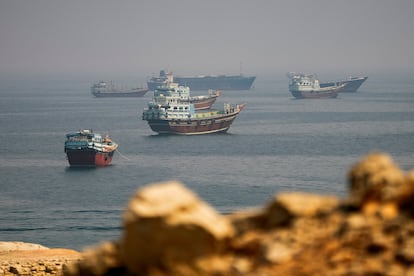
Waiting two or three years for a new tanker to be built is a luxury few can afford, especially for those hoping to capitalize on today’s elevated oil and freight rates. Brent crude has climbed back to around $95 a barrel, while the cost of transporting oil continues to soar. According to Jorge Molinero of commodities consultancy Sparta, the freight rate for a VLCC operating on a Middle East-to-Asia route has jumped from $5.4 million to more than $36 million.
“Ships have always had a strategic dimension, but the Hormuz crisis has heightened it considerably, particularly in the tanker sector. When the ability to transport one’s own oil can no longer be taken for granted, owning the vessels that carry it ceases to be a purely commercial decision,” said Veson Nautical, a shipping technology and maritime data company. “Shipowners are reluctant to sell vessels that are generating strong profits, which means fewer ships are available on the market and prices are being pushed even higher.”
Niels Rasmussen, chief shipping analyst at the Baltic and International Maritime Council (BIMCO), notes by email that “since the beginning of the year, the average price of a five-year-old tanker has risen by 35%. Prices for supertankers [VLCCs] have increased by nearly 40%.”
As shipowners hold on to their tankers, shipbuilders are facing growing demand from both oil-producing nations and major importing countries. “Shipyards are overwhelmed with orders for merchant vessels. This is a highly concentrated market dominated by a small number of players,” said Jaime Rodrigo Larrucea, professor of maritime law at the Polytechnic University of Catalonia and holder of doctorates in both law and nautical engineering.
The South Korean giant Sinokor further cemented its position as the world’s largest operator of supertankers by acquiring dozens of VLCCs earlier this year, before the outbreak of the war in Iran. Since then, it has chartered many of those vessels at significantly higher rates.
Veson estimates that Sinokor has acquired around 70 vessels so far this year. The United Arab Emirates has also been buying tankers through ADNOC Logistics, the shipping and logistics arm of state-owned energy giant ADNOC. Since the end of June, the Emirati company has purchased nine VLCCs for a combined value of $1.1 billion, further driving up prices for the giant crude carriers.
“Shipowners placed at least 140 new tanker orders in the first half of 2026. Chinese owners have accounted for most of the orders over the past 12 months, while Greek shipowners remain the most active buyers,” said Erica Tsirikou.
Chartering supertankers has become both a strategic necessity for oil-producing nations and a highly profitable business opportunity for shipowners. Financial investors are also showing growing interest in a sector that has traditionally been dominated by a small group of players and requires vast amounts of capital.
“High freight rates are making shipping assets increasingly attractive to investors outside the industry’s traditional ownership base,” Veson said. “Any prolonged period of strong returns tends to attract new attention, although turning that interest into significant capital investment usually takes longer than the headlines suggest.”
Sign up for our weekly newsletter to get more English-language news coverage from EL PAÍS USA Edition









































