
Back-to-school costs hit family finances amid tariff fears
Many are planning ahead to dodge higher prices at the start of classes
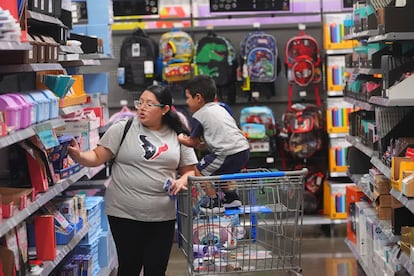

One of the emails that parents dread most during summer months is the list of school supplies that will be required for their children’s classes. Sometimes, it coincides with having to buy a new computer, clothes and shoes, in addition to tuition payments and monthly preschool fees. All this makes back-to-school the second-largest annual expense for families.
The annual ritual is further complicated this year by a combination of cumulative price increases over the last few years and expected price hikes due to tariffs. The Bureau of Labor Statistics (BLS) has found that prices for educational books and materials for schools, colleges and universities were already 9.4% higher in May as compared to last year.
The overall inflation rate in July was 2.7%, but a closer look at the data used to calculate that average shows that the cost of returning to school this year increased more than that percentage in many areas. Furthermore, the figure was released before the latest round of tariffs imposed on August 7 came into effect.
Statistics from the BLS show that, although shoes are not much more expensive than last year (0.2%) and girls’ clothes has gone down in price by 1.9%, the cost of boys’ clothes has risen by the same percentage. At the same time, people with children in preschool or kindergarten are facing 5.7% higher matriculation and school fees.
Fearing larger price increases in the short term, more families than ever, at 67%, planned ahead for these expenses in July, as reflected in statistics from the National Federation of Independent Businesses (NFIB). Other surveys reveal that, though not all prices have risen, there is potential for higher costs when it comes to purchasing computers and clothing, according to estimates from the Yale Budget Lab, which has led to people making their purchases earlier this year.
There has also been a collective tightening of the belt when it comes to other regular household expenses. A Credit Karma survey revealed that while last year, 34% of parents used credit to ensure that their children were prepared for the school year, this year 44% will do so. In addition, one in four families has no savings set aside for such expenses.
The NFIB has observed growing interest from families in finding the best prices, with many turning to discount stores and summer sales to cover the essentials. Dollar General is selling school necessities like notebooks and pencils for under a dollar, as it did last year. Target and Walmart launched their sales campaigns in July, which have continued online and in physical stores. Helen Murphy, vice president of communications at Goodwill in New York, explains that while bargain hunters aren’t the only ones shopping at these stores, they have noticed an increase in transactions.
Despite the discounts, retailers expect spending to rise 1.5% above last year’s numbers to $39.4 billion — but that is because more consumers are stocking up on items that are costing more, not because purchases per family are increasing. That figure is expected to be below an average of $858, down 1.9% from the previous year. Consulting firm Deloitte expects spending per child to fall for a third consecutive year.
But the financial burden of going back to school doesn’t end when kids are stocked up for class. The first day of school is just the beginning of ongoing extracurricular costs that aren’t always covered by the school. Half of all parents are concerned about how to pay for sports or other activities, which in turn has an impact on their spending in other areas like childcare. According to Credit Karma, up to 32% of parents are considering leaving their jobs to be with their children after school, or cutting back on their working hours to do so.
Sign up for our weekly newsletter to get more English-language news coverage from EL PAÍS USA Edition









































