What we can still learn from the South Bronx fires: neighborhoods reduced to ashes
Around 5,000 entire buildings burned down between the 1970s and 1980s in New York’s most depressed areas, but the real causes were not investigated for many years. Today luxury apartments have taken their place
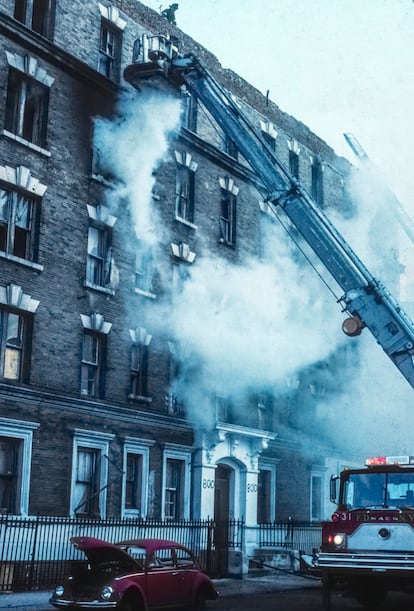

The Ortiz family slept fully dressed in case their building caught fire that night. The Ortizs, or the Brennans, or the Washingtons — it didn’t matter, it could be any surname, it could be a surname just like yours, exactly like yours. They lived in the South Bronx, in nearly century-old brick buildings of four, five or six stories with no elevators, and they went to bed in the clothes they would wear the next day, with their shoes on — especially the children — because going down three flights of stairs in socks on a burning stairwell could mean the difference between living and dying. Mothers left a bag by the door with documents, a family photo, and whatever cash they had, always the same ready bag, like people who live near a war front. Because, in a way, New York’s decade of fire was a war front.
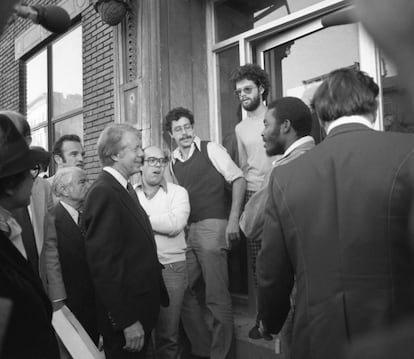
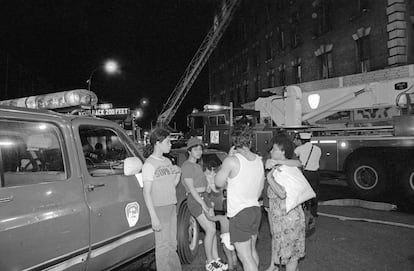
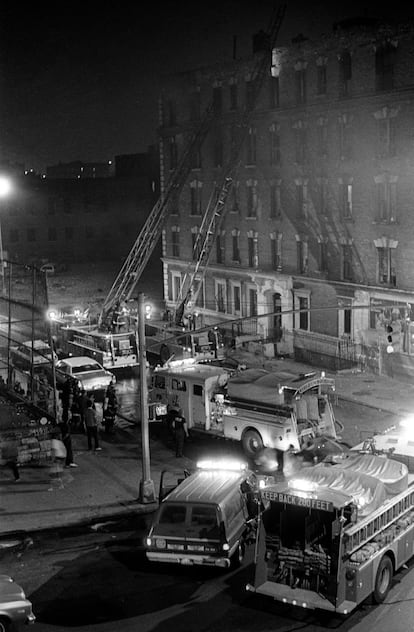
From 1970 to 1980 more than 5,000 entire buildings burned in the South Bronx; the area went up in flames with the regularity of the Sun and the Moon. There were days with three fires, five fires, nights with more than 15 or 20. Children played in the fire hydrant streams until dusk and then learned to read smoke the way they learned multiplication tables. You smelled the smoke and could tell if it was near or far, whether you could just look out the window or had to go downstairs. There were more than 200,000 fires in 10 years, some 30,000 to 40,000 a year in the worst years. A thousand in a single night — the night of July 13, 1977, the great blackout. When the whole city suddenly went dark, a thousand homes burned in the Bronx. In a district of a city in the richest country on earth, the official line was that the neighbors themselves, the Puerto Ricans and the Black people and the Irish still living there, set their own homes on fire out of vandalism, drugs, or some kind of self-destructive impulse that we poor people have. Newspapers reported it like a nature documentary. Look how they burn. Look how they enjoy it.
They didn’t like it, of course, and that wasn’t the cause of the fires. What had happened was much colder. In the 1940s the first migration wave from Puerto Rico arrived in a still-mixed Bronx, and people mixed and lived on the same stairs with Irish, Jewish and Black families. Then came the redlining maps that banks drew across the city to decide where loans would not be granted or where insurance for repairs would not be issued. They called it that way, redlining, and those lines discriminated between neighborhoods deemed worthy of survival and those that could be sacrificed to the logic of the economic machinery. In the 1960s urban renewal began — it improved New York in many places but also meant the displacement of tens of thousands of families from other neighborhoods — from Manhattan and Brooklyn — who could no longer afford rent and had to be rehoused in the oldest, weakest buildings in the Bronx. In 1964 the United States entered the Vietnam War and, a decade later, half the country was technically bankrupt, New York especially. The city cut back on public services, including fire department units. Do you know where it cut them? In the neighborhoods that burned the most. Twelve fire companies were eliminated from the South Bronx between 1974 and 1976. Earlier, they could get to a fire in 15 to 20 minutes; afterwards, by the time they showed up there was nothing left to extinguish.
So landlords did the math — a very simple arithmetic that turned fire into a financial asset. A building full of poor tenants with rent-control was worth nothing, while a burned building was worth the insurance money. They would hire someone, empty the apartment —because they were greedy but not murderers—, lit a match, and the owner collected more than the property would have yielded in 10 years of rent collection.
Almost a quarter of a million people lost their homes. Some say that half the borough’s residents ended up leaving. No one knows precisely, of course, because measuring it accurately would have meant admitting it. What was measured, years later, was the ash. In seven sections more than 97% of the buildings burned down. On Charlotte Street one in 30 survived. In Soundview, an entire neighborhood, only nine houses were left standing. Nine.
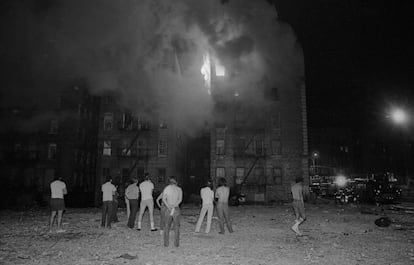
Vivian Vázquez Irizarry grew up in one of those houses, on one of those streets, on Leggett Avenue. For years she believed what everyone believed — that it was their fault, that something in their people, in their blood, had brought the fire. Later she grew up, went to the fire department archives, requested the records and discovered that more than half of those fires were not recorded anywhere. Administratively they did not exist. Half the neighborhood burned down and the paperwork said nothing had happened. Forty years after the fires, with a grown son, Vivian decided to tell everything. She picked up a camera and made a documentary called Decade of Fire, 75 minutes built from archival footage and home movies from her own family. It premiered at the DOC NYC festival in 2018 and PBS aired it the following year. “We didn’t burn the South Bronx,” Vivian says at one point in the film. “We were the ones who saved it.” She says it looking at her son, explaining to a young man why the city where he was born covered all that up, why she slept with her shoes on.
Vázquez Irizarry’s film ends in the present, and in the present those who didn’t leave, those who managed to rebuild their lives, are discovering that the neighborhood they saved is now desirable. On the riverfront facing Manhattan, glass towers with pools and views now rise where factories and dumps once stood, and in an old piano factory converted into apartments, rent can reach $3,500 a month in an area where the average was $850. So new people who can pay are moving in and almost no one remembers the Ortizs, or the Brennans, or the Washingtons, or those with a surname exactly like yours.
Sign up for our weekly newsletter to get more English-language news coverage from EL PAÍS USA Edition