
Eric Sadin: ‘AI reeks of death’
On November 30, 2022, the day ChatGPT was launched, Sadin couldn’t sleep a wink. The French philosopher, a leading voice in the resistance against runaway technological change, believes that artificial intelligence is a catastrophe that should have been banned: it threatens creativity, talent, and intellect — the very foundations of human civilization
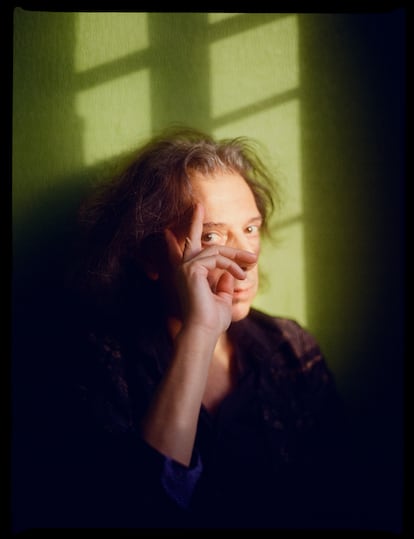

Éric Sadin gets up and paces around the living room of his Paris apartment when an argument excites him. His own voice urges him to do so. He has developed a critical body of thought, brimming with striking headlines and elegant analyses of the future, riding the philosophical and social thinking of the last century to arrive at a scathing conclusion across some 10 books: we have become idiots, and we are on our way to becoming even bigger idiots.
Far from being threatened by a supreme intelligence that will terrorize us, like Skynet from Terminator —“that’s the thinking of a retarded adolescent,” he interjects, still standing — we are being subdued by our own laziness, which will ultimately lay down its arms — intellectual and creative — to generative artificial intelligence.
Sadin welcomes us into his apartment in the Parisian neighborhood of Belleville. He has just baked three croissants and has a stack of papers with arguments laid out on the table where the interview will take place. A decade before the 2020 publication of The Age of Surveillance Capitalism by Shoshana Zuboff, Éric Sadin had already warned about the social control arising from digital technologies in Surveillance globale: Enquête sur les nouvelles formes de contrôle (or, Global Surveillance: Inquiry into the New Forms of Control).
His latest work is Le Désert de nous-mêmes (or, The Desert of Ourselves), a dark analysis of the future we are building. A place that existed beforehand in data and in the probabilistic framework that designed it. A place that reeks of death and of the past. And it all began on November 30, 2022, with the advent of ChatGPT. “That night I didn’t sleep at all. And I usually sleep like a baby,” Sadin explains as he sets the pastries on the table. The book, a bestseller in France, opens with a quote by Louis-Ferdinand Céline: “I can say that I saw the catastrophe coming.”
Question. So, did the apocalypse begin on November 30, 2022?
Answer. I usually sleep like a baby, but that day I didn’t sleep a wink. The days that followed were worse. All those people saying it was fantastic, super cool. I couldn’t understand how no one saw the civilizational catastrophe that was coming. It’s strange to observe a phenomenon like generative AI cloaked in such a veneer of modernity and practicality without analyzing the immediate, extremely serious consequences. And the longer we wait, the more serious it will become.
Q. You argue that it should have been banned.
A. From the beginning. But it’s the opposite of what happened. Sam Altman, co-founder of OpenAI, went on a speaking tour and heads of state rolled out the red carpet for him. The response, including France’s with Mistral, was to sign us up for this race toward the desert of ourselves. There are many empty and absurd words spoken about AI: “We will live in a better world.” “Everything will be easier...” Based on what? I analyze it based on principles such as sociability, dignity, human integrity, freedom, the expression of our faculties... and all of that will be destroyed. If we consider the current consequences and those that are being predicted, it is extremely serious.
Q. What will those consequences be?
A. There is an artificial intelligence that began to be developed in the 2000s. It analyzed real-world phenomena in real time and revealed results to interpret certain situations: Waze, the traffic app. It collected information that no human could gather.
Q. Well, that doesn’t sound too bad.
A. But it wasn’t just that. Waze also suggests one route or another. For the first time, we were being advised to act in a certain way. Technology is beginning to impose an idea on us. Not everything is negative, of course. In the aeronautical industry, it allows for fine-tuning aerodynamics; in pharmaceuticals, it improves molecules. But in management, for example, it has unacceptable effects. All of this should have been part of a legal, political, and social framework that hasn’t been developed. And three years ago, a new AI appeared: operational AI.
Q. Worse, of course.
A. These are systems that handle tasks that until now have mobilized our intellectual and creative faculties, the true dimension of civilization. Generative AI is indefensible.
Q. The French government has debated a ban on social media for children under 15. It feels like we’re always late to the party.
A. [French President Emmanuel] Macron wants to regulate it now, but until now, he has given these platforms every possible advantage. They started in 2010, and 15 years later, we’re admitting to the disaster. Society, when it comes to digital issues, always wakes up too late.
Q. Have we already lost generations of young people?
A. Many adults have also been medicalized in society. And the same will happen with generative AI. We are already seeing the consequences: job losses, social isolation, and damage to our image. But also the emotional dependence of teenagers who speak directly with generative AI, which tells them the truth about everything, turning it into a psychological coach. And this is just the beginning.
Q. We talk to AI, we ask for advice, we have emotional conversations. But the language, although it may seem the same, is different.
A. These are systems that analyze the entire digitized corpus: library books, newspaper articles, and internet data to reveal semantic laws. They are formal paths constructed with statistics, equations, and mathematical formulas. It’s a language that reeks of death because it operates under the regime of correlation. It analyzes all the data and knows that certain words will follow others. In AI, everything that has already happened always happens. It responds to the conformity of logic. It’s a future that has already existed. And that’s the opposite of human language, which works by association of ideas. I don’t know what word I’m going to use after the one I’m saying right now, because human language depends on our thoughts; it’s unique. No one travels the same path.
Q. That could define human freedom.
A. Of course. On the one hand, there’s dead, necrotic, mathematized language, born of linguistic capitalism. And on the other, a language that speaks of an indeterminable infinity, of our freedom and singularity. And this change we’re experiencing will also modify personal relationships, increasingly absent in favor of an omniscient, know-it-all system. In the last municipal elections in France, they discovered that there were candidates and mayors writing their speeches with ChatGPT. Do you realize how serious that is?

Q. The impression is that the culture generated by AI will be like junk food, tobacco, sugar… a commercial narrative for disadvantaged classes who cannot afford the authentic, the real. A social and economic distinction. Reality, with its flaws, for the rich; AI, for the poor.
A. You’re right, but the distinction will be between the lazy and those who are eager to use their faculties. Such people may also exist among the less fortunate. And there will be rich people who choose this path out of laziness, apathy. But it won’t be easy to distinguish between the two worlds; the realm of the phantasmatic image is born. Each will produce images that correspond to their point of view.
Q. The impact on the audiovisual and cultural sector will be enormous.
A. Of course. It will sweep through series and films. There will be AI-generated actors, sets, lighting, makeup, costumes… We are heading towards a massive disappearance of professions: editor, makeup artist, director. We are moving towards self-creation. Products that contain ourselves. selfmusic, or the selfbook. Instead of discovering, we will construct our own little fiction. And that is a hurricane that will crash into the world of culture.
Q. Jobs will be lost, but perhaps a new industry will be created. Another way of understanding work that’s less all-consuming.
A. Society was founded on Joseph Schumpeter’s concept of creative destruction. Some technological developments destroy jobs, but in the medium or long term, they lead to new types of work, as happened with the birth of the service sector in the 1970s and 1980s. Very hard jobs became the domain of machines. Today, almost 80% of employment comes from the service sector, which is characterized by mobilizing intellectual and creative faculties: lawyers, translators, architects… But this time there won’t be a quaternary sector. Think about your work as a journalist, which you love and which gives you social recognition.
Q. I think he’s confused about the era. Or the profession.
A. Come on, you publish work under your name, you do personal things.
Q. If there is a technology that does mechanical or routine tasks much better than humans, why would we oppose it?
A. We can neither prohibit nor regulate. But we can defend the value of our work. I know that only one criterion counts: the human being as an accounting variable. Systems will do the work more reliably, faster, and cheaper. But there is some irreplaceable know-how. The problem is that we are heading towards a world where humans will ask a system for answers. Sam Altman, a year after launching ChatGPT, said to those happy fools who were applauding him: “Relax, this is nothing compared to what’s coming.” I mean, super-assistants. And this will leave a world with humans increasingly excluded from its organization.
Q. The promoters of that world say that we will end up receiving a kind of basic income for doing nothing.
A. That’s great! Does that sound like a breathtaking future to you? Humans are creative beings. We just want to express our abilities.
Q. We are in a stage similar to that of God on the sixth day of his work. We have created an intelligence in our image and likeness, and now all that remains is for us to lie down and enjoy Sunday rest.
A. Sure, but the beauty of Sunday is that the next day is Monday. Imagine an endless Sunday, and on top of that, it’s subsidized by tech gurus. I’d rather my children be creative; that’s the future. The future is the hand [gets up from the chair again and waves his hand in the air, extending all five fingers].
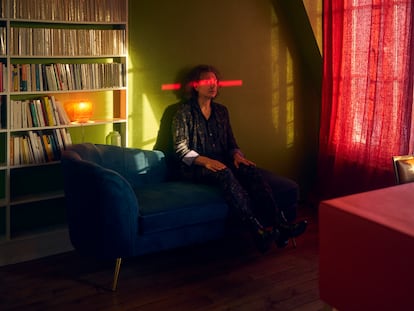
Q. I have a three-year-old daughter and an eight-year-old daughter. Do you think they will survive this hurricane? What can we do?
A. The future should be collective: at work and in leisure. The first consequence of liberalism is not inequality, but the death of the spirit. If you want to see hell, go to certain offices. People get depressed, they go crazy. There has never been such a widespread collective feeling of saturation. And such a strong desire to do something different. After COVID-19, 20 million Americans quit their jobs. But it’s hard to do anything else. The state, instead of subsidizing all these useless startups that everyone wants to commercialize, should support collectives or structures that are not subject to automation. The future should be small collectives.
Q. What should our children learn to avoid that living death?
A. Craftsmanship. Look, that dichotomy already existed during the Industrial Revolution. Karl Marx, on the one hand, and William Morris, on the other. Marx advocated the reappropriation of the means of production, but this increased ecological disasters and assembly-line work. Morris, on the other hand, an incredible person, a socialist at the origin of the Arts and Crafts movement, said that one had to be creative. And that could be achieved through craftsmanship, through excellence, through signed, unique works.
Q. A bit elitist, isn’t it? Not everyone can afford a handmade chair, a designer shirt, or a gourmet dinner. Many can only afford McDonald’s or to shop on Temu and AliExpress.
A. We must defend what you have inside [he taps his chest]. But it’s true that we’re moving towards a two-speed world. One automated, practical… and another where some people will say there’s something unique about human beings and not everything can be processed by systems. There are affinities in the power of creation, collaboration among equals. And that’s what we must defend.
Q. There doesn’t seem to be much hope.
A. The hope lies in the children of their children’s age who, when they grow up, will choose another path, as happened in The Matrix. That moment will come. It will come for some pure children. But we have already lost many. Kids who spend all day on TikTok and don’t even know how to write. They are robots that only respond to signals, impulses. They are bodies without autonomy.
Q. Can this creature become independent and subjugate us like Skynet in Terminator?
A. That’s nonsense. A childish science fiction delusion. An adolescent anthropomorphic vision. But what I’m telling you is much worse. The surrender of our fundamental faculties! We are threatened on every scale, and every threat forces humanity to retreat from the exercise of what makes it great. Imagine a world without writers, without schools, without artists. That’s what dies out. And I assure you, it’s much worse than Skynet. But do you know who can prevent it?
Q. From your expression, I’m starting to imagine it.
A. You. I mean, the parents! You can’t use ChatGPT to send emails or anything like that. How are you going to ask your children to learn to write? Saving the world today depends on the conscience of parents.
Q. You don’t use any generative AI?
A. Those killing machines? No, thank you. I love life. Writing a sentence is difficult, but what happiness. And I see young people starting to stand up, to reject it. I think there will be everyday heroes and slaves to their own laziness. And those will see their uniqueness shattered in the name of an artificial truth. Anyway, I’m talking too much. How much space are you going to give this?
Q. Don’t worry, we’ll summarize it with ChatGPT.
Sign up for our weekly newsletter to get more English-language news coverage from EL PAÍS USA Edition









































