
No country for old men: Music genre rejuvenates to fit the algorithm era
The Nashville sound is reinventing itself through artists such as Kacey Musgraves and Ella Langley, a shift that has helped it consolidate as a global phenomenon


The first few months of 2023 were dominated by the ubiquity of Miley Cyrus’s song Flowers. It was the perfect hit: a sound that drew parallels between her and Mark Ronson and Fleetwood Mac — the vinyl edition of Rumours became the album that young people bought when they got their first record player — with lyrics of self-help and independence and an iconic video that spawned thousands of recreations on social media. The song was everywhere and liked by almost everyone, which meant no one bothered to pay attention to the global charts. It seemed impossible that anything or anyone could overshadow it. The sun never set on that three-minute empire.
But the truth is there was a track above Miley’s on the charts. It was Last Night by country artist Morgan Wallen, a man born in Knoxville, Tennessee, who embodied almost every genre cliché. The cut, from his marathon third album, One Thing At a Time (36 songs, over two hours long; in contemporary temporal units like reels it would be roughly 500), reached the top of the U.S. charts (and later the global charts), displacing Flowers and marking the first time since 1981 that a male country artist had achieved the feat. The previous was Eddie Rabbitt with I Love a Rainy Night. Wallen’s magnificent but ultimately inconsequential hit — beyond the echo chamber of a genre that still relies on radio waves to try to reach its audience — did not become a cultural or TikTok phenomenon, but it did announce what was coming.
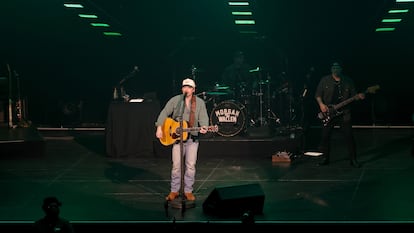
In country music there was a new niche of opportunity. The task was to try to produce artists who were less cliché and — above all in Wallen’s case — would not be at the center of racist scandals like the one that embroiled the singer two years earlier when he was filmed using racial slurs against the Black community, an episode that led to an attempted cancellation and several months in rehab. He said after the controversy he had been “on hour 72 of a 72-hour bender,” which may be the most country justification ever heard.
Major labels and leading pop figures took note of Wallen’s success. Thus, the following year, Beyoncé released Cowboy Carter, her purported country record, which not only embraced a roots sound mixed with her idiosyncratic R&B but also included an anthropological proposal around historically silenced Black and female voices in Nashville’s clubs and radio stations, the genre’s cradle.
A few months later, Post Malone released F-1 trillion, a country album featuring collaborators ranging from the estimable Morgan Wallen to Dolly Parton, and including other genre heavyweights such as Tim McGraw and Chris Stapleton. The album earned him a Grammy nomination and the accompanying tour grossed $170 million, with dates in Asia and Australia. In that latter country the genre has become an unstoppable phenomenon. Streams have risen by 115% and there are 47 country-dedicated festivals in the state of Queensland alone. In Spain, for now, there is little beyond the Huercasa festival, held in Segovia, which this year celebrated its 10th edition.
The arrival of artists from other genres, devoted to country but bringing their own discourse not bound to almost atavistic clichés about alcohol, bad women who smoke and long lonely roads, began to change much of the public’s perception — a shift completed when, during the 2024 U.S. election campaign, country voices supporting the Democratic ticket were numerous for the first time in a long while, from the classic Willie Nelson to Mickey Guyton or Taylor Swift, whose profile, despite having far outgrown Nashville, remains associated with the genre. This summer the Pennsylvania native recorded another country track, I Knew It, I Knew You, for the soundtrack of Toy Story 5. After the flop of The Life of a Showgirl, the song was warmly received, and a potential new Swift album rooted in country sounds could be just what’s needed to cement the most interesting trend in this revival we’re experiencing: girl power with a cowboy hat.
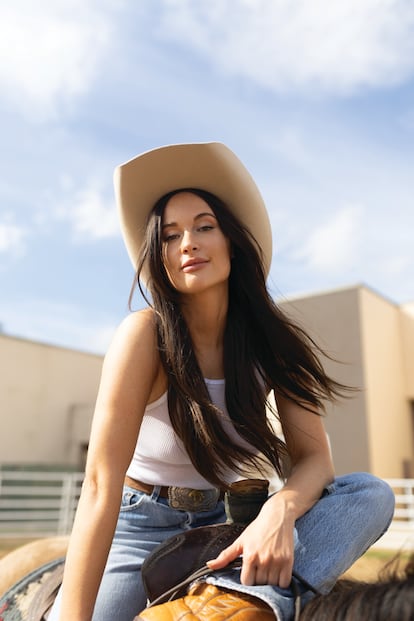
The movement’s leading figure is undoubtedly Kacey Musgraves, who at 37 has become a pop figure validated both in Brooklyn’s cool circles — where Pitchfork magazine is still read and people hunt for Nintendo cartridges — and in Kentucky’s roadside bars. Musgraves first rose to prominence in 2007 on Nashville Star, a kind of country version of American Idol. After a couple of well-regarded albums within that universe’s confines, she released Golden Hour in 2018, flirting with yacht rock, soft rock, and even electronic music. She won a Grammy and appeared on nearly every anglophone critics’ year-end best-of list.
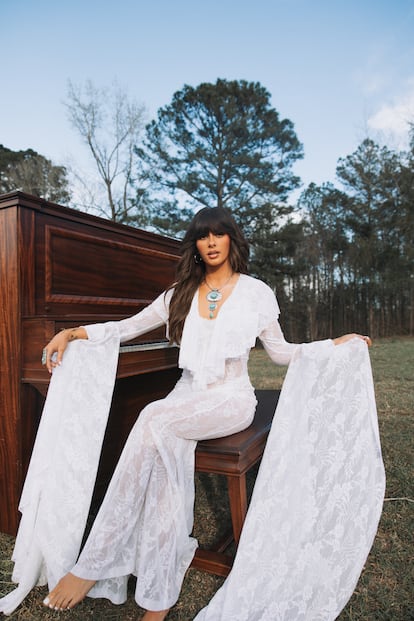
Since then Musgraves has gradually returned to the genre’s fold, co-creating with Zach Bryan one of the major country anthems of the last five years, the majestic I Remember Everything. This year she released Middle of Nowhere and has earned her place as the country artist finally being listened to by those who profess they hate country, completing a process years in the making. Her career and success have served as the mirror for new Gen Z country stars like Megan Moroney and, especially, the fabulous Ella Langley. A few months ago her song Choosin’ Texas knocked Swift’s Opalite off the top of the U.S. charts. Langley has been forged the old-fashioned way — in bars and in country radio studios — while also understanding the power of social media and storytelling, which has allowed her to begin positioning herself as a serious alternative not only to rule Nashville and some Australian cities, but also to challenge pop divas like Chappell Roan or Sabrina Carpenter.
In a polarized world like ours, it is unsurprising that the two most listened-to genres globally right now are Latin urban and country. One offers nearly the same proposition early reggaeton did 20 years ago; the other has simply adapted its public profile to the TikTok era and digital marketing. But at its core it still plays the same chords Willie Nelson played — riding into the sunset with tears in its eyes, breath scented with bourbon, and swollen with heartbreak.
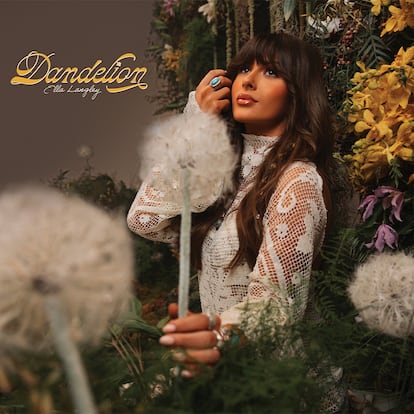
Ella Langley
(Columbia / Sony)
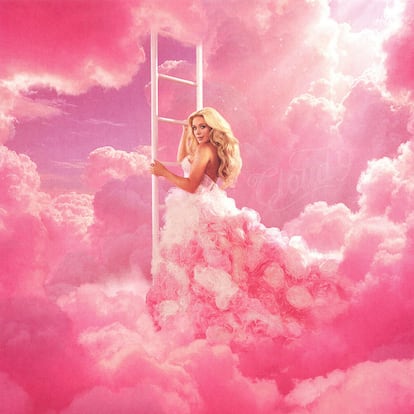
Megan Moroney
(Columbia / Sony)
Sign up for our weekly newsletter to get more English-language news coverage from EL PAÍS USA Edition









































