
Steven Spielberg, the filmmaker who put extraterrestrials into the planet’s imagination, returns to his great obsession
In ‘Disclosure Day’ the director reflects on how humanity would confront the discovery that we are not alone, something he is increasingly ‘convinced’ of
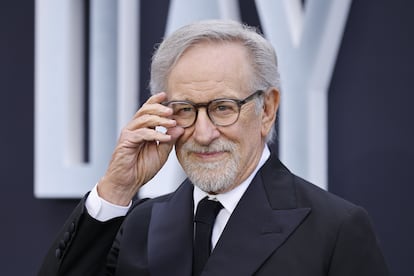

“I am much more inclined now than when I made Close Encounters of the Third Kind to really believe that we are not the only intelligent civilization in the universe.” With that line, which Steven Spielberg repeats in the trailer for his new release, Disclosure Day, the filmmaker underscores that he has returned to his two great themes: extraterrestrial life and truth.
The man who sculpted the image that many viewers have of possible non‑terrestrial intelligent beings with E.T. the Extra‑Terrestrial (1982) and Close Encounters of the Third Kind (1977) returns for a fourth time to alien worlds: with War of the Worlds (2005) he captured the sense of vulnerability that permeated the American psyche after 9/11; with Disclosure Day he probes government manipulation of information: yes, he is talking about Donald Trump, but also about how humanity would handle the discovery that “we are not alone” — including the rethinking of religions. Or as USA Today puts it: “It is a story about us.”
It should be recalled that Firelight, the amateur film Spielberg shot as a teenager in Arizona in 1964, centered on extraterrestrial visitors. And it is true that of his 36 features, the 79‑year‑old filmmaker has worked across genres, but in many of them his urge to explore truth versus an official message is felt (a constant in his extensive historical films), a background visible from the way contact with the visitors is concealed in Close Encounters of the Third Kind to the faceless government men in E.T. (first, because they appear at night with flashlights that dazzle the witnesses; later, wearing hazmat suits).
In the trailer, Colman Domingo’s character, an official who wants humanity to know the truth, says: “This 79‑year campaign of terror and lies has to end!” Indeed, 79 years have passed since the Roswell incident, the summer of 1947 discovery by a New Mexico rancher of metallic debris from something the U.S. Army first described as a “flying saucer” and, the next day, as a “weather balloon.” Thus UFOs were born for Americans. Today, more than ever, they are in vogue thanks to the Trump administration, after it declassified an initial set of 162 documents on Unidentified Anomalous Phenomena last May.
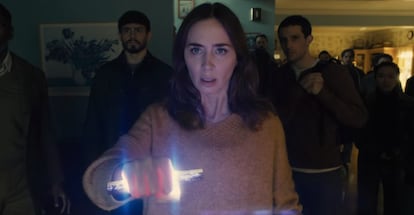
Extraterrestrial life has always been in the filmmaker’s soul above and beyond passing social trends. During this latest press campaign, Spielberg told USA Today that his latest film could have been one of his late mother Leah Adler’s favorite films — she was a major influence on his career: “She would always say, ‘Let’s not be arrogant thinking we are the only intelligent life in the universe.’ She used to joke: ‘Well, there must be many more intelligent planets out there.’ I would tell her, ‘Mom, we’re pretty clever,’ and she replied, ‘No, I’m sure there is a lot more we can learn if we open our hearts and our minds.’”
The director is so invested in defending the possibility of intelligent life beyond Earth that he told the Associated Press: “It’s my first film that will be considered science fiction that I do not consider to be science fiction. It’s much more reflective of the world as it is evolving and discoveries that are being made as we speak.”
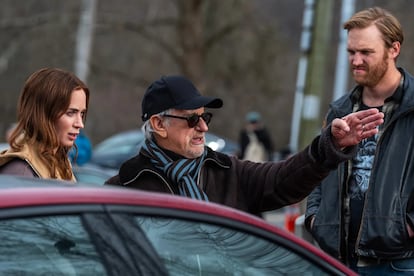
Last March, in a keynote interview in Austin, Texas, at the SXSW festival, he confessed: “I have a very strong suspicion that we are not alone here on Earth right now.” On that occasion he recalled that he has been a believer since he made Close Encounters of the Third Kind half a century ago. But that he always said that until he saw a UFO with his own eyes he would not categorically state that life out there existed. “I have changed my mind because of the overwhelming circumstantial evidence,” he said.
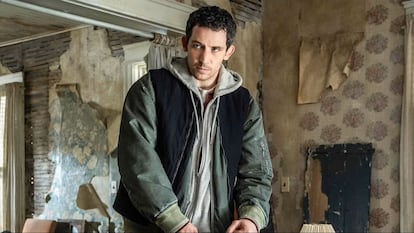
Spielberg revolutionized film history with Close Encounters of the Third Kind. He abandoned the popular cinematic concept of murderous Martians with robots and lasers conquering Earth (The Day the Earth Stood Still) or extraterrestrials replacing humans by duplicating themselves in pods (Invasion of the Body Snatchers) in favor of visitors who want to make contact with their neighbors. Suddenly it sounded like a plausible connection. It distilled science and reality. E.T. moves in an unsettling darkness, although in the end Spielberg was telling the story of a child — the camera stays at Elliott’s eye level — and his new best friend. War of the Worlds fit within the “death and destruction” subgenre. Still, all three share the filmmaker’s underlying intention to talk about humanity and how it relates to and faces challenges.

There are two added codas in Spielberg’s extraterrestrial filmography. Three years after the pessimism of War of the Worlds, the filmmaker included beings from outer space in Indiana Jones and the Kingdom of the Crystal Skull, a very odd turn in the archaeologist’s saga. The other addition came earlier, in 2001, because A.I. Artificial Intelligence reveals itself as an inverted first‑contact story: humanity, already gone, is studied by synthetic descendants of machines.
Disclosure Day plays similar cards to Close Encounters of the Third Kind, such as people who don’t know one another forming a deep connection. However, both Spielberg and his co‑writer, David Koepp, have mentioned another source of inspiration: the classic 1970s conspiracy thriller Three Days of the Condor: only those who know how to listen will learn the truth. The question is whether a global revelation can, in this Trumpian world, transcend humanity’s divisions.
Sign up for our weekly newsletter to get more English-language news coverage from EL PAÍS USA Edition









































