Super Mario, Sonic and Lara Croft: Video game icons celebrate milestone anniversaries
In 2026, the plumber’s 45th anniversary and the archeologist’s 30th, among those of other legends, commemorate the era that laid the foundations of the industry and transcended into popular culture
They’ve never all appeared together at once, except on lists of video game legends. And, surely, in the dreams of some gamers. They would certainly make a peculiar group: a mustachioed plumber, a fearless archeologist, a lightning-fast hedgehog, a warrior and a princess, a monkey in a tie, a marsupial in jeans and a strange yellow rodent. Outlandish, to those unfamiliar with them. But for those who know of their existence, these creatures are global icons.
In 2026, they’re celebrating with milestone birthdays: Mario and Donkey Kong are turning 45; Zelda and Link will be 40; Sonic turns 35, while members of a younger generation will be 30: Pikachu, Lara Croft and Crash Bandicoot. Indeed, this year is a true tribute to an era of unbridled creativity — the one that invented the first icons of consoles and computers. It’s also a reminder of the industry’s progress to this day. And, incidentally, it’s an opportunity to ask how they transcended the screen to leave their mark on popular culture… and why other video game celebrities have barely managed to do so since then.
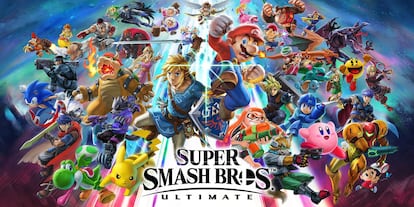
Super Smash Bros. Ultimate, the 2018 Nintendo Switch title, came closest to bringing them all together: only Lara Croft was missing, while Crash just made a brief appearance. The game also featured the protagonists of Metroid and Castlevania, two other key franchises now celebrating their 40th anniversaries.
It’s impossible to gather so many stars in any other art form. And lately, this is even the case when it comes to video games themselves, which are increasingly successful, mainstream, and populated. “When they first became popular, there were only a few titles. Mario [Bros.] was literally the first thing a generation of gamers ever played. Everyone was playing the same thing, so the most fascinating characters were known to everyone,” Chip Carter reflects. He currently hosts a television show, Where the Food Comes From, but was previously a pioneer of video game journalism, with a column in The Chicago Tribune launched back in 1990.
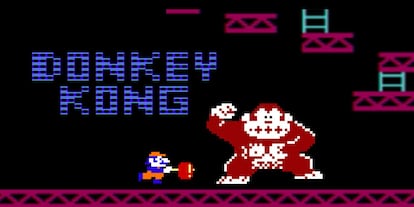
Mario and Donkey Kong had been on the market for almost a decade by then, since the 1981 game, where the plumber dodged the barrels that the gorilla threw at him. Shortly after, Nintendo decided to give each of these characters their own game series. And it was such a smash hit that the company’s only rival at the time, Sega, tried to regain lost ground with a rapid expansion.
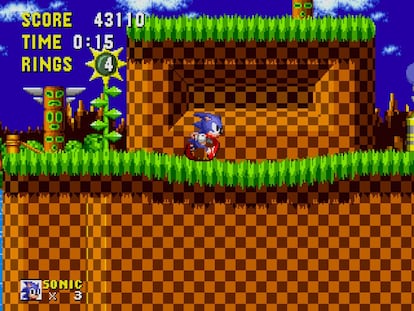
“We wanted a character that kids could draw,” one of Sonic’s creators, Naoto Oshima, told the entertainment website Polygon back in 2018. Another co-creator, Hirokazu Yasuhara, explained that companies used to look for disposable protagonists, until those years changed the paradigm. They considered an armadillo, or another mustachioed fellow, who would end up being the villain. Finally, in addition to the blue hedgehog, the creators invented his backstory: he was supposedly inspired by the hair of a 1940s airplane pilot.
“At first, it was more or less the Wild West: totally free creativity, not a single suited executive in sight. [But] everything changed when Sony launched the first Playstation,” Carter points out.
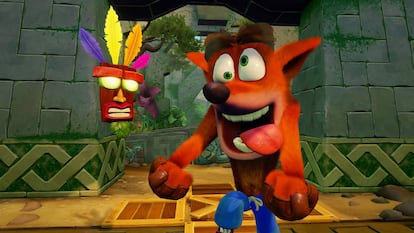
This brought more competition, variety and Crash Bandicoot. The company needed a visual identity for its brand-new console. They took inspiration from the most famous ones: they tried to create a three-dimensional Mario and christened their first prototype “Sonic’s Butt,” because the 3D visuals often showed the protagonist’s rear end. It was initially going to be a Tasmanian devil… until they discovered the Australian bandicoot. Of course, the character was created without a neck, for the same reason they put a cap on the first Mario’s head: technological limitations.
Lara Croft herself emerged in the same year, 1996, from a similar creative impulse. She was supposed to have the surname “Cruz” and be of Latin American origin, while her creators projected that the game featuring this character would sell around 100,000 copies. Ultimately, however, her last name changed… and so did the result: seven million copies sold. This was thanks to a different formula: a saga that was finally female-driven (although conceived by a man, hypersexualized and an unintentional symptom of an industry that still needs to make strides toward equality) and very serious, in contrast to the lighthearted entertainment and humor of its rivals.
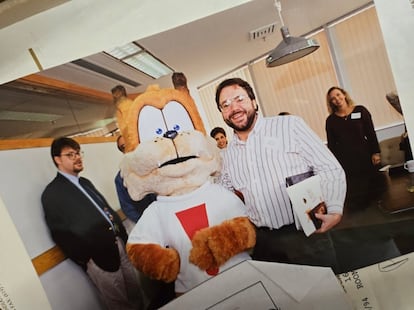
Carter literally witnessed the birth of Sonic and Tomb Raider: he had access to early versions of both games. He even played with Shigeru Miyamoto, the celebrated creator of Mario, Donkey Kong and The Legend of Zelda. And he still has a photo with Bubsy, a reminder that not all digital mascots survive the test of time: charisma is necessary, but so is the ability to innovate.
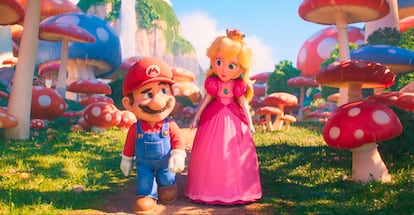
“The original Super Mario Bros. [from 1985] was full of surprises and hidden wonders. However, after many years, those things have somehow become commonplace,” the developers of Wonder — one of the most recent installments in the saga — reflected in their development diary. The game attempted to recapture that old sense of wonder, with the idea of a realistically proportioned Mario humming the classic music and exclaiming “Boing!” whenever he jumped. Perhaps the most striking thing about the character is his achievements: as of March 31, 2025 (the latest available data), the series had sold over 452 million copies.
“[The characters aren’t] popular just because of their games, but also because of how people grew up with them, associate them with childhood, friendships and passion, and have invested in them in terms of fan creations, conversations…” says Kirk Sigmon, a lawyer at Banner & Witcoff Ltd., a firm specializing in intellectual property. Oftentimes, the public even claims ownership of certain characters, as well as the right to make decisions about them.
The lawyer clarifies: “When a fan invests any kind of capital, they develop a sort of private property. It doesn’t mean they can create their own works and usurp copyright, but it does suggest that their passion should be granted some leniency. Without it, many characters wouldn’t have their popularity.” However, the expert also emphasizes that so-called “fandom” can become a cage, preventing certain icons from exploring new avenues, or simply doing something different from what their followers adore and demand.
Mario, Sonic, Donkey Kong and Crash — among other characters — have also driven cars, competed in the Olympics and tried their hand at the most unusual disciplines in other installments of their respective franchises. Lara Croft will soon be in two new video games and her story will be told via a television series, following two previous attempts in film. Meanwhile, Zelda (2027) awaits its debut, while the plumber and the blue hedgehog are already enjoying success. Add to that clothing, toys, television series, and all sorts of merchandise and media coverage. The archeologist Croft even appeared in the 1999 Sanremo Music Festival, where Italian singer Eugenio Finardi sang Amami, Lara. It’s difficult to find similar milestones among more recent video game icons, such as Ellie from The Last of Us, Kratos from God of War, or Agent 47 from Hitman.
“These are characters that have managed to become ingrained in popular culture and the collective imagination,” says Antonio Planells de la Maza, a professor at the TecnoCampus of Pompeu Fabra University. This expert focuses specifically on two: “Link — the warrior from the Zelda saga — is the epitome of the updated hero’s journey, capable of becoming a symbolic canon that has survived for decades in the most unexpected ways. For example, his soundtrack has become an anthem played by classical orchestras around the world.”
Planells also returns to the blue hedgehog. He recalls how Sonic became an environmental icon, since in the character’s early games he freed caged animals. “Furthermore, the Sega-Nintendo rivalry — in which Sonic and Mario represented their respective companies — cemented a part of gaming culture for decades. With Sega’s demise, we thought Sonic would follow the same fate… but he’s been given a new lease of life through film, which has led to further installments of the games,” Planells details. Ultimately, to become an icon, a controller isn’t enough. Nor is past glory.
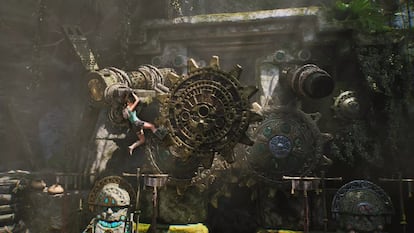
Several characters, in fact, are celebrating their 2026 anniversary with new titles, from Mario Tennis Fever to Pokémon Pocopia, as well as Tomb Raider: Legacy of Atlantis.
“If it wasn’t for that [2013] reboot [for a video game], Lara probably would have died a lonely, sexist death. People would have gone: ‘Remember the dark days when we had that weird woman with the gigantic breasts?’” Esther MacCallum-Stewart, a professor of game studies at Staffordshire University, told The New York Times in 2018. And part of the renewed success was due to the changes introduced by screenwriter Rihanna Pratchett: “We wanted to show a protagonist who was scared and insecure… something not so common in video games.” The result was equally impressive: the game sold 18 million copies.
“[Today], there are so many more games, of much more variable quality. Even if I tried my best, I’d die before completing all the ones in my library. [As a result], my attention span is less focused and each game is probably less memorable,” Sigmon adds. “There’s also a debate about whether current games are too postmodern, in the sense of tending to be unusual through their narratives. Some developers seem allergic to keeping their games simple and entertaining; in the worst cases, they fill them with content to make them unnecessarily long,” the intellectual property lawyer explains.
The truth is that the industry has matured, with its offerings and complexity exploding. However, at the same time, it suffers from the same problem as other artistic fields: an overwhelming number of releases, competing for the public’s time, both with each other and with films, TV series, books, and music. Donkey Kong Bananza was among the best titles of 2025 with precisely the opposite approach, as its development diary boasts: “You can enjoy it without having to rack your brain.”
It turns out that simplicity and originality never age, no matter how many years pass. Neither does the gorilla: so many acrobatics and not a single ailment at the age of 45. You just need to be a legend… and a video game.