
‘Fallout’ or how the world’s largest company turned an anti-capitalist apocalyptic Western into a phenomenon
The Amazon Prime Video series is a ‘pastiche of cultural references’ that combines the old west, comedy, monsters, robots, and technocrats


Second seasons are always tricky. Especially if you have to replicate the overwhelming audience success of the first. In 2024, Fallout was crowned the fifth most-watched original series across all streaming services in the United States (and the second on Amazon Prime Video), according to Nielsen audience measurement data. Returning on December 17, the adaptation of the apocalyptic video game faces that challenge. How do you maintain that level of success? “Our goal was to respect what we believed worked in the first season, and maintain the tone of the games — that mix of comedy, tragic drama, moral dilemmas, and insane violence. Plus, the wonderful desert landscapes that Jonathan Nolan brought to the table,” showrunner Geneva Robertson-Dworet tells EL PAÍS via video conference.
That’s why, in its second season, “this pastiche of American cultural references,” as its screenwriter describes it, simply keeps all the disparate pieces that worked. There’s a Western, there’s an apocalyptic novel, there are giant monsters, artificial intelligence, plenty of irony, a critique of capitalism… And at the center, a protagonist, played by Ella Purnell, who, after escaping the survival bunkers of the wealthy, discovers the horrors of a surface world inhabited by factions, bandits, androids, cannibals, and ruthless businessmen like her father (played by the legendary Kyle MacLachlan). In this second season, the destination is New Vegas, one of the most famous settings from the video game series, which they revisit here 15 years later.
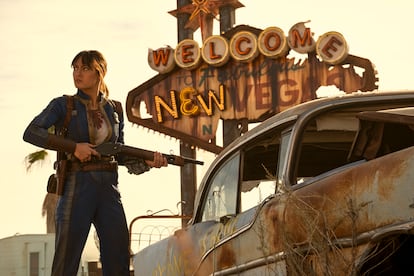
Convincing existing fans of this world and its mythology was precisely one of the great successes of the first season. In a Hollywood where superheroes are no longer an infallible weapon at the box office and on television, video game adaptations have become a lifeline, spawning some of the most successful recent franchises. While for years these kinds of productions were relegated to third-rate projects that never quite took off, more recently successful ventures such as Super Mario Bros., Sonic, Five Nights at Freddy’s, Uncharted, A Minecraft Movie, and The Last of Us have been launched. And coming soon are Zelda, God of War, and Horizon Zero Dawn. “Even Scorsese draws inspiration from anime today. In our world, everything is being adapted, referenced, and expanded. And in this case, we’re talking about games that take seven or eight years to develop, so they have very rich universes,” says actor Aaron Moten, who plays soldier Maximus, a character who survives an atomic bomb and becomes a hero, but harbors doubts about the organization of the world he has vowed to defend.
“I think the fans saw that we were honoring the adaptations,” Robertson-Dworet points out. “The fan response was a relief. Our production designer was even going to sleep listening to Fallout podcasts. But for me, this adaptation was different from the rest, because of the games’ unique tone; full of humor, irony, and intelligence, and all sorts of moral dilemmas. That’s quite unique in a genre that seems overdone, like post-apocalyptic. It’s fun, and we tried to emulate that. Plus, we were lucky enough to have decades of world-building to work with.”
That vast source gave them the freedom to make one episode look like a zombie series, another like a Western, while in another, the protagonist finds herself in a Roman camp with Macaulay Culkin playing a legionary: “It was strange working with him because it felt like I knew him. I’ve seen him every December 25 for 15 years, and he never aged. Suddenly, there he is, with the same face but an adult. I tried to stay cool, and I found out he was there because he knows the video game well and wanted to be part of the series. It was a strange and wonderful moment,” recalls Purnell, who, at 29, was born when Culkin had already been starring in the Home Alone films for six years. She played Fallout 4 to prepare for the first season, and now she’s brushed up with New Vegas to familiarize herself with the references included during filming. “I want to experience what the players feel.”
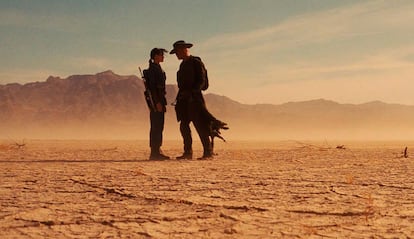
All these themes appear in the series amid jokes, impossible action scenes, and a twilight Western atmosphere. Among this mix of ideas, the Western, as recently seen on television with Yellowstone, is once again proving successful: “The core themes of the genre — about discovering a moral code in a profoundly amoral universe — are still there, and they continue to make the Western timeless,” believes its creator.
“It contains all those simple themes about good and evil, but the best ones take them to a higher level of complexity. They raise questions about what is truly good and kind, how that will impact others… and also, because they have such a well-established esthetic, it’s easy for the viewer to recognize their feel,” says MacLachlan, who highlights the Los Angeles deserts where Fallout is filmed, and which are attracting fewer and fewer productions.
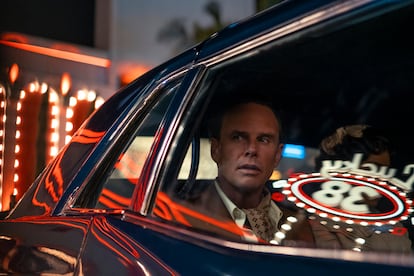
For Purnell, the second season has been like “seeing an old friend again, your childhood home, a warm and nostalgic place.” MacLachlan, who has been involved in controversial second seasons like Twin Peaks and has appeared in series including Sex and the City, Desperate Housewives, and How I Met Your Mother, thanks the writers for “how they have expanded each character’s journey in a rich and ever-growing world.” His character, in particular, much like his transformation in the third season of David Lynch’s series, has gone from being an exemplary father to mourn to an unscrupulous businessman responsible for nuclear destruction. Does he draw inspiration from technocrats like Elon Musk, so prevalent in the media? “I don’t know if I borrow aspects, but I do recognize things and look for similarities. My character comes across as a man who has all the answers, as the only one who knows how the world works. And I think we see a lot of that in today’s world. There’s no dialogue, no compromise. It’s: either it’s done my way, or out the door,” he observes.
“The themes have been relevant for decades because they always appeal to something timeless, like the nature of monopolies or the cyclical nature of violence and war. It never changes. Even in video games, there was a political message about corporations, the here and now, although sometimes it seemed very subtextual. If you looked closely, in this destroyed universe everything has a logo, a brand, and you started thinking, ‘Could these monopolies have had something to do with the end of the world?’” explains Robertson-Dworet, who introduces another technologist this season, played by Justin Theroux, who sees himself as a god: “That’s what technocrats do today,” says the screenwriter. And so, in a paradox that no one can fail to notice, a multidisciplinary giant like Amazon embraces anti-corporate sentiment with its big brands (it’s most-watched series is The Boys) from a purely corporate perspective. Or at least from the most exaggerated perspective.
Sign up for our weekly newsletter to get more English-language news coverage from EL PAÍS USA Edition









































