
Jamaica plunged into darkness after Hurricane Melissa passes through: ‘There is only rain and violent wind’
The Caribbean island has been hit by floods in the southwest and widespread power outages due to the strongest cyclone on record in the country
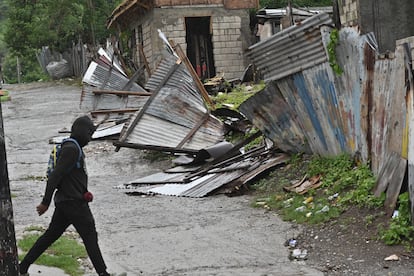

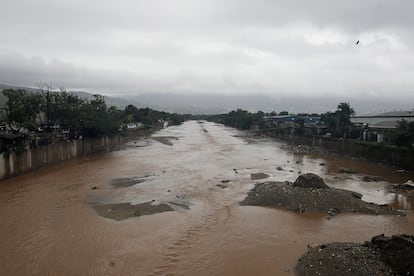
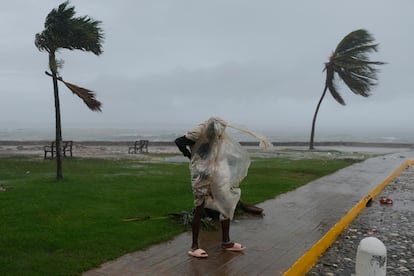
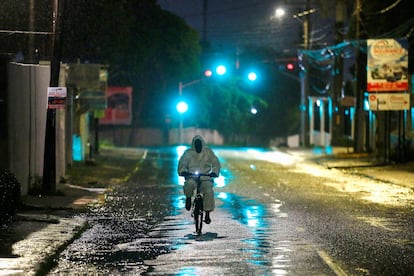
After what seemed like an eternity of anticipation, as the massive storm slowly approached, Hurricane Melissa finally made landfall in southwestern Jamaica around midday on Tuesday. Winds uprooted trees and downed power lines, and the resulting storm surge, several meters high, and flooding from swollen rivers and saturated ground have left St. Elizabeth Parish — one of the country’s 14 administrative subdivisions — underwater. As night fell, the Caribbean nation was plunged into darkness by widespread power outages, while damage assessments began as best as possible amid the aftershocks of what is shaping up to be the strongest hurricane in the country’s history. So far, there have been no official reports of deaths from the storm, but authorities warn that this will change when the storm has passed on Wednesday.
“There’s only rain and violent wind,” recounted 28-year-old Kevaughn J. from the relative safety of the higher ground in the capital, Kingston, located to the east. “I’ve seen videos and photos of houses and cars completely flooded. I’m seeing huge trees down. I see roofs ripped off completely [...] Many streets are impassable because the water is too high; they’re like rivers.”
Local Government Minister Desmond McKenzie announced at a press conference that by mid-afternoon Tuesday, with the latest data available, more than 530,000 customers — approximately 77% of Jamaica Public Service’s customer base — were without power. The minister assured the public that restoration work was underway, prioritizing hospitals and water pumping stations to maintain essential services. However, McKenzie warned that most Jamaicans would spend Tuesday night without electricity amid widespread flooding and blocked roads.
“The biggest problem here is that there’s no electricity. My girlfriend, for example, doesn’t have internet either, and her cell phone battery died, so we can’t talk,” Kevaughn told EL PAÍS in voice messages. “I have a powerful external battery, which is actually for my car, but it also charges devices. And I still have a data connection. But there’s no way to communicate or get information. Many people are completely in the dark. And we don’t know when the electricity will be restored.”
In the days leading up to the storm, Melissa intensified until Monday, when it became a Category 5 hurricane on the Saffir-Simpson scale. With winds of up to 295 kilometers per hour (183 mph) and forecasts of storm surges of up to four meters and nearly 1,000 mm of rain for some areas — about half the island’s average annual rainfall — Jamaicans began preparing more intensely as the edges of the cyclone, more than 600 kilometers (372 miles) in diameter, were already pouring water down on them.
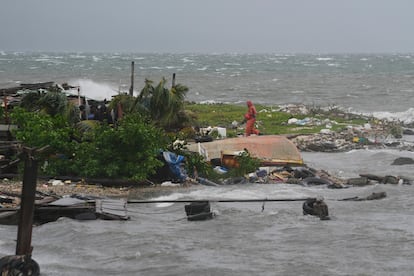
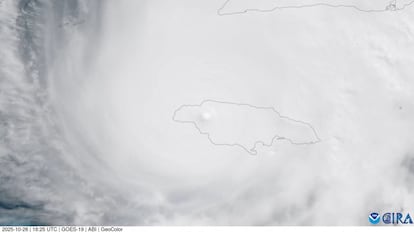
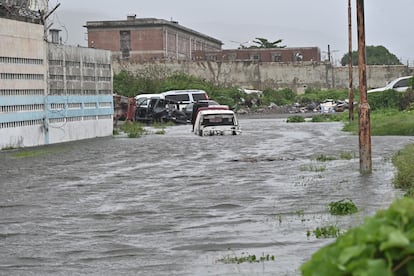
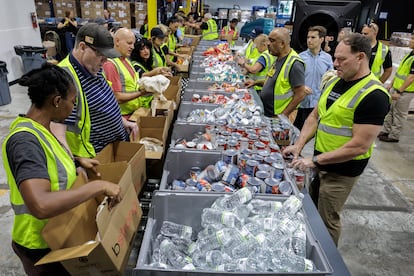
Supermarket shelves were quickly emptied, and homes, most with fragile zinc roofs, were reinforced with sandbags and bricks to prevent them being blown off. Once the eye of the hurricane made landfall, the measuring systems were overwhelmed, and by Tuesday night there were no reports of the amount of rain that fell on the island that day, nor of the strength of the storm surge, the two most dangerous elements of a cyclone of this size. Furthermore, while Melissa was projected to be the strongest hurricane to hit the country since records began, this has not yet been confirmed.
Kingston, the most populated area, located about 100 kilometers (62 miles) east of Melissa’s impact zone, was spared the worst of the storm. Reported damage has been concentrated in the west of the island, where the eye of the hurricane passed on its south-to-northeast path. “The parishes on that side are suffering the most: St. Elizabeth, Montego Bay, Mandeville, Trelawny… There are some tourist areas there, but it’s mostly rural. Farmers are being severely affected; their crops are lost, and even their livestock,” explains Kevaughn.
The memory of the effects of Hurricane Beryl, which struck the island in 2024, is still fresh, and Jamaicans, after experiencing a day dominated by incessant rain and the constant pounding of violent winds, are already anticipating that recovery after Melissa will be even more difficult.
With further details of the full extent of the damage still pending, Prime Minister Andrew Holness has declared the entire country a “disaster zone,” anticipating that the island has been devastated by widespread infrastructure damage and catastrophic flooding. In the darkness, only questions remain.
Sign up for our weekly newsletter to get more English-language news coverage from EL PAÍS USA Edition









































