
The small revolution of Portugal’s winegrowers
Sustainability, biodiversity and the protection of rural areas are giving rise to a new wave of winemaking in the Southern European country

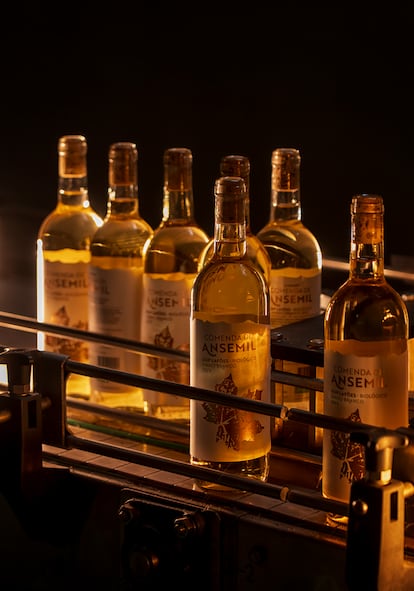
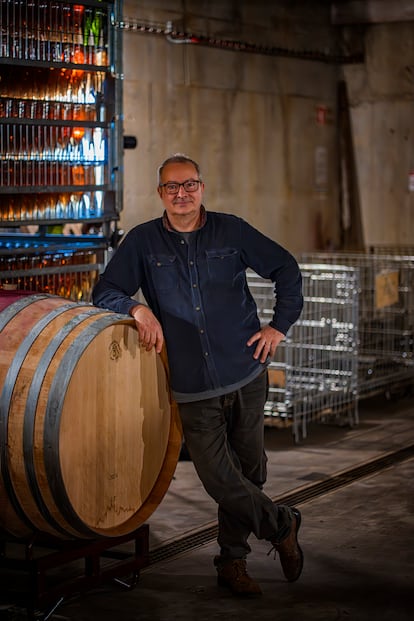
Angelo Rocha meets with his team at eight in the morning to organize the day’s tasks at Quinta da Comenda, a beautiful property in São Pedro do Sul, a municipality in the Central Portuguese district of Viseu. The estate once belonged to the mother of Afonso Henriques – the first king of Portugal – and then to the Order of Malta, until 1843. The country’s first natural wine was produced here in 1987.
When Angelo’s parents acquired this 86-acre estate in the early 1980s, it was completely abandoned. They turned to old books and local sources to recover its essence. Along the way, they discovered the historical importance of the wine region of Lafões.
Today, the family cultivates 24 acres of vineyards, as well as olive trees, fruit trees, asparagus and cereals. They’ve even restored an old mill by the river, where they process flour to make their own bread. Some of their animals, including geese, goats, chickens, donkeys and several local Arouquesa cows, are left to roam freely among the vines from the end of the harvest until bud break begins in March. These creatures fertilize the land and enhance the health of the soil.
This deep connection to the land also radiates outward. The property hosts cultural events and a weekly organic farmers’ market, while offering agro-tourism accomodation. Rocha also leases space in his extensive winery to other producers. It’s hard to imagine a more collaborative and sustainable model.
However, it hasn’t been a bed of roses. The death of his parents triggered a family schism. It took three years of litigation before Angelo and one of his sisters had their right to retain ownership recognized. The wine, which is their highest value-added product, is made in one of the smallest, most unknown and mistreated regions in Portugal. Here, at one point in history, the uprooting of vineyards was even encouraged, ultimately bringing down the local cooperative.
There are just three municipalities located on the middle course of the Vouga River. They straddle the regions of Dão and Vinho Verde. All three are characterized by their granite soils, but the wines of Lafões are closer to the vibrant character of Vinho Verde. In fact, their high-acid, mineral and vibrant whites are a regular accompaniment to vitela assada (roast veal), the local dish par excellence.
Southwest of Lafões – nestled between the cities of Aveiro and Coimbra and highly exposed to the influence of the Atlantic Ocean – the Bairrada region has its own winning combination: suckling pig (leitão) with sparkling wine.
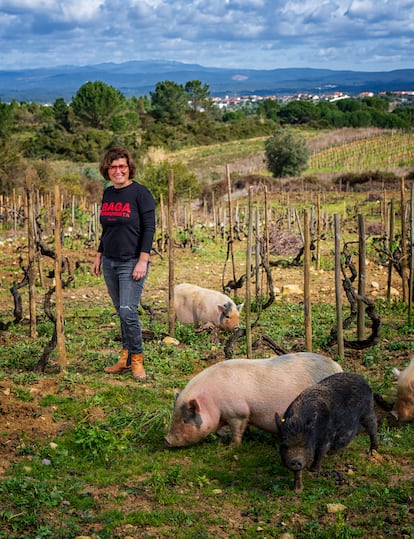
Filipa Pato, a winemaker with an overwhelming personality, would never have imagined that pigs could help her in her quest to save some of the oldest vineyards in the area. With very different clay and limestone soils (“Bairrada” comes from the Portuguese word for “mud”) – along with a humid climate that favors the development of fungi and the growth of vegetation – the best solution to avoid the use of herbicides was to introduce animals that would eat the grass and loosen the soil.
Horses were too large for the vines’ characteristics. Sheep compacted the soil too much, while chickens were easy prey for foxes. The suckling pigs have been a great find: they’ve been shown to achieve a faster recovery in vineyards that were previously treated with herbicides. Collaboration with animals makes perfect sense for Pato’s smallholdings. She farms 50 acres spread across 36 plots, with high planting densities that prevent mechanization and require practically artisanal farming methods.
Filipa is the daughter of Luis Pato. He was a legendary winemaker who helped change the region’s production-driven image, offering instead a modern vision of Baga, the main red grape variety in Bairrada. This grape has thin skin, powerful tannins and high acidity. It’s sometimes compared to the Piedmont region’s Nebbiolo red grape variety, or Siciliy’s Nerello Mascalese.
Although the logical course would have been to work with her family, Filipa preferred to pursue her own path, which wasn’t without its difficulties. “In 2001, organic wines weren’t well-regarded. Today, this has changed, because there’s a foreign clientele living in Portugal who demand them. But being a woman and working in biodynamics has been a handicap for me; that’s why I sell 90% of my wines abroad,” she explains.
Her husband, the Belgian sommelier William Wouters, was one of her first clients. They now share a business that churns out around 120,000 bottles annually. The firm’s motto is “authentic wines without makeup.” They rely on local grape varieties: in addition to Baga, the white wine grapes Bical, Arinto, Cercial and Maria Gomes, and produce sparkling, white, red and fortified wines.
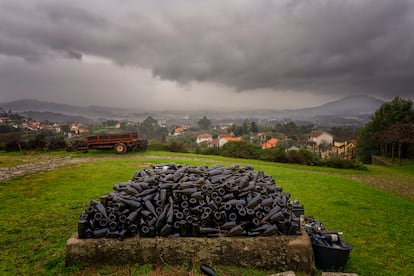
This project is a kind of revenge. In the mid-18th century, when the Marquis of Pombal favored port wines, there was a ban on producing the local varieties. The region was disregarded, suffering greatly as a result. The despot even ordered the uprooting of vineyards in Bairrada.
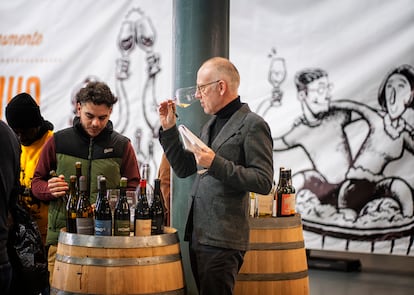
Filipa Pato and Angelo Rocha are the kind of producers who offer their wines for tasting at Simplesmente Vinho, an alternative event conceived as an offshoot of Essência do Vinho, the most important Portuguese wine fair. In 2013, two winemakers from the Douro region – João Roseira (Quinta do Infantado) and Nicolau de Almeida (Trans Douro Express) – were inspired by similar shows in France to replicate the model and bring together a group of 15 winemaking friends in just two weeks.
The last edition was held in February of this year, at the Alfândega in Porto. The former customs building stands by the river and overlooks the aging cellars of Vila Nova de Gaia on the other side. Simplesmente Vinho brought together nearly 150 wine producers in a relaxed and informal atmosphere, one that benefits from the improvisational skills of João Roseira and his son, Gustavo, the main organizers. Each winery has a barrel, which serves as a tasting table for their wines. Attendees can combine the tasting with a good selection of petiscos, the Portuguese word for tapas and small dishes.
Although there are wineries that share this style, Simplesmente Vinho isn’t an organic wine fair. The free and eclectic mix reflects the energy of new Portuguese wines, with representation from almost all of its producing regions, including Madeira and the Azores. It welcomes both established figures such as Dirk Niepoort, one of Portugal’s best-known winemakers, and other pioneers who offer unconventional quality offerings in their respective regions, as well as producers taking their first steps.
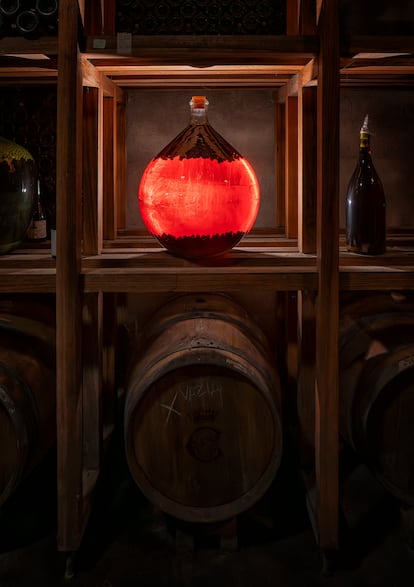
The common threads are a connection to the vineyard, a desire to produce wines with personality, working with a wide range of local grape varieties and the revival of traditional styles that fit well with the new trend toward more fluid wines. Names worth learning are palhete (a light red wine that includes white grapes in the blend), claret (a pale red wine, almost like a rosé), curtimenta (a red wine with a light color, almost like a very opaque rosé) and talha (a wine that ferments in clay jars), the last of which follows a deeply-rooted tradition in the Alentejo region.
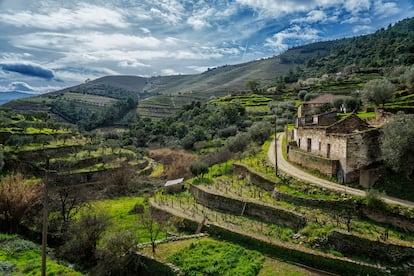
The Roseiras’ drive and determination have been instrumental in spurring this movement. From their estate in the heart of the Douro Valley in northern Portugal, the family is famous for breaking the monopoly on port wine bottling, which – since 1979 – has been held by merchants in Vila Nova de Gaia. To reach Quinta do Infantado, you must take winding, narrow roads that crisscross the dramatic landscape of terraces and steep slopes, where the Roseiras farm their 116 acres (a third of which are organic).
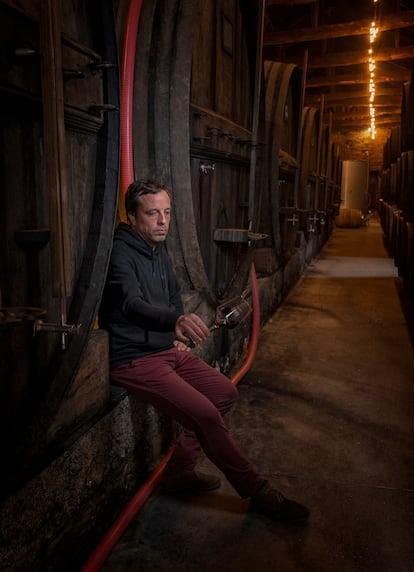
In the family’s hands since the late 19th century, the various buildings on the estate – especially the aging cellar, with its enormous vats – retain the flavor of bygone days. Always made from their own vineyards, their port wines have a more accessible profile, thanks to longer fermentation periods that allow for more natural alcohol (port is made by halting the fermentation process with alcohol, so as to obtain a sweet wine) and less sugar. Álvaro Roseira – a winemaker and João’s nephew – defines them as after-dinner wines. He believes that they reveal more of the personality of the terroir and the grape varieties. In the still reds – given the area’s high degree of sunlight and slate soils – João Roseira advocates the idea of “showing the sun.” The more modern range also includes the Palhete – a light red wine – or the dry, vibrant and saline white profile made with Rabigato, their most promising white grape variety.
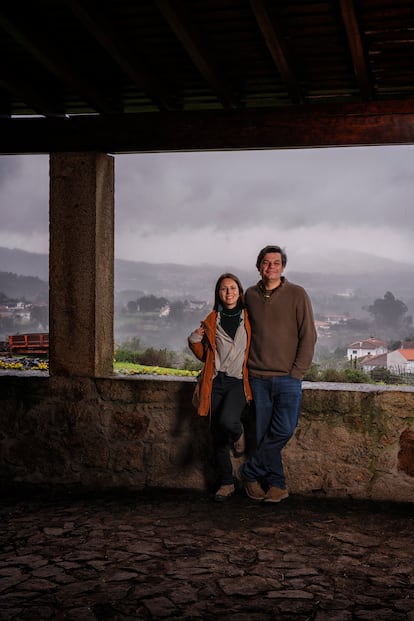
The Douro Valley is also the homeland of Miguel Viseu, a promising young Portuguese winemaker who quit his family wine business and chose to embark on a nomadic life that took him to California, Tuscany, South Africa, Brazil – where he met his wife, Leli Dalla Costa – and Mozambique. However, he eventually felt the need to return to Portugal.
An opportunity arose in 2017, when he was offered the position of technical director of Aphros, a pioneering biodynamic winery in Refóios do Lima, in the Vinho Verde region. He also came full circle by returning to the city where he went to college.
Today, he balances this job with the family project he founded with his wife – Galactic Wine – and various consultancies. Most notably, from one of the highest vineyards in northern Portugal’s Lima Valley, he produces a single-plot white wine – Paraiso Natural – for a British couple living in New York. This Vinho Verde sub-region – which could be described as a corridor open to the sea breeze – is considered to be the best terroir in Portugal for growing the white Loureiro variety.
Galactic Wine’s philosophy is free-spirited: it involves taking risks if this contributes to a better understanding of the land and its potential. “These are wines without appellation designations, because regulations don’t allow for cloudy or pét-nat colors. But we’ve also avoided the image of [organic] wine; the most important thing for us is that, when someone opens a bottle, they say, ‘This wine is good for the price.’”
The wines bear the Saravá brand – a word from Brazilian Portuguese that means a wish for health and good luck. Most of them are whites from the Lima Valley, the bottles bearing depictions of the sun. The company has also begun making reds in the Douro Valley, using the image of a spiral. And, alongside another partner, the firm has an organic cider project that has already earned a recommendation in The New York Times.
Sustainability is important to the couple. They ask the winegrowers they buy grapes from to follow their protocols, paying more to those with organic certification. They use lightweight bottles, opt for natural wax instead of capsules and seek out locally-sourced materials.
Miguel has come to the conclusion that he wouldn’t be able to advise a project that he isn’t at least minimally aligned with. This is just one of the many small gestures of an ethical approach to wine and the vineyard.
Sign up for our weekly newsletter to get more English-language news coverage from EL PAÍS USA Edition









































