
Declassified 9/11 papers show New York authorities hid air toxicity after the terrorist attacks
Mayor Zohran Mamdani said that in the past 25 years more people have died from related illnesses than the 2,753 who lost their lives in the attacks on the Twin Towers
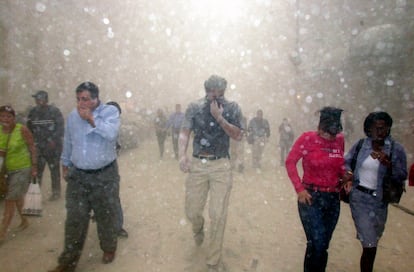

As the 25th anniversary of the September 11, 2001 attacks on the Twin Towers approaches, New Yorkers are beginning to learn something many suspected but had no official confirmation of: the toxicity of the air they breathed after the devastating Al Qaeda attacks. Contrary to what authorities had previously said, the dust and toxins around Ground Zero could make people sick. The city’s current mayor, Democrat Zohran Mamdani, announced Tuesday the release of long-awaited documents that show those suspicions were well-founded.
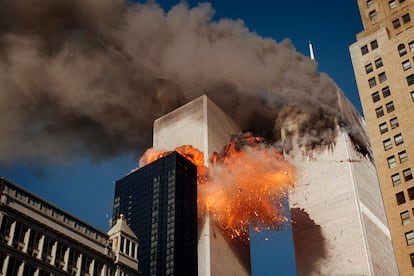
This coming Friday, the United States will honor the 2,977 people who died on September 11 as a result of Al Qaeda’s attacks. New York’s political leadership will be at Ground Zero, but not Donald Trump, who will break the quarter-century tradition of presidents attending the New York commemorations. The Republican will instead attend events in Washington. Two thousand, seven hundred and fifty-three people died at the World Trade Center. But they were not the only direct victims. An indeterminate number of people breathed toxic air despite what authorities told them at the time. Now, finally, 25 years later, the details have been made public.
The release of over 170,000 pages of records about what happened during those tragic days sheds light on what City Hall knew about toxic conditions around Ground Zero, even as it told residents and rescue teams that the air was safe. The records, which include air-quality reports, pollution data, and communications among municipal officials, are now available on a city website.
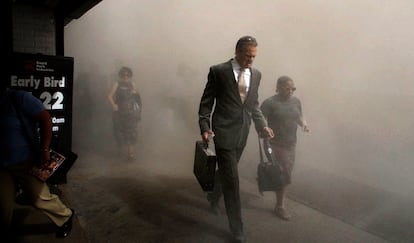
“For a long time New Yorkers have known the truth, but they have been unable to see the truth in any document presented to them,” Mamdani said Tuesday at a news conference where he announced the declassification of the files. The mayor also said many people exposed to Ground Zero dust and debris were misled about the risks they faced. “People got sick because the leaders they trusted lied and told them they were safe to breathe in toxic air,” he said. The mayor explained that the papers reveal asbestos was found in virtually every site tested.
Thousands who lived, worked, or studied near Ground Zero after the attacks have fallen ill over the years. According to the mayor, thousands of steelworkers, firefighters, and employees of various kinds remember 9/11 “each time they take a struggling breath, each time they have to swallow a pill, each time another chemo dose is administered.” “Now, close to 25 years later, more people have died from 9/11-related illnesses than were killed on the day itself,” the Democrat said.
End of a legal battle
The release of the papers follows years of demands for transparency from survivors and emergency personnel who responded to 9/11. It also resolves litigation brought by 9/11 Health Watch, an organization that sued the city to force the release of the records.
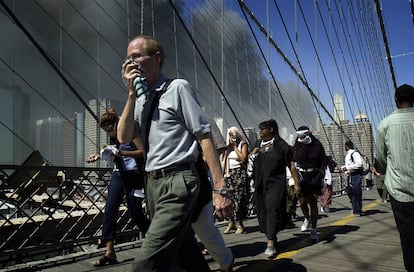
Ben Chevat, the group’s executive director, told The New York Times — which reported the story first — that the documents proved the city was aware of the danger posed by toxic chemicals “even as city officials continued messaging to the public that the air was ‘safe and acceptable.’” The disclosure of these documents could expose the city to new lawsuits and could also help people who fell ill in the years after September 11 file claims for compensation from federal victim funds.
The documents comprising those 170,000 pages had been stored for more than two decades in 68 boxes in a municipal office, out of public view. City officials said they were discovered last year. Over the next year, Mamdani’s administration plans to review, redact and release many more documents — some found in municipal offices and others at insurance companies — related to the environmental toxins resulting from the events of that tragic day.
The mayor at the time of the attacks, Republican Rudy Giuliani, has in recent days waged a campaign against Mamdani urging him not to attend the memorial events this Friday. “Having lost friends there and being very close to many of the families, it offends me that he’s coming,” Giuliani, a close Trump ally, told the far-right outlet Newsmax. The former mayor even compared Mamdani, who is Muslim, to the hijackers who crashed the planes into the Twin Towers.
In a week of September 11 remembrance, the Muslim faith is again at the center of U.S. political debate. Much has changed in 25 years: the Muslim population in the United States has grown substantially. New York has its first mayor of that faith and, if Democrat Abdul El-Sayed wins in the midterm elections on November 3, there would be a Muslim senator for the first time. In this context, Republicans are already sharpening attacks on several Muslim candidates and warning of the risk that they could impose a radical vision of Islam.
Vice President J. D. Vance, for example, has called El-Sayed, who seeks a Senate seat in Michigan, a “very, very bad” person and accused him of defending terrorism. In Alabama, where the Muslim share of the population is below 0.5%, Republican senator and current gubernatorial candidate Tommy Tuberville said, referring to what he calls “radical Islam,” that “the enemy is inside the gates.”
Sign up for our weekly newsletter to get more English-language news coverage from EL PAÍS USA Edition









































