
Judge declares mistrial in Lindsay Clancy case after jury deadlocks
Prosecutors must now decide whether to retry the case or pursue a plea agreement with the defense
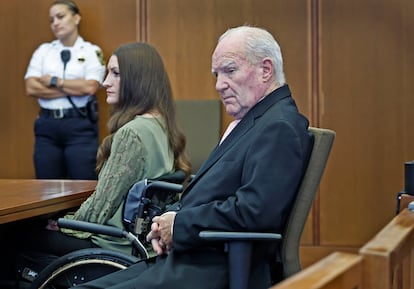

The legal drama surrounding Lindsay Clancy, broadcast live for the past six weeks and followed passionately by people around the world, entered a new chapter on Friday after the 12 jurors failed to reach a verdict and the judge in charge of the case declared a mistrial. There could be a retrial if prosecutors decide to pursue the case further.
It is an undisputed fact that Clancy, a 36-year-old former nurse, strangled her three children at her home on the outskirts of Boston on January 24, 2023. The question is whether she was responsible for her actions because of the mental illness she suffered.
Massachusetts Judge William F. Sullivan declared a mistrial after seven days (40 hours) of bitter deliberations by the jury. Prosecutors must now decide whether to retry the case or pursue a plea agreement with Clancy’s defense. The only certainty is that this new episode will fuel debate even further in a case that has spilled over in the past six weeks onto social media and into news outlets.
At Friday’s public hearing, the defense attorney, Kevin Reddington, left a couple of hints about the jury, made up of nine women and three men: he referred to the jury’s spokesperson as “she” and to the holdout juror as “he.”
The Plymouth Superior Court in Massachusetts has been the scene this summer of an intensely emotional trial that has generated sharply divided opinions for and against the defendant. On one side are those who believe Clancy, who sought medical help after realizing her mental health was deteriorating rapidly, is a victim of a system that failed to provide the care she needed. The image of this group is the women wearing pink who have occasionally demonstrated outside the Plymouth courthouse. Opposite them are those who believe that regardless of her health, she committed a horrific crime and must spend the rest of her life behind bars.
The final chapter of this legal drama comes after something wholly exceptional occurred on Thursday. In the midst of the jury deadlock, Clancy’s lawyer, Kevin Reddington, intervened with a surprising proposal. He passed a note to the judge asking that a juror be removed because, Reddington said, that juror was preventing the required consensus. That is how it emerged that a fierce fight was underway, with 11 jurors in agreement and one dissenter.
Judge Sullivan rejected the request, saying it would amount to taking sides between two camps: those who want Clancy committed to a psychiatric hospital and those who believe she is responsible for her actions and should therefore go to prison.
Beyond Clancy’s personal responsibility, the trial has served to highlight mental health struggles some mothers face after childbirth, with severe disorders such as postpartum depression or, in extreme cases, postpartum psychosis. Clancy’s defense has argued that the latter illness explains the tragedy. They say a male voice told her to first kill her children and then kill herself.
“She sought help, but no one gave it to her,” Reddington said on Thursday in his closing argument to the jury. Contradicting that account, prosecutor Jennifer Sprague argued that despite suffering depression, Clancy was capable of meticulously planning the three murders and was aware she was committing an atrocity.
Sign up for our weekly newsletter to get more English-language news coverage from EL PAÍS USA Edition









































