
Thousands of Haitians face deportation after losing TPS: ‘They have been struggling for years and now they have nothing’
The end of Temporary Protected Status, fear of raids, and mortgage foreclosures corner immigrant families in Miami’s Little Haiti
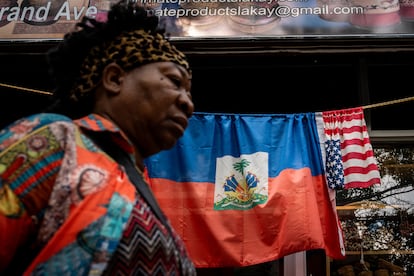

Franz Fabien is about to lose his home, his business of 20 years, and two sisters who are about to be left without immigration status. Amid uncertainty over raids and the end of Temporary Protected Status (TPS) for Haitian customers, relatives, and friends, almost nobody enters his shop in the heart of Little Haiti in Miami. He sells everything there — national team T-shirts, shoes, hair extensions — but his main sources of income were remittances to the island and prepaid cellphone top-ups. That business has all but disappeared: “I used to activate phones for people with TPS and now I can’t even remember the last time I did an activation.” With no income, Fabien is six months behind on his mortgage and on the verge of foreclosure. But what worries him most as the eldest brother and the only naturalized U.S. citizen in his family is that he has no resources to help his sisters, who on Monday lost their work permits and will in the coming hours lose the status that had protected them from deportation from the United States to an island in crisis.
The TPS status of about 350,000 Haitian nationals expired at midnight on Monday. In the coming hours a federal judge is expected to formally lift the protections following a recent Supreme Court decision that cleared the way for the Trump administration to end these programs. As a result, Haitian people who have lived in the United States for years — since the first TPS was approved after the devastating January 2010 earthquake — are now unauthorized to work and remain in the country.
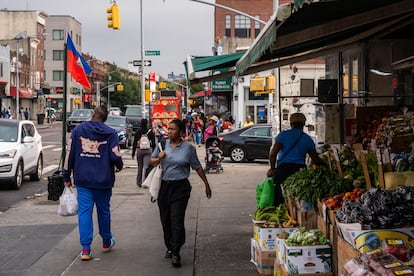
On Monday, Fabien’s sisters were fired from their jobs and fear being detained if they leave the house. After having built a life in Miami since 2009, they will also have no money to pay next month’s mortgage installments. “They’ve been struggling for 17 years and now they have nothing. They can’t drive, they can’t use their IDs. Their stress is going to add to mine because I can’t leave them helpless. If they’re hungry or need transportation, I have to help them,” he laments in the empty shop. “It’s as if I’m also under TPS, because I don’t know exactly what’s going to happen.”
Activists and lawyers working with this community’s immigration cases are doing what they can to provide resources to help people navigate the situation, alleviate fear, and avoid paralysis. “We shouldn’t panic, we should prepare,” is the advice most often repeated by attorney Vanessa Joseph, chair of the Catholic Legal Services of the Archdiocese of Miami and president of the National Haitian American Elected Officials Network (NHAEON). “In addition to seeking immigration advice, if you have family members, children, or assets you need to protect, including your finances, your bank account, your business, property, cars, things like that, it’s important to make plans.”
Thomas Kennedy, who lives in Little Haiti and is a policy consultant for the Florida Immigrant Coalition (FLIC), has observed in recent months how residents have begun taking precautions. “A lot of people are moving legal ownership of their things — houses, cars. Others are planning in case they are detained by authorities. Many people are planning what to do, how to protect themselves, but the vast majority do not want to leave.”
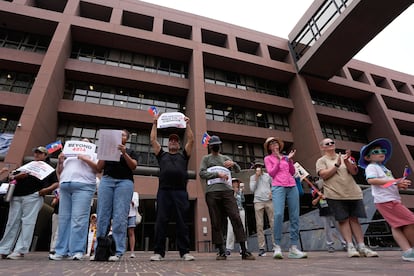
Even after the Supreme Court ruling, some activists and lawyers still believe there is hope that certain protections could remain if Congress and district courts act in favor of immigrants in the coming days. “There is a bill that passed the House that would extend protections for Haitians who benefited from TPS. But unfortunately Senate leadership refuses to give that bill a hearing even though it was approved in the House. For now, beyond that, there is no option to save the protections these people have,” Kennedy says.
However, activist José Palma, coordinator of the National TPS Alliance, believes district judges still have the authority to review individual cases alleging violations of constitutional rights for people who until now had been covered by temporary protections. “Even though the Supreme Court decision should be implemented today, judges still have the authority to review cases and see what their final verdict will be — whether to close the case because of the Supreme Court order or to make a decision based on other legal arguments,” Palma says. His organization is part of a coalition that has filed lawsuits across the country to halt the termination of protected statuses and has won small victories, such as a decision that temporarily extended work permits for some asylum applicants and TPS beneficiaries.
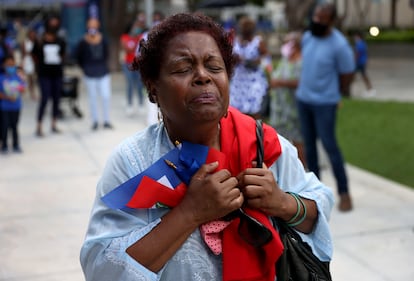
While the legal battles are unresolved, tension is rising in Miami areas such as Little Haiti, North Miami, and North Miami Beach over U.S. Immigration and Customs Enforcement (ICE) raids in gas stations, Hispanic supermarkets, and other places where immigrants gather. According to reports from CBS, ICE plans to increase its operations in these communities and accelerate deportations to the island.
Like a ripple effect, the situation is seeping into an economy that largely depends on these workers. In Florida alone there are 158,000 TPS beneficiaries who last year contributed about $2.6 billion to the state economy, according to the most recent report from the Department of Economic and Demographic Studies published in 2025. They work in hospitality, hospitals, on farms, and in sectors the state itself acknowledges critically need their labor.
Sign up for our weekly newsletter to get more English-language news coverage from EL PAÍS USA Edition









































