
Chapter 10: Architecture and decoration as a form of power
An imperial presidency demands grand architecture — and Trump wants one of his legacies to be precisely the creation of that image
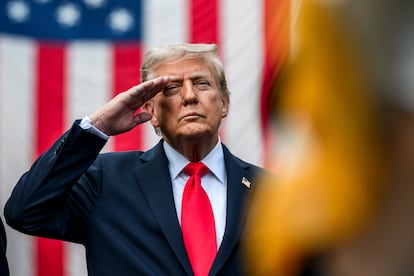

In the early hours of September 7, the Donald Trump administration did what no previous federal administration had done in 44 years: attempted to dismantle the peace vigil that has been held in front of the White House since 1981. It is popularly known as the longest continuous demonstration in U.S. history.
“President Trump is committed to the public safety of D.C. residents and visitors, as well as the beautification of our nation’s capital,” White House spokeswoman Taylor Rogers explained in a statement. The president ordered the action after a conservative journalist told him at a press conference two days earlier that the protesters’ tent was an “eyesore.”
The anecdote underscores the singularity and superficiality of one of the most ambitious goals Trump has pursued since returning to the White House: transforming the nation’s capital and its most iconic political buildings into a true reflection of the “new gilded age.” An imperial presidency demands grand architecture and opulent décor —and Trump wants one of his legacies to be precisely the creation of that image.
Historically, large buildings have been a symbol of strength and supremacy. As Sergi Miquel Valentí writes in his book Arquitectura y poder (Architecture and Power): “Styles have been designed to frighten, cathedrals have been built to intimidate, and urban planning has been used to guide our lives.” Trump knows this very well. He and his family amassed their wealth as real estate developers. In New York, the city of skyscrapers, he knew that the best way to make himself known was through large towers. And he spread that philosophy throughout a globalized world where wealth is measured, in many cases, by how many floors a building has. Currently, Trump dominates the skies of 18 cities with more than 30 architectural projects that bear his surname.
On the same day he returned to the White House, Trump signed an executive order requiring all federal buildings adhere to a “regional, traditional, and classical architectural heritage.” Architectural experts have criticized the measure, claiming it seeks to construct a false narrative: that the country is the cradle of Western civilization, while denying the diversity and styles genuinely originating in a geographical area as vast as the United States.
In a nation where the most iconic buildings have stood for decades, the scope of this measure is limited. Yet it is far from the only initiative the president has undertaken. He is advancing the most significant transformation of the White House and Washington in decades. Will this enable him to successfully impose his narrative of a new gilded age?
That same afternoon, September 7, after dismantling the 44-year vigil, the protesters who maintain it every day rebuilt it in front of the White House. A simple demonstration that tearing down to rebuild — and to reshape citizens’ minds — can be far harder than doing so with buildings and their walls.
The imperial capital
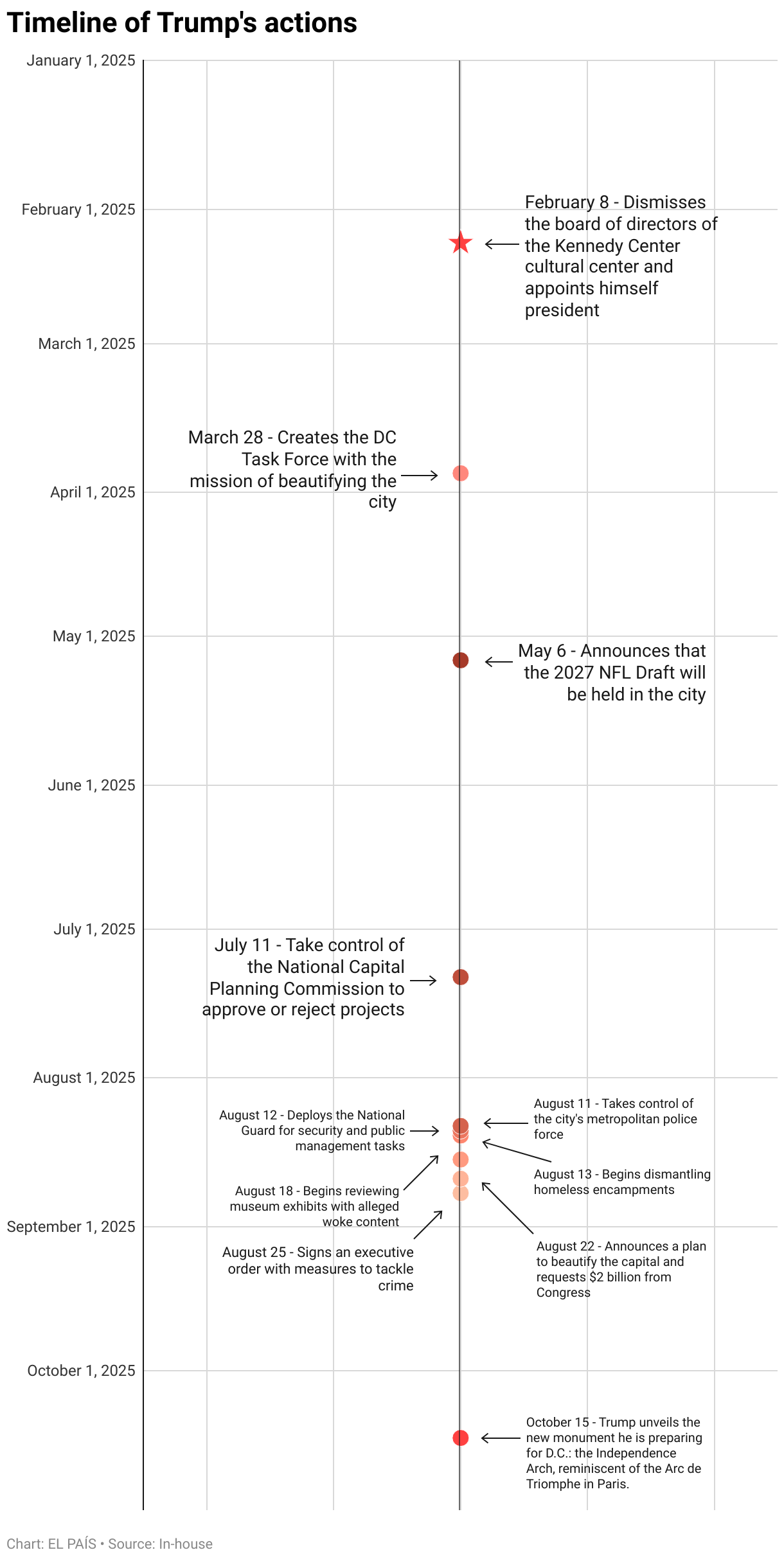
Every great empire must have an admired capital. Accordingly, Trump’s political narrative positions Washington as a decadent city that he seeks to reclaim, so it can once again astonish the world. It is a striking example of how urban intervention can become a core element of political messaging, even when it involves measures that experts say constitute an abuse of power or pose risks to citizens. Since returning to the presidency, his interventions in the city span the cultural, political, and military spheres.
From the White House to the Gold House
In the 17th century, King Louis XIV of France adopted the sun as his emblem to symbolize his central and absolute power. That is why, even today, various allegories of the sun can still be seen throughout the Palace of Versailles, the place to which he moved the court and transformed into the center of his reign. Gold, yellow like the sun, became a fundamental part of its décor.
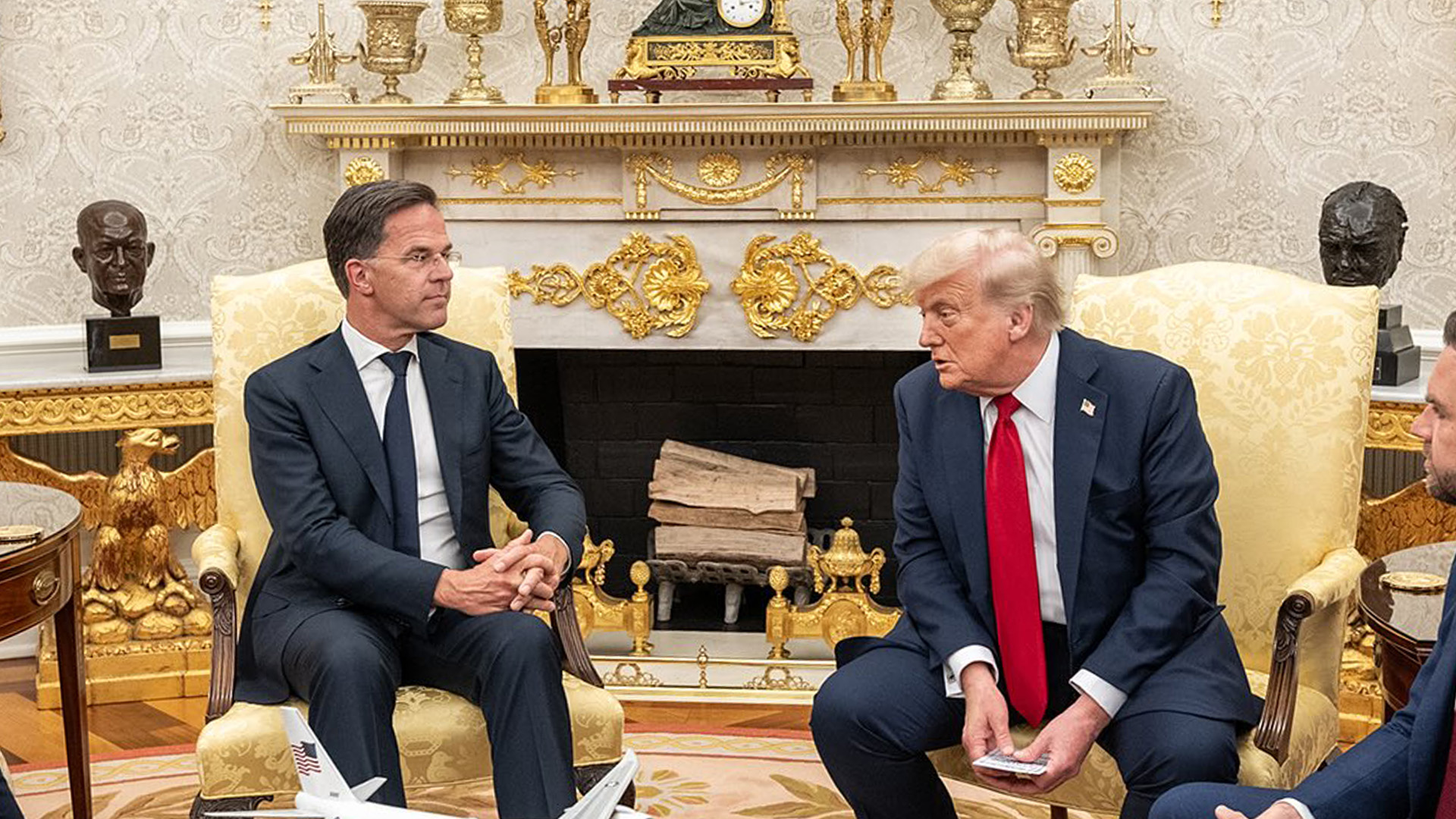
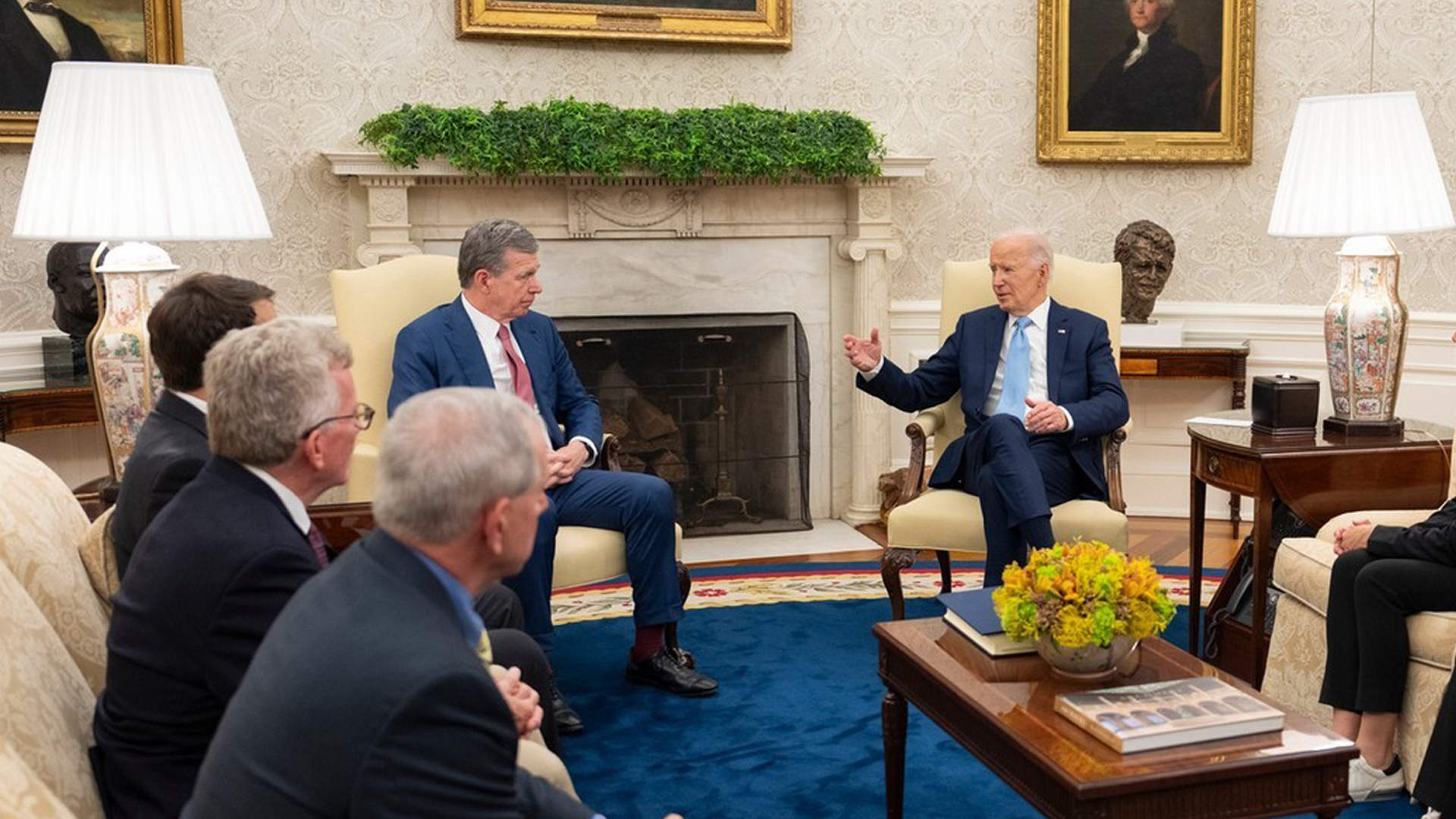
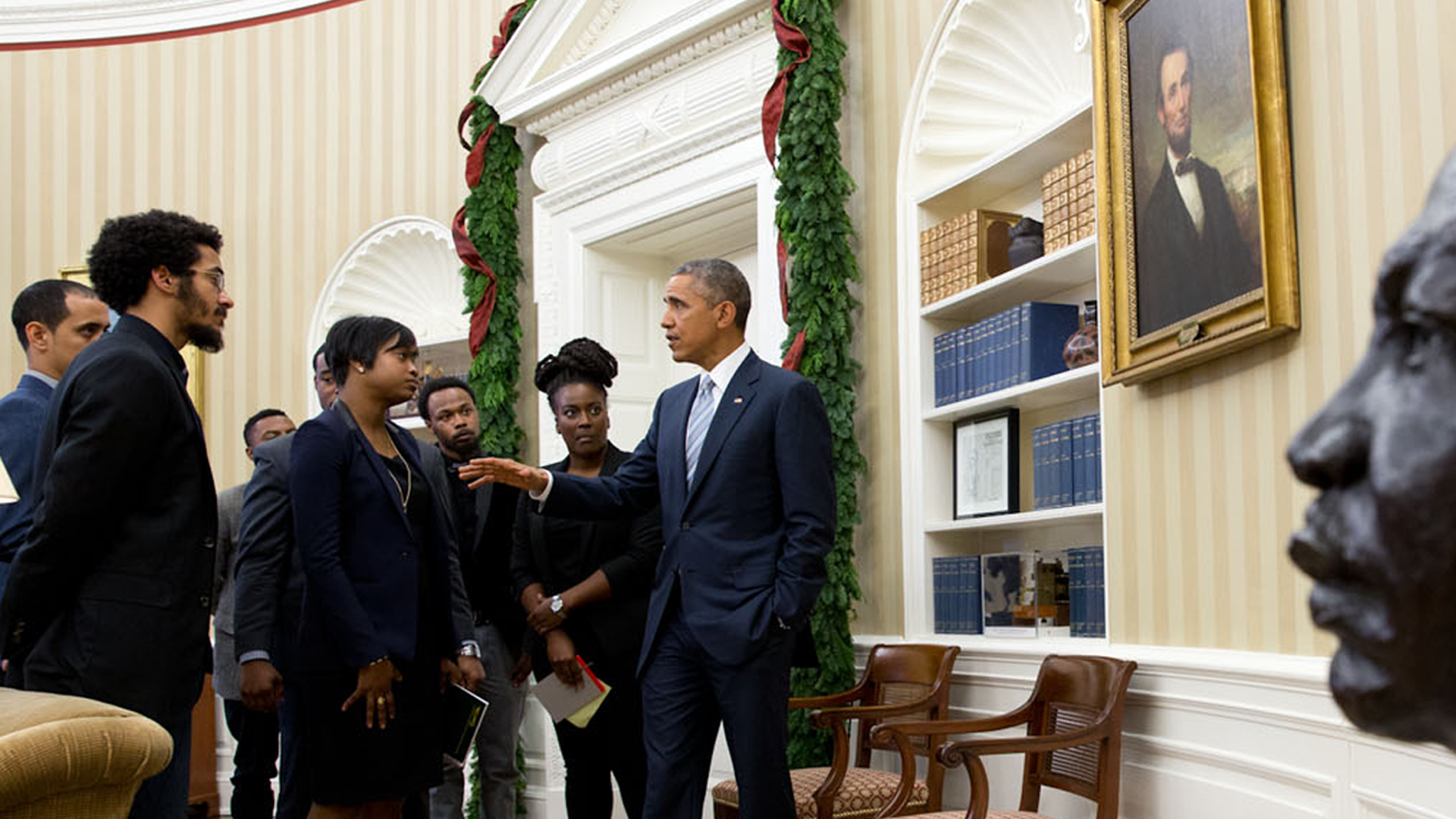
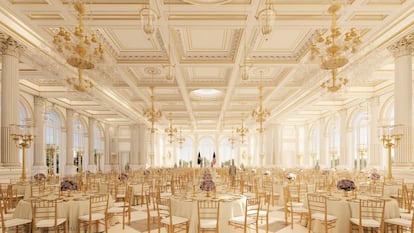
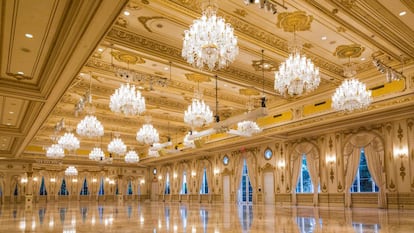
Trump is reviving this tradition. Even before becoming president, his Manhattan penthouse and his Mar-a-Lago home demonstrated his understanding of gold and maximalist ornamentation as symbols of power. Now he is bringing that style to the White House, even relocating a designer from Mar-a-Lago to Washington via Air Force One. They call him his “Gold Guy.” Trump plans to build a ballroom and banquet hall with golden chandeliers, capable of holding 650 to 900 people, and has covered the walls and furniture of the Oval Office in gold decorations. And make no mistake — it is real gold, as he clarified in a social media post.
The companies behind the decorations
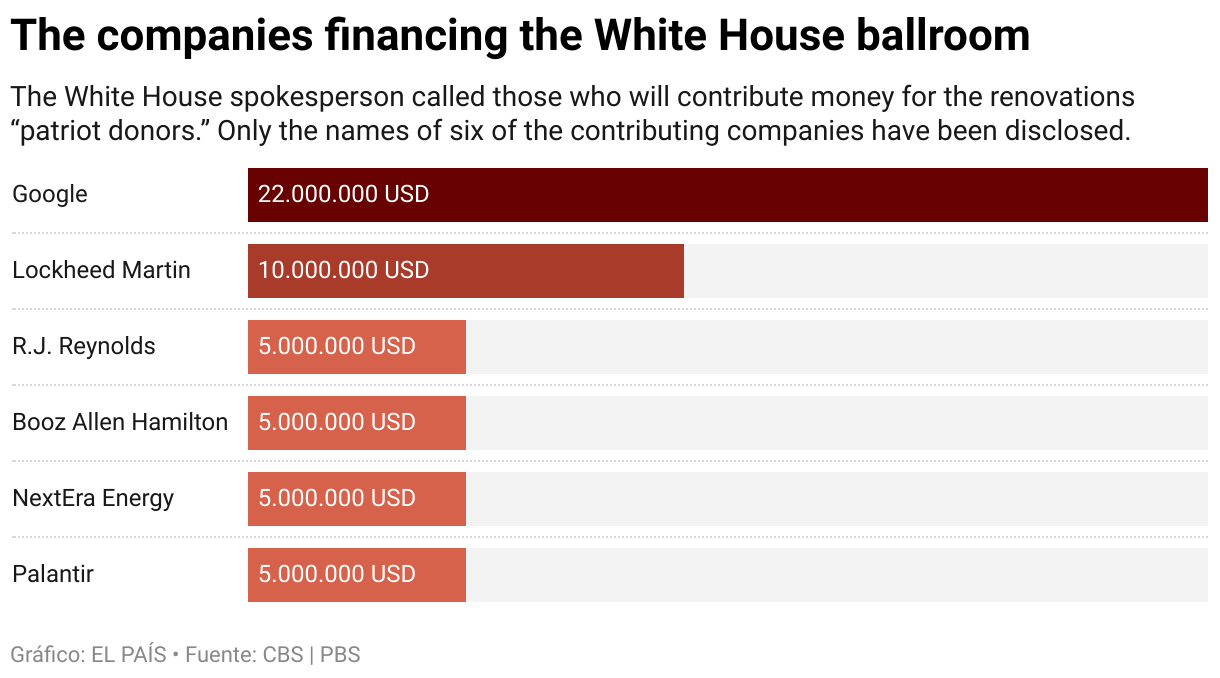
The renovations at the White House extend beyond the new banquet hall and the Oval Office. Trump also replaced the lawn of the iconic Rose Garden, designed during John F. Kennedy’s presidency, with a concrete floor (Trump said it was designed to prevent women’s heels from sinking into muddy ground), replaced trees in the garden, added new flagpoles, and refurbished the flooring in several rooms. He is so proud of his role as master builder that he gives tours to journalists and international leaders. The total cost is estimated at around $250 million. To fund it, he negotiates donations from various companies that are seeking a good relationship with an administration that keeps detailed records of contributions from every major private-sector player. The Democratic Party is investigating these negotiations from Congress.
Redecorations as an attack
The changes at the White House are not limited to showcasing power through opulence. They also aim to minimize and discredit Trump’s predecessors — the Republican and Democratic figures whom his political narrative holds responsible for putting the United States in a state of weakness that he must fix. In August, he moved the portraits of Barack Obama, George W. Bush, and George H. W. Bush to a less public and less visible location. In September, he created a presidential hall of fame with portraits of every president — except Joe Biden, his immediate successor, whose portrait he replaced with a photo of an autopen, referencing the tool Biden used to sign certain executive orders.
Cult of personality
Beyond gold and neoclassical architecture, another decorative element is becoming increasingly common in Washington: the president’s face. Both in government buildings and private-sector initiatives, homage is paid to Trump by displaying his image in public spaces. According to a report by Democratic Senator Adam Schiff, at least $50,000 has been spent on large posters of the president on the façades of buildings such as the Department of Agriculture and the Department of Labor. Meanwhile, the Bitcoin industry installed a temporary 3.6-meter-tall golden statue of the president in front of Congress.
AMERICAN WORKERS FIRST! pic.twitter.com/4XOjmi3EXv
— U.S. Department of Labor (@USDOL) August 25, 2025
JUST IN: 🇺🇸 Golden statue of President Trump holding a Bitcoin placed outside US capital. pic.twitter.com/LSoOqiwHHr
— Bitcoin Junkies (@BTCjunkies) September 17, 2025
To find out more
Books:
- Sergi Miquel Valentí: Architecture and Power
- Peter York: The style of dictators
Articles:
- Pedro Torrijos: The pitfalls of the “beautiful civil architecture” promoted by Donald Trump
- Meredith McGraw, Josh Dawsey and Julie Wernau: How Trump and His ‘Gold Guy’ Are Redecorating the White House
- Sergi Miquel Valentí: This is how Donald Trump uses architecture to convey his vision of the United States
- Cuneyt Dil: Trump’s D.C. utopia
- Antoni Gutierrez-Rubí: Trump, imperial
- Marc Caputo: Don the Builder: Inside Trump’s White House makeover
Videos and podcasts:
- AP: Trump turns the White House Rose Garden into the Rose Garden Club
- PBS: A look at Trump’s effort to reshape the White House in his image
- The Hill: Trump Putting Personal Stamp On The White House: Ballroom, Flagpoles, Rose Garden Patio
- CBC: Rating Trump’s golden White House makeover
- Fox News: President Trump gives an exclusive tour of the Oval Office
Studies:
- Adam Schiff: Propaganda: How the Trump Administration Breaks the Law and Spends Tax Money on Images of Itself









































