
Tim Weiner, CIA journalist: ‘Trump is the greatest danger to American national security’
The reporter says that US intelligence is at a crisis point, and warns of the risks of the White House’s operation against Nicolás Maduro
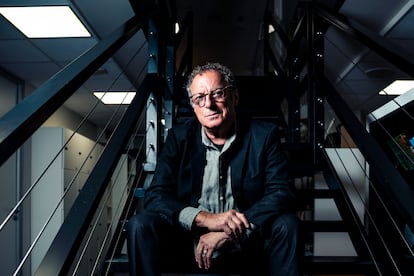

The fascination Tim Weiner (New York, 69) has with the CIA began when he was just 13, when he caught a man writing down the license plate on his father’s car, a renowned psychiatrist and university professor, after the two attended a massive anti-Vietnam war protest in Washington D.C. After that incident, the family went through three years of aggressive tax audits.
As a young man, Weiner imagined that spies were undercover heroes who drank martinis in far-off capitals and felled entire governments before escaping on a speedboat in the middle of the night. But when he encountered them in real life, they turned out to be quite different than the version he’d seen at the movies. In 2006, the reporter from The New York Times published Legacy of Ashes, a seminal book about what happened behind the scenes in U.S. intelligence services during the 20th century. Now, he’s presenting The Mission (Mariner Books), a detailed account of the CIA’s recent history and the fragile state it is in after the return of Donald Trump to the White House. “Trump is the greatest danger to American national security,” says the Pulitzer winner in an interview about his latest book and his country’s current political reality, which took place on October 21 in Madrid.
After two months of military operations in the Caribbean, last Wednesday it came to light that Trump had authorized undercover CIA operations in Venezuela. The announcement, justified by Washington as a decisive step in its war on wrugs — geared toward increasing the pressure on the regime of Nicolás Maduro — stirred up the ghost of decades of U.S. interventionism in Latin America.
“With the rarest exceptions, [the CIA] does what the president tells it to do. Now, the president has publicly ordered it to overthrow Maduro,” says Weiner. “The history of CIA coups around the world, particularly in the Western hemisphere, is not a happy one, from Guatemala to the Bay of Pigs, to the Contra Wars, to the invasion of Panama. The list is long, and its ‘successes’ in the long run are disasters.”
When asked whether it is possible that the operation in Venezuela could be similar to the coup against Manuel Noriega in Panama, Weiner answers, “Of course it’s possible. But let’s look at what happened in Panama. OK yeah, they got Noriega, a former CIA and Drug Enforcement Administration informant. They pulled him out of the embassy of the apostolic nunciature, the embassy of the Vatican. The United States murdered hundreds and hundreds of civilians. With the bombs and missiles, the number is close to a thousand, but we’ll never know the true exact number. Nobody remembers Noriega fondly in Panama, but that invasion is now marked with a day of national mourning. That’s their blueprint, that’s what they’ve got. So we’ll see. Will there be a coup in Venezuela? I don’t know. Are they thinking about it, are they discussing their secret plans in public? Of course they are.”
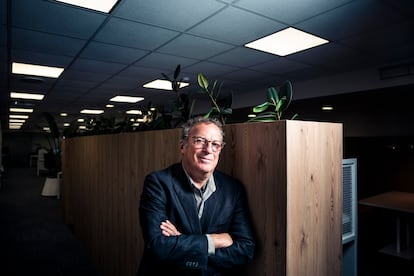
Weiner doesn’t have a crystal ball, but the operation announced last week does not sound promising. “The CIA is not going to be able to overthrow Maduro with covert action, but it can make his life even more miserable than it is now,” he says. Part of the skepticism of the journalist, who has covered the agency for four decades, has to do with Trump’s decision to go public with the operation. “Now that the president has announced the plan, its chances of success go down considerably.”
The writer has other doubts pertaining to the Republican’s disdain for intelligence reports, animosity that has only grown since the CIA investigated Russian interference in the 2016 presidential elections after Trump’s first victory. U.S. agencies have documented that the bulk of drugs that arrive in the country largely come from the Pacific Ocean and Mexico, not the Caribbean and Venezuela, says the specialist. “Covert operations without good intelligence are an invitation to a tragedy or a farce, or perhaps both.”
“Trump is using the language of the war on terror to justify blowing boats out of the water and killing people in the Caribbean,” he says. Weiner recognizes that he hasn’t been in contact recently with his sources from the CIA, but says that his acquaintances who work for the agency are also “extremely pessimistic about the possibility of a good outcome.”
What could the role of U.S. intelligence in Venezuela involve? “The CIA has lots of ways to overthrow a foreign leader. It can give weapons to the opposition. It can use political propaganda to get the people to rise up. I guess it can subvert the economy, although in Venezuela the economy is already subverted by Maduro. It can try and do these things and then fail, and then the president will send in the Marines.”
“The message is that Donald Trump believes he’s a king,” he continues. “He could order the CIA to overthrow the government of Panama so he can seize the Panama Canal, or Colombia because its president has stood up to Trump for murdering Colombian citizens [in an attack against a supposed drug-trafficking boat].”
“The question is, will the CIA say no?,” asks the author, who says there have been few cases of the agency refusing to follow the president’s orders. That short list includes Richard Nixon’s request for a cover-up of the Watergate scandal. “Their loyalty is to the Constitution, not to the man in the White House. It may be that some CIA officers will say no to Trump. If they do, it will be a long time before their stories can be told,” he says.
“Now the question is, can the CIA survive?,” he queries. Just three days after the beginning of the second Trump administration, the Senate approved the appointment of John Ratcliffe, a staunch MAGA member of Congress, as the new head of the agency. “This triggered an ideological purge,” says Weiner, who cites interrogations of agents as to their opinion on the 2021 assault on the U.S. Capitol and who they voted for in the 2024 elections, as well as massive layoffs of employees hired during the Joe Biden administration.
“Trump is swinging a wrecking ball through the architecture of American national security,” says Weiner, who holds that the current moment can only be compared to post-9/11 uncertainty. The CIA director at the time, George Tenet, described in his memoir the multiplicity of threats the agency faced. Weiner turns to metaphor to describe what is now happening with the current administration. “Imagine an oil rig out in the ocean,” he says. “It’s a dark and stormy night and the rig is on fire. It’s on fire now, today. And the arsonist is the president of the United States.”
Sign up for our weekly newsletter to get more English-language news coverage from EL PAÍS USA Edition









































