The ordeal of pregnant women detained by ICE: Malnutrition, isolation, and miscarriages
The ACLU and other human rights organizations have urged the agency to stop detaining pregnant women, a practice that has been banned since 2021
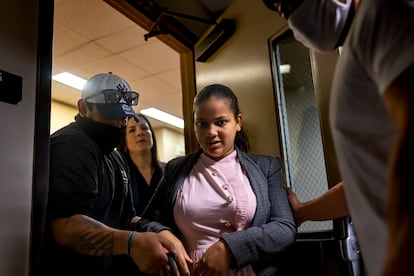

Ana (not her real name) is in her early twenties and six months pregnant. She is being held at the Immigration and Customs Enforcement (ICE) detention center in Basile, Louisiana, despite ICE guidelines urging against detaining pregnant women. In her first month behind bars, she did not receive the recommended prenatal vitamins, and although she suffers from nausea, vomiting, and body aches, the detention center has only provided her with Tylenol, a drug that, ironically, President Donald Trump has claimed causes autism in children (although this assertion is not supported by science). She also barely eats because she cannot keep most of the food down.
Her case is not unique. It’s just one example of what the American Civil Liberties Union (ACLU) has compiled in a letter to highlight the dire situation faced by pregnant women locked up in ICE centers and to call for an end to their detention.
“The detained pregnant women reported being handcuffed and restrained during transport, being held in solitary confinement, receiving late and substandard prenatal care, being denied prenatal vitamins, being inadequately fed, having no interpretation or translation during medical consultations, receiving medical care without consent, and medical neglect resulting in a dangerous infection following a miscarriage,” said the letter, sent Wednesday to the agency’s director, Todd Lyons, and signed by other human rights organizations.
The Trump administration’s deportation campaign has effectively lifted the guidelines governing ICE’s actions since 2021 against detaining pregnant and nursing women. The Biden administration, responding to criticism of its immigration policy, imposed a requirement that pregnant migrants only be detained under “exceptional circumstances” where they pose a threat to national security or immediate harm to themselves or others.
Since Trump returned to the White House in January — seeking to increase the number of detainees for the largest deportation in history — agents have had no qualms about arresting pregnant women, despite their need for additional care that ICE centers don’t provide. There are several cases of women who have suffered miscarriages without receiving adequate treatment while detained, and there have even been reports of women being rushed to the hospital handcuffed while suffering vaginal bleeding.
Lucía, also a fictitious name, who arrived in the United States in 2025 and was released by Border Patrol with an electronic ankle monitor, is one such case. Weeks later, ICE agents surprised her at her home and detained her at the Stewart Processing Center in Lumpkin, Georgia, despite her having kept her routine check-in with immigration authorities. Although Lucía didn’t know it at the time, she was pregnant and began experiencing typical first-trimester symptoms, such as vomiting and abdominal pain. She asked to see a doctor several times, but was not examined until several weeks later, at which point her pregnancy was confirmed.
Two weeks later, she began bleeding heavily and experiencing cramps in the middle of the night. She wasn’t taken to the doctor until the middle of the next day and was left alone in a room, bleeding, without food or painkillers, for several hours. That evening, she was taken to a hospital, handcuffed. She had suffered a miscarriage. She needed a transfusion to replace the amount of blood she had lost. She was taken back to the detention center, where she has continued to suffer abdominal pain and heavy bleeding for a month.
Another woman, Alicia, who had lived in Louisiana with her daughter and son, a U.S. citizen, for nearly a decade, suffered a miscarriage while detained at the Basile center. Without her consent, she underwent an invasive uterine examination that caused excruciating pain and was injected with an unidentified drug. She was then returned to the detention center, where she spent two more months suffering from bleeding, inflammation, and intense uterine pain that radiated to her legs. In July 2025, Alicia was deported to her home country and separated from her children. After her deportation, she had to seek medical treatment at a hospital for a serious infection resulting from her time in ICE custody.
No official data
It is unknown how many pregnant women are being detained by immigration authorities because the Trump administration is not reporting to Congress, despite ICE being required since 2019 to detail the circumstances of each pregnant detainee and the length of her detention every six months.
To address the information gap, the advocacy group Women’s Refugee Commission (WRC) created a tool in September to report known detained pregnant women. Despite guidelines prohibiting it, they continue to receive cases from ICE that ignore these protections, putting the health and safety of women and their babies at risk. “This tool will bring transparency to a system that has become a black box, so we can fight for the safety and human rights of these women,” said Zain Lakhani, director of immigration rights and justice at the WRC, at its launch.
“WRC has received reports of pregnant detainees begging to bring an apple or a carton of milk into their cells and being denied, forcing them to try to meet their nutritional needs with French fries and frozen burritos, the only food available for purchase, at an exorbitant price,” at the Basile facility, the report states. WRC staff interviewed deported nursing mothers in Honduras, “who were so malnourished by their detention” that their bodies “had stopped producing milk.”
Allegations about the lack of adequate treatment for detainees in general and pregnant women in particular are not new. Georgia Senator Jon Ossoff launched an investigation last summer in which he states that he identified “14 credible reports that pregnant women have been mistreated in Department of Homeland Security (DHS) custody, including lack of adequate medical care and timely check-ins, lack of urgent care when needed, denial of adequate snacks and meals, and being forced to sleep on the floor due to overcrowding.”
In response, DHS replied that pregnant women receive medical care and nutritional support, and that “the detention of pregnant women is rare and subject to rigorous oversight and review.” “No pregnant women have been forced to sleep on the floor,” it added.
The official position, however, has not been convincing. Washington State Democratic Senator Patty Murray, along with 27 other senators, last month sent a letter to DHS Secretary Kristi Noem, urging ICE to stop detaining pregnant women except in exceptional circumstances. They also asked the department to provide information on the number of pregnant women in its custody — as well as demanding answers to a long list of additional questions about oversight — by September 26. “Medical research links ICE detention with high rates of pregnancy complications, and doctors identify serious risks to fetal and maternal health. These already serious risks are compounded by deteriorating conditions at detention centers, including extreme overcrowding, reports of inadequate food and water, and a lack of emergency medical care,” the letter stated. There was no response.
Sign up for our weekly newsletter to get more English-language news coverage from EL PAÍS USA Edition
Tu suscripción se está usando en otro dispositivo
¿Quieres añadir otro usuario a tu suscripción?
Si continúas leyendo en este dispositivo, no se podrá leer en el otro.
FlechaTu suscripción se está usando en otro dispositivo y solo puedes acceder a EL PAÍS desde un dispositivo a la vez.
Si quieres compartir tu cuenta, cambia tu suscripción a la modalidad Premium, así podrás añadir otro usuario. Cada uno accederá con su propia cuenta de email, lo que os permitirá personalizar vuestra experiencia en EL PAÍS.
¿Tienes una suscripción de empresa? Accede aquí para contratar más cuentas.
En el caso de no saber quién está usando tu cuenta, te recomendamos cambiar tu contraseña aquí.
Si decides continuar compartiendo tu cuenta, este mensaje se mostrará en tu dispositivo y en el de la otra persona que está usando tu cuenta de forma indefinida, afectando a tu experiencia de lectura. Puedes consultar aquí los términos y condiciones de la suscripción digital.
More information

Archived In
Últimas noticias
Chris Martin, Taylor Swift, Elijah Wood and other famous wedding ‘crashers’
‘How does it feel to be a failure?’: Elizabeth Berkley’s journey from ‘Showgirls’ ridicule to vindication
The story of the Málaga virus: The code that haunted Google’s cybersecurity center director for 30 years
The impact of Ecuador’s mega-prison: A polluted river, cleared forests and military checkpoints
Most viewed
- Christian Louboutin: ‘Young people don’t want to be like their parents. And if their parents wear sneakers, they’re going to look for something else’
- The low-cost creative revolution: How technology is making art accessible to everyone
- Liset Menéndez de la Prida, neuroscientist: ‘It’s not normal to constantly seek pleasure; it’s important to be bored, to be calm’
- All the effects of gentrification in one corner of Mexico’s Colonia Roma
- December Social Security and SSI payments: Dates, double checks and the 2026 COLA increase