
The costly failure of the CBP Home self-deportation app
According to an NBC News analysis, in the five weeks following its implementation, only 356 people used it to voluntarily leave the country, and no further data has been published since then
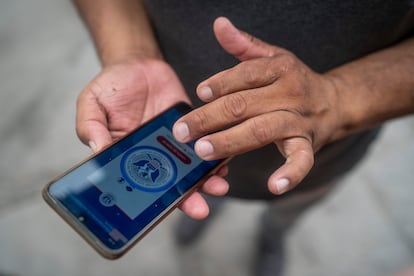

Six months have passed since the Department of Homeland Security (DHS) launched its campaign to encourage what they named as self-deportation. One of its first actions was to change the CBP One app—created by the Biden administration so that asylum seekers could get an appointment at the border to enter the country legally—to one called CBP Home, which includes a tool for immigrants who are in the country illegally to “self-deport”: that is, to leave the country voluntarily in order to potentially receive supposed benefits for future re-entry into the United States.
A month ago, Homeland Security Secretary Kristi Noem announced a two-year, $200 million television advertising campaign and promised a $1,000 payment to people who decide to leave the country voluntarily to purchase plane tickets to their countries of origin. At the same time, she said she would announce the exact number of people who have self-deported since the campaign began. So far, she has not done so, and the Department has not released any figures either.
An ineffective campaign
According to an investigation by NBC News, the campaign has not been nearly as effective as Noem claims. An analysis of a five-week period after the DHS launched CBP Home in March found that only 356 people used the app to self-deport. The data was obtained under a Freedom of Information Act request, but the department has refused to provide more recent data.
In response, a CBP spokesperson said the ads had been a success and that the data obtained by NBC News did not cover the period after the “formal announcement” of the broader project to which it belonged, called Project Homecoming. In addition, he said that thousands of undocumented migrants had used the app and that registrations are still open.
Since Trump began his second term, there have only been 91,000 downloads of the app from within the United States. DHS declined to say how many people have completed the process and used the app to confirm that they have left the country.
According to data from Appfigures, a private company that tracks app downloads, the app had the most downloads on January 20, the day Trump took office, when it was still CBP One, and it rose again in March after the change to CBP Home was announced. However, the data shows a steady decline.
Critics of the campaign have questioned whether the television ads are reaching immigrants, because, according to one analysis, only 20% of those that have aired have Spanish subtitles, while the rest are in English, raising doubts about whether the commercials are only serving to boost the image of Noem and Trump. In response, a DHS spokesperson said the department seeks to reach migrants through digital ads, with at least 918 million impressions across Spanish-language audio and video platforms.
Regarding the high cost of the campaign, Noem said in a congressional hearing that the cost of self-deportation is $4,500, while forceful removal would cost more than $17,000.
While Noem and the DHS claim that the app has helped thousands to self-deport, some undocumented migrants told Noticias Telemundo that it is difficult to use because it does not provide enough information about the problems involved in obtaining the travel documents they need to leave the country. The department noted that the department can help people obtain the documents they need and purchase plane tickets.
Sign up for our weekly newsletter to get more English-language news coverage from EL PAÍS USA Edition









































