
The dilemma of US-deported migrants in Cameroon: Trapped without rights or returned to danger
The justice system had protected them from being expelled, but two of them were sent back to their country of origin, and the rest remain detained in a foreign country, in appalling conditions
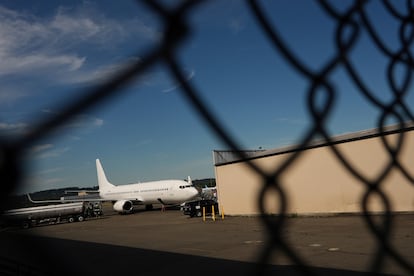

One of the Trump administration’s strategies to increase migrant deportations has been to seek out third countries to which people who cannot return to their country of origin can be transferred. The flights have been conducted in secret, and the destinations are unpredictable, mostly in African countries where human rights are not respected. The latest destination chosen was Cameroon, although the United States has not publicly announced any agreement with that country to accept deported migrants. Some 17 migrants were sent there between January and February. All of them had legal protections preventing them from being deported to their countries of origin, where they would face persecution.
Two of the migrants transferred to Cameroon in January have ended up back where they fled from: Morocco. They suffered physical and psychological abuse in their home country for being homosexual and now have to hide. One of them, a 21-year-old, was interviewed and is now overwhelmed by the media attention she’s received and is afraid, so she prefers not to speak further. “I think she feels a bit regretful because she’s seeing it all over social media, and she’s very worried that people will find out who she is,” explains Alma David, an immigration lawyer who is in contact with her and assists the rest of the group sent to Cameroon from the United States.
The young Moroccan woman embarked on a journey she believed would be a one-way trip to the United States, but her asylum application was denied. She was detained by Immigration and Customs Enforcement (ICE), and a judge recognized that her life would be in danger if she returned to Morocco. But that is where she ended up after a stop in Cameroon. “The Trump administration is taking advantage of the fact that they can deport people to third countries, and they are doing so in a way that violates various laws, such as those prohibiting deportation to countries where they may be tortured,” says David.
Judge declares third-country deportations illegal
U.S. District Judge Brian E. Murphy of Massachusetts ruled Wednesday, for the second time, that the government’s deportations to third countries are illegal and must be halted, though he suspended his ruling for 15 days to allow for an appeal. Murphy said migrants have the right to “meaningful notice” and the opportunity to object before being sent to a third country. The deportees were expelled without due process, and the U.S. government disclaims responsibility for what happens to them once they are outside its territory.
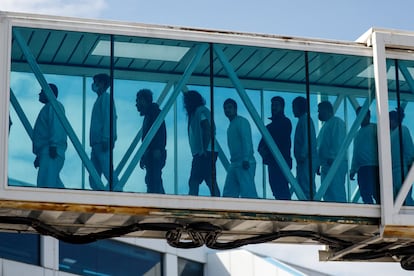
The two Moroccan women were part of a group of nine migrants of various nationalities who were sent to Cameroon from the ICE detention center in Alexandria, Louisiana, in mid-January. At least eight more migrants were sent to Cameroon a month later. This group included citizens from several African countries: Kenya, Senegal, Sierra Leone, the Democratic Republic of Congo, Ghana, Ethiopia, Angola, and Zimbabwe. They are now being held in Cameroon’s capital, Yaoundé, and have no idea of what awaits them.
The women who returned to Morocco had no contact with a lawyer and were only given the option of going back to their country or going to another country where they had legal residence — that is, none. According to David, they were not offered any other options, such as applying for asylum.
In a phone conversation with EL PAÍS, the lawyer for the other deportees, Joseph Awah Fru, says that although they do not wish to remain in a foreign country where their rights are not guaranteed, they are willing to apply for asylum in order to avoid being deported to their home countries. He does not, however, trust the intentions of the Cameroon government: “I think they are doing everything possible to break them psychologically and make the situation so unbearable that they say they want to return to their countries,” even knowing that their lives are in danger if they do.
The detainees have different backgrounds, but they are not the dangerous criminals that the administration of Donald Trump claims it is deporting. A 20-year-old student from Ghana, and a nurse from Zimbabwe who has lived for 15 years in the United States, are among the people in the group. There is also a man from Angola who, after living for 30 years in the United States, is stateless, since the Angolan government does not recognize him. All of them sought refuge in the United States because they are persecuted in their respective countries for their gender, their race, or their political beliefs.
Some were detained as soon as they entered the United States, and several had spent a year locked up in ICE detention centers. This is the case of a 26-year-old woman from the Democratic Republic of the Congo who fled her country because her appearance as a Rwandan put her in danger. Rwanda and the Democratic Republic of the Congo have maintained armed conflicts, and the young woman was attacked because she was mistaken for someone from the rival country. After being raped by the police and abused by her compatriots, she decided to flee. When she arrived in the United States, her asylum request was denied, and she was detained. A judge granted her protection so that she would not be deported. But without any notice, after spending a year in detention, she was put on a plane to Cameroon.
Treated as criminals
The deportees, who prefer to remain anonymous to avoid reprisals, say they were treated like criminals by U.S. immigration agents, who transferred them in handcuffs and shackles on their feet. Upon arrival in Cameroon, they were detained. Although there are no charges against them in that country, they are being deprived of their liberty and denounce the conditions in which they are being held at the detention center.
“They say it’s not a prison, but it’s only different in name. They aren’t allowed to leave. They have no documentation. And the three daily meals aren’t guaranteed. There are days when they don’t receive any,” says Fru.
The detainees have complained that there have been days when they haven’t received any food until late in the afternoon. Their situation is dire, and their morale is falling with each passing day.
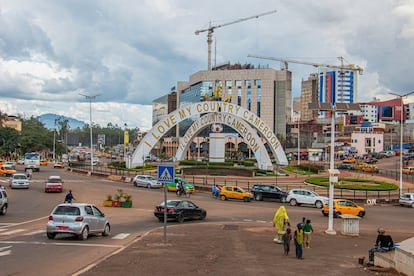
Fru visited the group that arrived in January daily, but has had little contact with the second group, which landed in Yaoundé on February 16. Last Wednesday, he was notified that he was barred from visiting and that he would have to request visits through the International Organization for Migration (IOM), which is in charge of them. “I haven’t seen them in a week. So, if they’re talking to them without a lawyer, I think they’re forcing them to voluntarily return to their countries. If that were the case, the United States should have done it,” Fru says.
Journalists arrested
The Cameroonian government is trying to withhold information about the detainees. On February 17, just as the second group of deportees had arrived, two journalists and two photographers who went to the detention center to interview them were arrested for a few hours. Their phones and equipment were confiscated and were only returned after a week of arduous efforts.
One of the journalists, Randy Joe Sa’ah, a contributor to the BBC, had gone to the center with Fru and was listening to Fru’s explanations to the new arrivals about the possibility of requesting deportation to their country of origin or applying for asylum. The other journalists were covering the story for the Associated Press.
When the administrator of the center realized that they had taken photos, he confiscated their phones and equipment and alerted the police. They were taken to a police station, where they were questioned. Sa’ah was detained for five hours and only this Tuesday recovered his laptop and phone.
“I haven’t opened my computer yet because I want to be cautious. I want to find out first if they planted any of these viruses before I can start using it,” he tells EL PAÍS by phone.
Sa’ah estimates that the older detainee was over 70 years old. “He looked frail. He was lost in thought,” he says. The journalist adds that he has experienced worse detentions in the course of his reporting, but what worried him most was that the authorities might discover sensitive information on his computer “and accuse us of something else, not of what we were actually covering.”
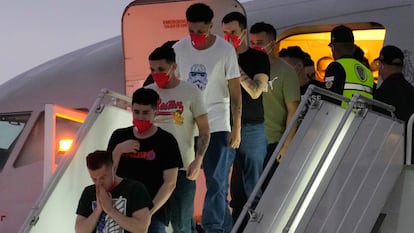
Their belongings were only returned to them on the condition that they would not use the material they had gathered during their visit.
“Cameroonian authorities must stop harassing journalists for doing their job and respect the public’s right to be informed,” said Angela Quintal, the Africa program director of the Committee to Protect Journalists.
“For years, parts of Cameroon have been wracked by violence and armed conflict, the government has cracked down on opposition and the media, and armed groups and government forces have committed widespread abuses, including torture in detention,” said Lauren Seibert, an analyst at Human Rights Watch, in a recent article. “In 2022, we documented how Cameroonian asylum seekers deported by the U.S. experienced harms in Cameroon after their return.”
There is no official information on whether the U.S. government has reached a financial agreement with Cameroon to deport migrants of other nationalities. However, a recent report by the United States Senate revealed that it has paid at least $32 million to third countries — “including those with records of corruption, human rights abuses and human trafficking” — in order for them to receive migrants.
The possibility of remaining in Cameroon, a country unknown to the deportees and in a critical situation, is not very encouraging, but even that has become a better option than returning to their home countries.
“It’s clear that they don’t want to be here, because no one asked their opinion. But it’s better than going back to the country where they face persecution,” says Fru.
Sign up for our weekly newsletter to get more English-language news coverage from EL PAÍS USA Edition









































