
Venezuelan singer Davicito wins asylum case, but remains in US detention: ‘I’ve never been a criminal’
On August 22, immigration authorities filed a motion to reopen the investigation and deport him, arguing that the judge had rushed to issue a ruling in favor of the artist
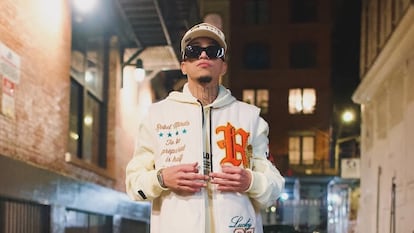

On July 8, 27-year-old Venezuelan singer Claudio David Balcane, better known as Davicito, won his asylum case after being violently arrested in early April outside his Chicago home and detained at the Dodge County Jail in Wisconsin. As in the case of many other arrested immigrants, authorities used his tattoos as evidence to link him to the criminal gang Tren de Aragua. His involvement in the hit song Donaltron — a catchy dembow track in which he performs alongside LuxorMaster and Junior Caldera, humorously critiquing U.S. President Donald Trump’s immigration policies — also earned him ridicule and threats of deportation from ICE agents.
“Welcome to the United States; I hope you do well in this country!” were the words of the immigration judge who granted his asylum in a hearing that lasted three hours and 20 minutes. The magistrate informed the artist that he would remain in detention for another 30 days because the prosecutor had reserved the right to appeal. Time passed, and no appeal was filed, so by August 8 he was set to be released. However, on August 22, the government filed a motion in the case, intending to have the judge reopen it, arguing that the verdict had been rushed before the investigation was complete.
“I don’t know if it’s my appearance, my tattoos, I really don’t know. I feel like I’m too clean to be real. I’ve never been a criminal in my country or any other,” says Davicito in a video call with EL PAÍS from the Dodge Penitentiary in Wisconsin. “They think my appearance doesn’t match my criminal record and insist they can find something against me so they can revoke my asylum and deport me [...] Here, they don’t want you to fight your case. What they’re looking for is to break you mentally so you sign for voluntary deportation and leave.”
A key event on August 8 would help explain what happened next. Two immigration officials came to the detention center to question him, apparently about matters unrelated to his asylum case.
“They tricked me,” says Davicito. “I thought if I cooperated, I’d be released that day, but that wasn’t the case. They asked me how the coyotes [smugglers] worked at the borders of the countries I passed through. They also asked me if I had seen human trafficking along the way, if I knew individuals who cooked drugs, or women who were paying for the trip to the United States with their bodies. I told them the truth the whole times. I’ve never been involved in any negative things. I didn’t make anything up; I cooperated with them as much as I could.”
The agents also probed his personal history and tried to gather information about his son and his family. Finally, they asked whether he had videos documenting his journey north. “I told them I did, and I signed an authorization for them to search my cell phone. There’s nothing negative there, nothing criminal that links me to any gang,” says the singer, who is approaching 180 days in detention and now faces uncertainty following the government’s motion.
EL PAÍS contacted the artist’s new legal representative, attorney Michelle Lenze from the National Immigrant Justice Center, but she said she could not provide information about his defense at this time. The Venezuelan had parted ways with the lawyers from Chicago’s Consumer Law Group, who had represented him until July, as he felt “abandoned” by them during one of the most critical moments of his case.
Making music from frustration
Davicito is an artist with a budding career. After years earning a living by rapping on the streets and buses, and connecting with the underground scene and the graffiti world, he found digital platforms as a showcase to gain recognition and build a fan base. His name is also among the most prominent in a musical movement of Venezuelans — mostly from Maracay — making urban music in Chicago.
In this context, his detention has been a severe setback to his career. “Before coming to the United States, I didn’t have the career I have now. That’s what motivated me to fight for asylum and reject a voluntary deportation order. But being in prison prevented me from signing a record deal that could have taken my career to the next level,” he laments.
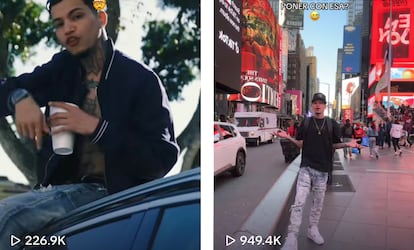
He does not regret participating in the remix of the song Donaltron, which became a turning point in his career and has nearly a million views on YouTube. “Recording this track meant that important people started reaching out with the intention of collaborating. If this is the price I have to pay, I’m willing to pay it. It’s not a song that disrespects anyone; we’re not being rude to the president of this country. It’s simply a protest in the form of comedy, which also carries a message: we are good people, and we’re not causing trouble,” he insists.
For the past five months, he has shared a cell with 23 other inmates, and despite the harsh experience of being detained, he says the treatment he receives in the facility is not violent.
“I live in a hostile environment. Things are always happening, there are always conflicts. I only have one Venezuelan friend,” he says. “There were two others, but one was deported, and the other released. The other inmates are Central American […] The food stinks. It has no flavor, and it’s always the same: potatoes with beans; sometimes we get a little rice, but never an egg or steak. You have to eat it, or you’ll starve. In the commissary, they sell ramen-style soups that we often mix with pork rinds or Cheetos, but I don’t always have money to buy food,” he explains.
To date, his girlfriend has been providing financial support to pay for the calls that keep him in touch with his family and to cover the fees of the lawyers who helped him win asylum.
His days start very early, at 5:30 a.m., with the first headcount. Breakfast arrives at 6:00 a.m., but the singer usually saves it to eat later and sleeps until nearly noon. His goal is to pass as many hours as possible so that anxiety doesn’t take over. In the afternoons, he plays cards with his cellmates, does some exercise, and watches TV for a while, but he has never performed music in prison. He admits it has been very difficult to find inspiration to compose in that environment.
“I have small fragments of songs that reflect my frustration and my need to vent, but that’s all,” he explains. “One of them says: ‘I crossed several countries, rivers, jungles, and deserts, sleeping, eating on the street, sometimes even without utensil. What do you know about me? You don’t know my story, you don’t know what it’s like to come from the bottom and reach glory. With little hope, but with a clear desire to be someone in life and to remain in their memory so that anyone can come and brand me a criminal, because I have tattoos, because I look different [...] In suffering, I realized the days I was happy and who were mine when the sky was gray. No matter how much I try to forget the bad. Creams never completely erase the scar.”
These are the lyrics of the South American artist, who is now facing the Trump administration’s latest attempt to criminalize him.
Sign up for our weekly newsletter to get more English-language news coverage from EL PAÍS USA Edition









































