
Fired immigration judges prepare to take on Trump’s Justice Department
Although there are only about 600 judges for the more than three million cases stalled in immigration courts, the administration has sent home around 50
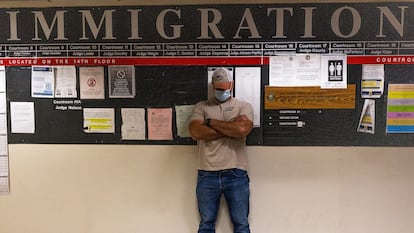

The dismissal notices for the federal immigration judges arrived without warning via a three-sentence email. No reason was given. Despite the fact that there are only about 600 judges for the more than three million cases stalled in immigration courts, and while the Donald Trump administration continues to roll out its deportation crusade — which supposedly includes reinforcing the judicial system focused on immigration cases — 50 judges have been dismissed. Now, once out of office and no longer bound by the decorum of their positions, the dismissed judges are openly denouncing in the media and through lawsuits that their terminations have been arbitrary, unfair, and constitute a political attack on the justice system.
Each case varies slightly. Some point to retaliation for court decisions that upset the administration. Others, to ideological issues or discrimination based on gender and origin. All, however, agree on one major concern: the erosion of legal institutions subjected to political pressure.
Jennifer Peyton, an immigration judge since 2016, was part of the Chicago court’s most visible group of judges, tasked with training new judges and overseeing highly complex cases. On July 4, she told CBS, while on vacation with her family, she received her termination email as a complete surprise. She maintains that she has never faced any disciplinary action and has always received positive performance reviews.

In the absence of an official reason for her dismissal, one theory is that she was on a “bureaucratic blacklist” circulated by an ultra-conservative group that accused public officials of opposing Trump’s agenda. She also points to a guided tour she gave to Democratic Senator Dick Durbin as a possible trigger. The Illinois senator, former chairman of the Senate Judiciary Committee and current ranking member, called the dismissal an “abuse of power.”
According to the union representing immigration judges, at least 50 judges have been fired, and around 50 others have been transferred or forced to retire. The union’s president, Matt Biggs, has stated that the remaining judges “are feeling threatened and very uncertain about their future.”
Although each judge’s situation is unique, there are also similarities, according to statements from the handful of people like Peyton who have spoken publicly. Judges reported pressure to dismiss immigration cases, the first step that leads to immigration agents subsequently detaining migrants outside the courthouse, as they are no longer legally protected by having an open judicial process. Those who have resisted this and other political pressure from the government, the judges say, are the ones who have been dismissed.
This is the case of Carla Espinoza, who has been an immigration judge in Chicago for a short time. Technically she hasn’t been removed, but she was notified, also in a brief email, that her two-year probationary period would not be permanent. She received this notice while issuing a decision. Espinoza alleges discrimination based on gender and her Hispanic surname, but also sees a recent particular case as a possible trigger.
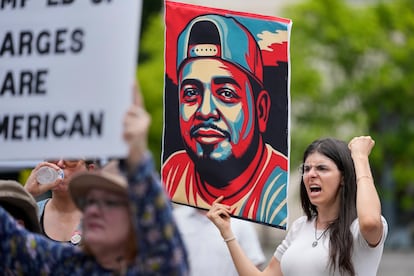
On June 12, she released Mexican immigrant Ramón Morales Reyes, falsely accused of threatening the U.S. president. The case was dismissed after it was discovered he had been framed by a man who had previously attacked him. But Secretary of Homeland Security Kristi Noem had previously repeated accusations against him and never retracted them. Espinoza doesn’t regret having made a “fair” decision, but she knows that at the time she felt the weight of political pressure. And she suspects that now that she has been removed from her job, the same thing is happening, but with greater consequences.
Although it’s the recently dismissed judges who have spoken out now, the situation transcends the immigration courts. Erez Reuveni, a former Justice Department lawyer, was fired after admitting to a federal judge that Kilmar Abrego García had been wrongfully deported. He told public radio that the White House had expected him to declare that the man, sent to El Salvador, was a terrorist. “There was no evidence of that. I couldn’t lie to a judge,” he said. Abrego García’s case has become emblematic of the excesses of Trump’s immigration crusade.
Reuveni, who as part of his job defended Trump’s immigration agenda during his first term, filed a complaint this week alleging irregularities. He claims that political leaders at the Department of Justice are manipulating judicial processes to expedite deportations. At an internal meeting in March, according to his testimony, a senior department official suggested ignoring judges if they tried to block deportation flights. That official, Emil Bove, was confirmed in recent days as a federal appeals judge by the Senate, despite protests from the Democratic caucus.
Reuveni’s complaint was prepared for months by a team of experts in labor law and government ethics. Even so, even though he has now lost his job, he fears retaliation. But he and numerous affected judges have decided to speak publicly and take on the Justice Department. “One voice can be ignored,” says Reuveni. “But a chorus... that can no longer be silenced.”
Sign up for our weekly newsletter to get more English-language news coverage from EL PAÍS USA Edition









































