
The wait to replace a Green Card increases by 1,000%
In one of the most worrying calculations, it is expected that some applicants from India in the EB-2 and EB-3 categories will have to wait up to 80 years to obtain permanent residency
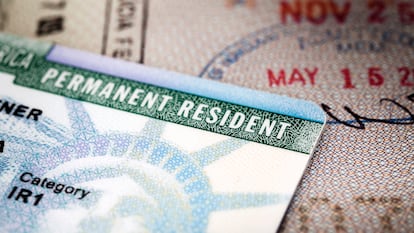

The U.S. immigration system is facing a historic crisis. In the second quarter of fiscal year 2025, the backlog of immigration cases has skyrocketed to 11 billion, according to the U.S. Citizenship and Immigration Services (USCIS). This includes Green Card renewals, visa applications, asylum applications, and work permits. This is the largest immigration backlog in U.S. history, leaving millions of applicants in legal limbo.
Who is most affected?
Among the most affected categories are replacements and renewals of residence cards. The average processing time for Form I-90, which is used to replace or renew permanent residence cards (better known as Green Cards), went from less than a month to more than eight months between the first and second quarters of 2025, an increase of nearly 1,000%. According to USCIS, 80% of I-90 replacement cases now take up to 21.5 months to complete.
USCIS received more than 285,000 I-90 applications between January and March 2025, a sharp increase from approximately 189,000 in the previous quarter. Meanwhile, the number of pending I-90 cases reached 356,000 at the end of March, up from 265,000 previously. Even routine immigration applications are affected by the overall systemic backlog.
What is causing the delay?
The suspension of the Streamlined Case Processing program, which was previously used to expedite low-risk applications, has added pressure to a system already facing problems of insufficient funding, understaffing, and outdated technology, according to experts and analysts. The USCIS has also admitted that it has more than 34,000 unopened applications still sitting in physical mailrooms, awaiting digital processing, a problem the agency claimed to have resolved in 2024.
Delays in obtaining a Green Card
Green Card holders who lose their physical card or reach its expiration date must submit a new I-90 form to maintain documentation of their legal status. Delays not only affect their ability to travel or work, but also leave them vulnerable to arrest or detention during the increase in immigration enforcement measures under President Donald Trump’s second administration.
The USCIS has attempted some temporary solutions, such as a 36-month extension of the validity of green cards with pending renewals, but this solution may not be sufficient in the long term.
Other immigration categories also face long wait times. Applications for work permits (Form I-765) and employment-based visa applications (Form I-129) have also accumulated significant delays, affecting both employees and employers.
In one of the most concerning estimates, some Indian applicants in the EB-2 and EB-3 categories are expected to wait up to 80 years to obtain permanent residency. Chinese professionals applying for work visas face waits of 20 to 25 years, while family-sponsored applicants in the family visa pipeline from Mexico and the Philippines would have to wait 10 to 15 years.
Efforts to address the crisis have stalled in Congress so far. Immigration reform proposals include visa recovery (reallocation of unused green cards from previous years), elimination of country limits, and increased funding for USCIS, but none have made significant progress. The Fairness for High-Skilled Immigrants Act, which aims to eliminate discriminatory country quotas, remains in legislative limbo. Until comprehensive immigration reform is passed, the backlog of green card applications, which has already reached record levels, could become a permanent crisis for millions of people stuck in the system.
Impact on migrants
Due to the Trump administration’s immigration policy, these delays may affect thousands of immigrants seeking to replace their Green Card or regularize their status. Currently, Immigration and Customs Enforcement detains people who do not have their documents in order and can deport them without due process.
In response, protests are planned across the country on July 17 under the slogan “Good Trouble Lives On,” which refers to the legacy of civil rights leader John Lewis and condemns the current tactics of ICE and the Trump administration.
Sign up for our weekly newsletter to get more English-language news coverage from EL PAÍS USA Edition









































