
Siwa, Egypt’s unknown oasis of salt lakes and wild desert
The beauty of this paradise seems otherworldly: the enormous dunes of the Sahara merge with palm groves, turquoise springs, and the magical atmosphere of the place where Alexander the Great was declared a demigod

Located some 450 miles from the bustle of Cairo and just 30 miles from the Libyan border, Egypt hides a treasure that has managed to survive the tourist crowds and retain the magic of the unexplored. The only way to reach this remote corner of the Western Desert is to hire an overnight minibus from the capital. After a journey of more than eight hours, the first rays of dawn announce arrival at the Siwa Oasis. In this verdant location, situated 17 meters below sea level, palm trees reach for a sky filled with stars, turquoise saltwater lakes paint a utopian landscape, and time seems to have stood still amid the footsteps of Alexander the Great.
The secret to Siwa’s beauty lies in its geographical location. For centuries, the inaccessibility of this oasis — without a single road connecting it to major cities until the 1990s — kept it impenetrable, allowing it to remain a paradise to this day, home to the only Berber population still present in Egypt, the Siwis, with their own language, culture, and traditions.
Much of this isolation is due to the fact that the Great Sand Sea, the Libyan-Egyptian Sahara, begins here. This ocean of shifting dunes, reaching up to 140 meters in height, stretches across more than 70,000 square kilometers (27,030 square miles) and is one of the most impenetrable areas in the world, but also one of Siwa’s most impressive tourist attractions. To explore it, many hotels offer their own tours with local guides in 4x4 vehicles. It’s one of the wildest and most beautiful experiences you can have in the oasis. The adrenaline rush of navigating its dunes is complemented by breathtaking sights: fossils of shells and marine sediments embedded in the sand — this immense desert was, millions of years ago, an ocean — or enormous springs that weave through the landscape, cutting across the barren wasteland.
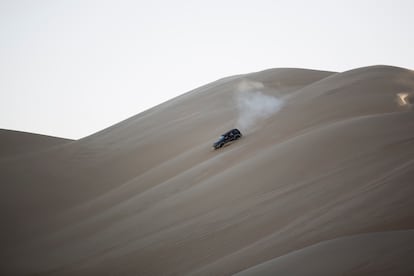
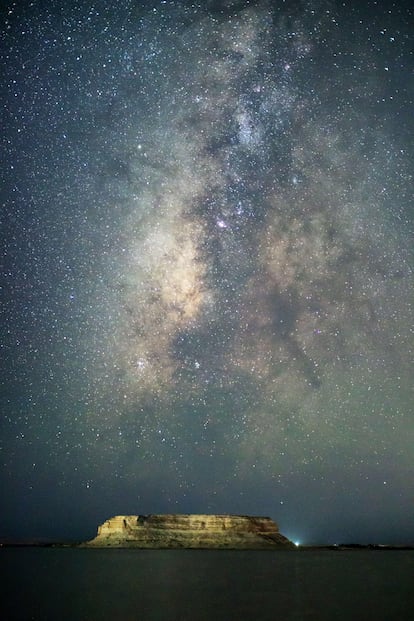
After the tour, some guides allow you to end the experience with a sunset picnic among the sand mountains, and even extend it with a night of camping under the sea of stars that covers the desert.
Salt pools and lakes
In this Martian-like landscape, water springs forth from the desert in all its forms. Hot springs and thermal pools flow from hotels and city streets, and enormous springs — both fresh and salt — are its defining feature. The explanation for this verdant and blue jungle lies underground: the Nubian fossil aquifer — fresh groundwater — feeds Siwa, flowing through various channels, some of which encounter minerals reminiscent of the formation of salt lakes.
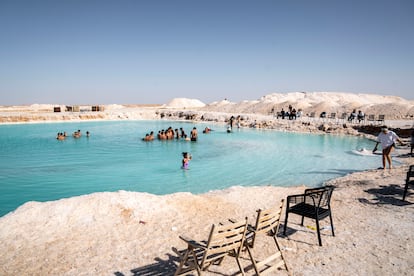
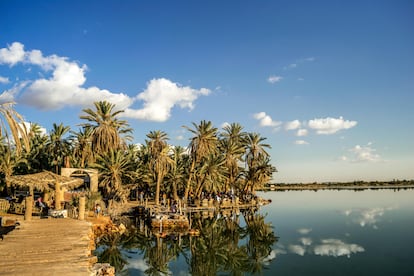
Fatnas Island is one of the best spots to appreciate this natural spectacle: there, local cafes offer drinks to those who come to enjoy a sunset on the shores of Birket Siwa, one of the largest salt lakes in the oasis, next to Birket al-Maraqi. However, one of the most striking and photogenic tourist attractions in this verdant oasis is its small salt pools. These excavations, with their utopian turquoise hues, have a salinity almost as high as that of the Dead Sea, and floating in them is one of the most relaxing experiences in Egypt.
The oracle that chose Alexander the Great
Beyond its stunning landscape, Siwa is historically known as the Oasis of Amun because of one of its historical relics: the Temple of the Oracle — built during the 26th Dynasty, between 664 B.C. and 525 B.C. — which Alexander the Great visited from the newly founded Alexandria in 331 B.C. to consult his divine lineage. It was there that the oracle declared the conqueror “son of Amun.”
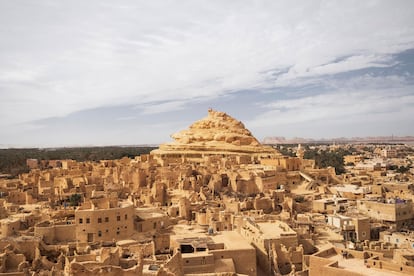
On the outskirts of the new city of Siwa lies another dreamlike site: the Shali fortress, the village the Siwi people built in the 12th century to protect themselves from neighboring tribes. What we see today is actually what remains of it, as the mud and salt structures were crumbled by the torrential rains of 1926. Since then, its ruins have created a labyrinthine landscape of sepia tones, crowned by a horizon of palm groves, water, and sand.
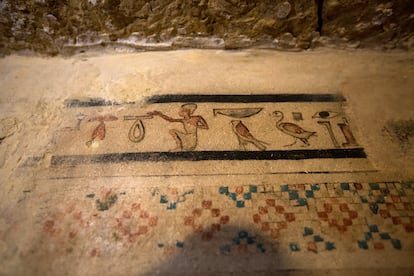
The Gebel Al Mawta necropolis — the Mountain of the Dead — is another living testament to the passage of the centuries in Siwa. This hill is freely accessible, allowing visitors to lose themselves among dozens of excavations dating from the Ptolemaic period (323 B.C.–30 B.C.) and the late Roman period (52–68 A.D.). Although many of the tombs have been looted and vandalized over its more than 2,000-year history, some of the beautiful paintings with which the Egyptians ensured the eternal life of their deceased have been preserved. These paintings differ from the well-known reliefs of the temples along the Nile due to the historical period they represent: on the walls of the Siwa tombs, Egyptian gods, such as Osiris, merge with Roman and Greek mythology in a fascinating symbiosis of cultures for lovers of archaeology and history.
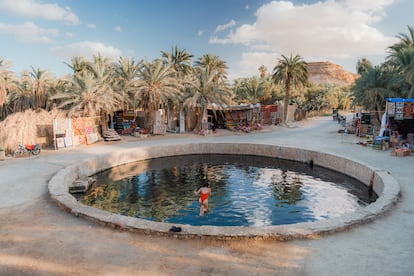
It is precisely the last queen of the Ptolemaic period who lends her name to another of Siwa’s most enigmatic places: Cleopatra’s Pool. Legend has it that, on one of her journeys to the desert, the Egyptian queen bathed in this natural freshwater spring hidden among forests and palm trees. Today, this magical spot is surrounded by traditional Siwa restaurants and shops that perfectly embody the soul of the oasis, a hypnotic enclave where time seems to slow down and the authenticity of the inaccessible prevails.
Sign up for our weekly newsletter to get more English-language news coverage from EL PAÍS USA Edition









































