
Jimbocho: Books, cafes and guitars in the coolest neighborhood in Tokyo (and the world)
The common thread running through this area of the Japanese capital is its over 180 bookstores and other businesses related to writing
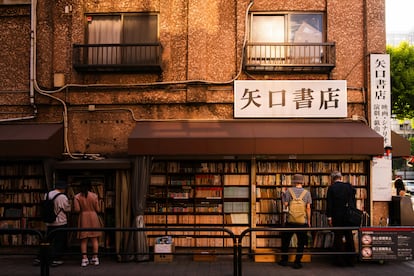
Jimbocho, a Tokyo neighborhood whose name was only uttered by insiders until recently, is now on everyone’s lips. Time Out magazine named it the coolest neighborhood in the world in 2025, making it quite famous. Even so, there’s no need to panic: Jimbocho works for those who are obsessed with staying on top of trends as well as for those who distrust fashionable lists and prefer to wander at their own pace.
The common thread running through this neighborhood is its over 180 bookstores, many of them secondhand, which frequently display their stock on the street, transforming the area into a kind of open-air book fair. This is especially true at the end of October, when the Kanda Used Book Festival takes place, which celebrated its 65th edition last year. It’s no wonder, then, that the Japanese writer Satoshi Yagisawa set his novel Days at the Morisaki Bookshop (2023), translated into more than 20 languages, in Jimbocho.
The density of used bookstores, publishers, and businesses related to writing is no accident: the proximity of several universities since the Meiji era (1868–1912) has transformed the neighborhood into an ecosystem where books are an everyday tool. The inevitable question remains for those who don’t read Japanese: what can we find there? Quite a lot: the design of Japanese books is so beautiful that it’s easy to be tempted to buy some artwork, or those vintage Japanese movie posters that seem to whisper an insistent “buy me.”
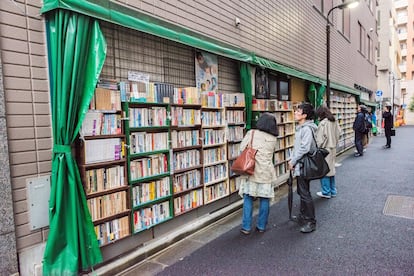
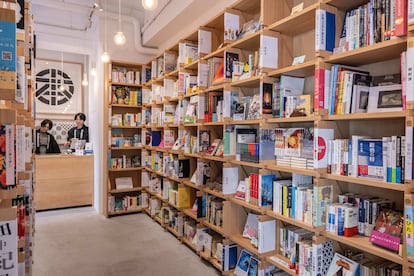
Among the many bookstores in the neighborhood are Kitazawa Shoten, specializing in foreign language books; Bohemians Guild, with its splendid collection of visual arts; Yumeno Shoten, specializing in manga; and Anegawa Nyankodo, proudly displaying its extensive selection of books, calendars, and cat-related items. Even an Italian bookstore, Italia Shobo, has ventured to open its doors in the neighborhood, counting on the cosmopolitanism of its passersby. All of this revolves around Yasukuni-dori, the main avenue, where most of the subway lines that give the neighborhood its name converge.
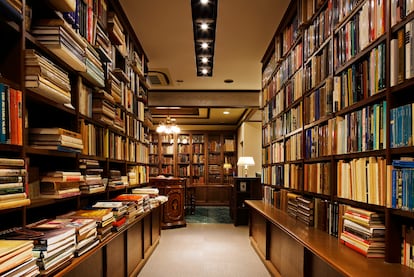
A bibliophile district can’t live on ink alone. Jimbocho knows this and responds with top-notch cafes. Milonga Nueva is one of them: tango plays on vintage, high-fidelity speakers, and you really listen. As in so many traditional Japanese cafes with a retro feel — known as kissaten — the rule is simple: listen to the music or chat quietly. Groups looking for a good laugh would be better off going elsewhere. Big Boy, tiny and dedicated to jazz, functions almost like a private listening room: vinyl records, local whiskeys, and a charming couple who go out of their way to welcome their customers. Kazuma Coffee Shop, meanwhile, takes the European concept of coffee to the extreme of Japanese culture: down a flight of stairs, you’ll find a place that doesn’t skimp on cigarette smoke, tiny drip coffee makers, English china, and a hand-crafted foam for the café crème.
If we don’t return with a book in Japanese, it’s quite likely we’ll end up with a ukiyo-e print in our suitcase. These prints, typical of the Edo period (17th to 19th centuries), were made from woodblocks and have become icons of Japan, largely thanks to Hokusai’s ubiquitous “Great Wave,” which has overshadowed many others. To get your hands on one, simply visit the Fifty Gallery and Yamada art galleries, both located in the same building. They offer good quality prints at surprisingly reasonable prices — 3,000 yen, about $19 at the current exchange rate — and even small original woodblock prints for the equivalent of three or four dollars.
Jimbocho also has its own themed hotel, the Book Hotel Jimbocho: the lobby has a library and its 32 rooms are decorated with original illustrations by contemporary artists.
Meanwhile, veteran rockers, or those aspiring to be, have their meeting point on Guitar Street, or Meidai-dori, on the way to the Ochanomizu subway station. There you’ll find the city’s electric guitar shops, where brands like Fender, Gibson, and Rickenbacker delight enthusiasts, as they are very reasonably priced and can be tried out in places like Big Boss or Kurosawa Music. Some of these shops also sell second-hand guitars, wind instruments, and electronic gadgets as eccentric as the local otamatone, a small electric instrument and an ideal gift for children or adults eager to experiment with sound.
A love of books inevitably leads to an interest in paper and illustration. For anyone wanting to try their hand at traditional sumi-e calligraphy or doodle in a travel journal, Bumpodo stationery shop is a must-visit. Open since 1887, during the Meiji era, it was founded when Japan was beginning to open up to the world and the demand for art supplies linked to educational modernization was growing; that’s why it specialized in oil paints and art supplies. The 1922 building it occupies, Western-style and with a concrete structure, survived the great earthquake of 1923. Today, it houses three floors of art supplies and, at the very top, a café with a gallery where you can sit and draw or escape the hustle and bustle of the neighborhood.
If we get hungry after our walk, Tokyo never disappoints, and Jimbocho even less so. On Suzuran Street, a tiny shop serves seafood tempura and fried vegetables right before our eyes: they’re so legendary that a line outside is a common sight. It’s called Tempura Hachimaki and is easily recognizable, not only for being always busy, but also for the vintage photograph of its interior that adorns the entrance. A few meters away, the Chinese restaurant Yosuko Saikan offers cold noodles with vegetables (hiyashi chuka) arranged in the shape of Mount Fuji, just in case we need a reminder of which country we’re in.
Sign up for our weekly newsletter to get more English-language news coverage from EL PAÍS USA Edition









































