
‘Pervert glasses’: Meta struggles with mockery and misgivings toward its star product
The launch of Meta’s new smart specs that feature an integrated camera has sparked a global campaign to discredit one of the company’s breakout consumer products
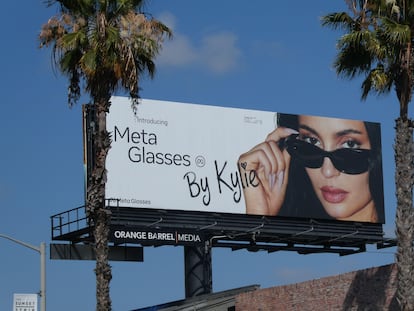

Meta’s latest smart glasses have been on sale for several weeks. They allow you to film, listen to music and chat with the AI and are no longer available in just the Ray-Ban model. Now there are a lot of models, including the most expensive, designed by the influencer Kylie Jenner, sold for €419 ($482) in Spain.
@peoplevselon Recording everything we see and do constantly? It’s giving fascism, not fashion, @kyliejenner hun. It’s just been revealed that Meta is planning to make the glasses “continuously record audio while taking photos every few seconds" without any warning light* Literally NO ONE asked for this *Source: Financial Times
♬ original sound - People Vs Elon
Hard on the heels of their global launch is a campaign from the London-based activist group Everyone Hates Elon, that includes at least three posters, one of which is an image of pedophile Jeffrey Epstein emblazoned with the slogan “Glasses for people who don’t do consent.” The Jenner ad morphs into a picture of a skull bearing the message: “We’re always watching.” And the third slogan reads: “Biggest advance in pervert technology since the trench coat.” EL PAÍS has contacted the activist group about the impact of its campaign but has not received a response.
@peoplevselon Hey @kyliejenner this @rayban @meta glasses ad is better than your one x We don’t have to allow these pervert glasses to become normal. No one consented to this. LINK IN BIO TO LEGALLY OBJECT TO META RECORDING YOUR FACE AND VOICE VIA THEIR PERVERT GLASSES #kyliejenner
♬ original sound - People Vs Elon
Due to this campaign spread on social networks, Instagram — also a Meta platform — has decided to act: it will ban videos recorded with Meta glasses involving the harassment of strangers. The announcement was made by Adam Mosseri, head of Instagram: “We don’t want people to be surreptitiously taking videos of other people and harassing them and then posting them on our platform,” he said. There are already two types of controversial videos circulating: humiliating pranks played on workers and videos of women filmed without consent.
Aside from the difficulty of spotting these videos on Instagram, it’s unclear what will happen to this footage on other networks. The glasses will continue to allow such videos to be filmed. Instagram’s solution seems, for the moment, to be nothing more than a sticking plaster. “People use our glasses because they find them useful,” a Meta spokesperson tells this newspaper. “They all have an LED that flashes when you take a photo or video. It can’t be turned off, and if someone covers it or damages it, the camera doesn’t work.”
@peoplevselon Meta's new AI sunglasses will help creeps record women without their consent. And then use the videos to train Mark Zuckerberg's robots. God forbid these tech bros build something the world ACTUALLY F*ING NEEDS???
♬ Circuit Echo Traverse - Trevor Banks
This small LED light is the only signal letting people know they are being filmed. Until now, it was easy to cover or deactivate that light, but Meta says it has made it more complicated to do so. “There are huge communities of users looking to turn off the LED, cover it up or get around it, and Meta is fighting back with updates that catch the fix and override the camera,” says Joseph O’Hagan, a researcher at the University of Glasgow. “To Meta’s credit, it’s becoming more and more difficult to cover it up or deactivate it: the most common method today seems to be a drill to pull it out.”
It is clear that the glasses are used to record situations in which a phone would be more obvious, says O’Hagan: “We have seen users justify covering the LED for various reasons, including wanting to take photos of children who don’t like their photo taken; wanting to record videos of holidays or concerts without being noticed. But there is also a growing perception that this facilitates shady behaviors, especially regarding women.”
A Swedish media investigation in February showed that these fears are justified. It revealed that the material captured by Meta’s glasses ends up being reviewed by a company in Kenya. Its employees described seeing recordings of naked people in the bathroom, sex scenes, inadvertently visible bank cards and users looking at pornography.
Those recordings are just one of the problems. Statements from Meta boss Mark Zuckerberg exacerbate the challenge of curbing this product’s reach. Anyone who doesn’t wear the AI-powered glasses will have a “pretty significant cognitive disadvantage,” Zuckerberg said a year ago, insisting this July that “it’s extremely unlikely, if you look out five years from now, that you don’t have billions of people with a personal agent that understands your goals, and that is just working on your behalf 24/7 to achieve your goals.” That agent would rely on glasses that record the user’s entire life, which could feature facial recognition and include a “permanent detection” system: the frame would record audio and take pictures every few seconds, creating a record for the AI assistant to know where you left your keys or what someone said to you at lunch.
One of the main problems with the glasses so far is that the beneficiaries are the users while those without them are the targets of potential harm. No one gains anything by being filmed on the street without knowing it. People seem to be willing to give up privacy in exchange for something convenient, as has happened with cell phones, apps, and mass surveillance. That kind of tacit agreement regarding these glasses will be much more complicated. The harms and benefits will be all but unimaginable. Everything can be exploited: “There is a very short step from the transcription of speech to clandestine listening,” explains Mark McGill, also a researcher at the University of Glasgow. “And a function that describes the emotional state of your interlocutor, designed for people with alexithymia [difficulty describing emotions], can end up being used to detect vulnerability for the purpose of manipulation. These are issues that emerge when the capabilities of these glasses precede their protections.”
One option would be to remove the camera from the glasses, which would make them a less useful object. The glasses continue to sell in high quantities: in 2025 alone seven million were purchased. At this rate, Meta may think, people will adopt them despite the risks. But it’s an ongoing debate and campaigns like Everyone Hates Elon reach a lot of people. “We need a much more sophisticated approach to privacy, which regulates when, where, and how cameras and microphones can be used on the devices we wear and what can be done with the footage,” McGill says. “The shady use of smart glasses could be reduced if the third parties featured were blurred or replaced when there is no clear consent. We also need to rethink the legislation on recording in public spaces, which was conceived in a period prior to the wearing of these cameras.”
Sign up for our weekly newsletter to get more English-language news coverage from EL PAÍS USA Edition









































