Ben Collins, from ‘The Onion’: ‘The powerful have a revenge fantasy, it’s the revenge of the dorks’
The CEO of the leading US satirical website explains what to do when reality is crazy, and how he is trying to buy the website of a famous conspiracy theorist


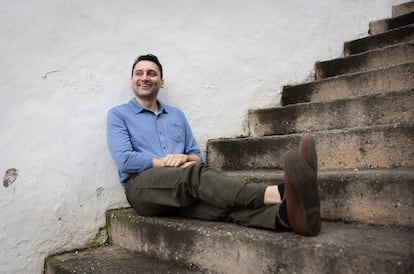
Ben Collins is the CEO of The Onion, the leading satirical media outlet in the U.S. “Say we’re like Charlie Hebdo, but better,” he advises, so a European audience understands what The Onion does. Collins spent more than a decade as a tech journalist focused on disinformation and conspiracies at The Daily Beast and NBC.
In 2024, he switched careers. He wanted to take a step back and relaunch The Onion’s print edition, which had been discontinued in 2013. The monthly paper now has over 50,000 subscribers and is its main source of revenue. But the U.S. elections disrupted his hope for calm. “I had to re-engage and do all the stuff that I knew how to do: make a story big in the old-fashioned way,” he says, partly referring to The Onion’s attempt to buy Infowars, the conspiracy website run by Alex Jones, who was ordered to pay $1.5 billion to the families of children killed in the Sandy Hook school shooting after repeatedly denying the incident occurred.
He now describes his work as “taking a headline or a story perfectly written by someone else and making sure everyone sees it.” He spoke to EL PAÍS in Barcelona, where he participated in the Mozilla Festival with a talk titled “Why Satire Is Important for Good Technology”
Question. Why is satire important in technology?
Answer. If you can’t make fun of the over valuations of AI companies and the people who are running them, you’re not painting the whole picture of what’s going on. We’re clearly in a bubble, and we have to make fun of them. One of my favorite headlines from The Onion is “Guy who sucks at being a person sees huge potential in AI,” and I think that’s how everybody feels about this stuff right now. We’ve got to hold power to account; that’s the rule of jesters and journalists. Where is true power right now if not in these companies?
Q. They don’t like jokes.
A. Elon tried to ban The Onion on X and failed. His inability to be cool affects everyone’s lives. We get take down requests from everybody, from Democratic governors to Donald Trump.
Q. But they know it’s all a joke.
A. But they get very offended by it. The Donald Trump case was before he was running for president in 2012. The headline was: “When you’re feeling low, just remember I’ll be dead in about 10 or 20 years.” We got an insane letter from Michael Cohen, his lawyer, and we framed it.
Q. He didn’t like the headline.
A. The origin stories of all these people are mockery. Donald Trump ran for president because he was made fun of at the White House correspondents dinner by Barack Obama. Elon Musk bought Twitter because he thought that there was some sort of magical button on Twitter that would make him cool. It’s all just a revenge fantasy against the world that didn’t accept them. We should do a better job of trying to accept people who are weird or have social issues. But they have more power than anybody, and at the end of the day, what they do is seek revenge.
Q. The revenge of the nerds?
A. That’s unfair to nerds. They’re more like dorks. I wrote a story about Palmer Luckey [creator of Oculus and former Meta executive], where I explained he had been funding The Donald, a pro-Trump forum that wound up being the planning place for the January 6 attack on the Capitol. Now he runs a drone and weapons company. Everybody has an origin story, and all these people in power have been rejected by polite society. There are two ways to handle that: you can reform and be a better person and look inward, or you can go and become a full fascist authoritarian. Most of them chose the second.
Q. Donald Trump jokes about everything. Reality seems like satire. Doesn’t that make The Onion’s job more difficult?
A. People say Trump is funny. But have you ever heard Trump laugh for real? Like a genuine laugh, the kind you can’t hold back? It’s never happened. His jokes are like, “That person’s fat” or “That person’s stupid.” It’s a bully behavior. We’re something else.
Q. What are you?
A. People always say like the world has turned into what The Onion has been doing for the last 37 years. I think it’s worse, frankly. I don’t like that The Onion has to come up with things that feel truer than what’s in the New York Times. But who else is going to do this? It’s not that we’ve changed, it’s that the media around us has changed. If what we write sounds more real than the news, that’s an indictment on the news, not us.
Q. What is the state of the media?
A. Things have changed dramatically. Almost all my friends are reporters, and they have two options: keep their heads down at the outlet where they work and keep their big paycheck, or go independent and report what’s actually going on. I know for a fact that all the media outlets that had a resurgence in the early Trump years either fired all the great reporters or told them to shut up.
Q. Does that favor The Onion?
A. People literally tell us things like, “I canceled my subscription to the Washington Post because The Onion is healthier.” I think that’s true. Being bombarded with non-stop pictures of babies being dragged out of daycare centers all day long is not good for you. Obviously, you should know that’s happening, but in terms of processing the news at a wider scale, you’re probably better served getting The Onion in the mail once a month than watching CNN all day long.
Q. It’s an actual trend. People are tuning out of the news.
A. Yes, but at the same time, they’re getting involved in civic life again, at least in Chicago. I’m not just saying that because my girlfriend [Kat Abughazaleh in Illinois] is running for Congress. People know enough to realize that what’s going on is terribly bad, and seeing another person kidnapped on the street is not going to change their opinion either way. They are already at 100% on the outrage. Now they’re in action mode. You see it, for example, with Zohran Mamdani [newly elected mayor of New York] and all the people who are volunteering. The same thing is happening in Chicago, but against ICE [Immigration and Customs Enforcement]: everyone has a 3D-printed whistle for when they’re in the neighborhood.
People have changed their news consumption from “what is going on?” to “how can I change things?” We don’t provide “how to change things,” but we do provide catharsis. We give off that feeling of, “You’re right, everything’s awful, but here are a few jokes and something you can write on a protest sign.” We offer a way to vent, because people already know the world is a mess and that eight people are in charge of the world, and they’re all evil.
Q. As a reporter, you covered disinformation. Some people might see the humorous headlines in The Onion as disinformation.
A. Disinformation is meant to deceive, and the kind I covered targeted people with the least amount of rights: trans people, immigrants, and was used for political gain. The Onion doesn’t do that. Everyone says we punch up, but it’s not just that. We’re trying to get to the heart of an issue by making fun of it, which is different from making up lies about a random guy. The quality of the person matches the quality of the joke. We would never make an AI video of us dumping shit all over American cities.
Q. What impact will AI have on The Onion?
A. It helps us in the sense that AI humor is so unfunny that anything that we do looks like the smartest thing that’s ever happened. AI is not just a plagiarism machine; it’s a machine that sucks the personality out of any piece of writing or art. When we do things ourselves, it clearly has heart and soul that makes us really stand out.
Q. AI is bad at jokes.
A. Go to ChatGPT right now and ask for a joke about what’s going on right now: your eyes will roll out of your head and out the window.
The war with Infowars
Q. The situation with Infowars a few months ago was extraordinary.
A. It was huge. We had no idea if we were going to get it.
Q. It was days after Trump’s election.
A. We put in our bid, they made theirs too, but it was lower. That day was insane, because we also — kind of as a joke — bid on all their supplements, and suddenly we had a warehouse full of boner pills and no idea what to do with it all. It was mayhem. Meanwhile, we watched Alex Jones lose his mind. Then we went to court, but we didn’t have a traditional bankruptcy lawyer, because, well, we just didn’t.
Q. Was it improvised?
A. We’d been preparing the bid for some time; we wanted to make sure the families were on board [Alex Jones was sued by the families of the Sandy Hook shooting for saying it didn’t happen]. We asked them if they were okay with us bidding, and they were very excited. Then the judge said it wasn’t enough money. We thought, “This isn’t really worth anything, but alright.” At this point, it’s become kind of a point of pride. If this guy gets away with it, if he ends up rigging the legal system to get out of paying these people, when he owes $1.5 billion and hasn’t paid anything, then the right thing to do is to keep going. We don’t know what happens next.
Q. Is the legal fight still ongoing?
A. Yes, we’re still trying.
Q. And what’s the plan if you succeed?
A. To create a website focused on showing how everything in American life is a scam, and how these people help several different kinds. Not just Alex Jones. Almost every kind of grifter on the internet is selling you something behind the scenes, using their cult of personality to do it.
Sign up for our weekly newsletter to get more English-language news coverage from EL PAÍS USA Edition