
Mikel Oyarzabal: ‘Often, the best thing you can do is not touch the ball’
The forward praises coach Luis de la Fuente and emphasizes teamwork as the key to Spain’s success
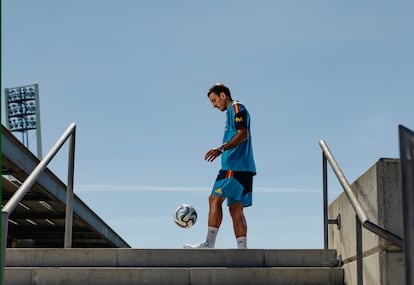
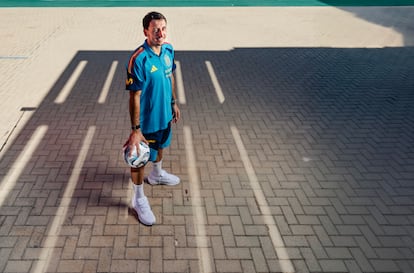
Mikel Oyarzabal (Eibar, 29) is as allergic to the spotlight as he is relaxed in conversation. He’s not fond of how he sounds in his answers, but he is clear. He is also polite and, above all, practical. He knows what he wants. A mirror of the way he plays. He scored the winning goal in the Euro 2024 final against England, Saturday’s opponent for Spain in the Nations League opener, and left the 2026 World Cup as La Roja’s top scorer with five goals. A symbol, if you will, of Luis de la Fuente’s successful tenure.
Question. How can the success of this team be explained?
Answer. Nothing is accidental. It’s what we’ve built up over all these years. A team, a group of players who prioritize the collective: putting their best individual qualities at the service of the team, not the other way around.
Q. How important is De la Fuente in that process and what sets him apart from other coaches?
A. It’s very significant that Luis has known so many people for so many years. He has known the vast majority of the players who were at the World Cup and the Euros for nine or 10 years. That creates bonds that make everything easier later on. When you have to lean on that network after taking a hit, it’s easier to get back up.
Q. Is that the formula that makes a player willing to do a bit more for a coach?
A. When that bond of trust and empathy is built up over so many years, it gives you an extra impetus. And the same goes among teammates. When you’re in a good atmosphere, in a good relationship, and you don’t care who’s next to you because the collective will be prioritized, you always have that advantage.
Q. At the World Cup you explained that sometimes it helps more in a passage of play to not touch the ball, to get out of the way. Does that relate to that collective spirit?
A. Often, the best thing you can do is not touch the ball— don’t get in the way of the players who are supposed to receive it or those who have it. That way, you can create space or make a run so that someone else can benefit. A game lasts 90 minutes, and at most you’ll have the ball at your feet for a minute, two minutes at the very most. The rest of the game you’re running, you’re doing things for the rest of your teammates. We need to place more importance on all of that.
Q. When did you realize that?
A. It ties in with how I’ve understood soccer since I was a child, with how I was brought up in football at Eibar, when I started, and later at Real Sociedad. And also from the experience of watching the game from the outside when you have an injury and you’re out for a long time — you notice things. Maybe that makes you change something or try to improve other aspects you hadn’t considered before.
Q. What happened during your injury layoff? Did you watch more matches?
A. You watch your team’s match every weekend from the stands, or on TV, something you’re not used to while you’re playing. That’s when you notice a lot of things.
Q. During your time injured, what did you miss?
A. The things you took for granted: coming here, spending a week training with everything arranged, with people working for you constantly, going to training, being with teammates, a simple bus trip to the stadium.
Q. As a child, which player did you look up to?
A. When I started, Xabi Alonso was at Real Sociedad. Shortly after, David Silva spent a year on loan at Eibar. I always went with my father to watch the matches. Later, as I grew older, I took Xabi Prieto as an example. And later I had the opportunity to play with David Silva.
Q. All midfielders...
A. Obviously you also watch Messi, Cristiano, all the people who score and rack up numbers, which is what’s appealing when you’re young. But in the end it’s a team sport. No matter how well you do individually, to be satisfied at the end of the year or after a tournament the collective has to win.
Q. You scored five goals at the World Cup and you’re not on the 30-man Ballon d’Or shortlist. Does that surprise you?
A. No, because I feel very loved and highly valued.
Q. You studied business administration, yet you give marketing zero importance. Did you skip that subject?
A. I was given a choice and I didn’t choose marketing. I preferred finance. I’ve never liked it much, to be honest. It’s another way of communicating, of making money, of making yourself known. It’s another world.
Q. Have you ever thought how much more you could earn if you went full-on as an instagrammer?
A. Maybe, but it wouldn’t suit me. I wouldn’t feel comfortable doing it, and I’d enjoy it much less than I do now. But I enjoy watching young people do the things they do. I like seeing different personalities and different ways of looking at life.
Q. So do you enjoy watching Nico [Williams] and Lamine [Yamal] messing around?
A. Yes. It’s true that I don’t know if I could put up with them for a whole year, but well, for a little while and stuff… [laughs].
Q. As captain, do you feel some weight when you have a gem like Lamine and think, “how can I help him”?
A. No. I see more problems off the pitch than on it. In terms of play we can help him very little with what he does on the field. Everything he does comes from within. Off the field you can give him four or five pieces of advice.
Q. Which ones?
A. Often it’s about keeping your cool. He’s 19 and lives life to the full. He experiences soccer intensely too. With time you’ll perhaps realize a bit more what soccer is. That it’s a business and you have to do what you love. Do what you believe in at each moment and that’s it. Don’t lose your mind.
Q. When Luis de la Fuente praises you and says you deserve more attention, do you like it or does it make you uncomfortable?
A. I’m proud. It means that people who understand the game, those involved in soccer, see that you’re doing good things. I’m not going to tell anyone not to talk about me, obviously, because if they say it that’s positive, but I’m not going to go around bragging about anything.
Q. De la Fuente recalled the other day that right after beating Argentina in the World Cup final a player approached him and said: “We’ve won everything, what are we going to win now?” How do you start over again?
A. You’re on a treadmill: there’s nothing else to do but to keep competing. And you want to keep winning, because what you won two months ago won’t help you win the day after tomorrow. And if you don’t win the day after tomorrow, you won’t remember that you won two months ago. You’ll remember that day.
Q. Spain have gone 38 competitive matches without losing. Do you ever talk about being beaten?
A. The more you win, the closer the next defeat is. Hopefully we can keep going like this for a long time. We believe we’re on the right path.
Sign up for our weekly newsletter to get more English-language news coverage from EL PAÍS USA Edition









































