
Over 40,000 irregular migrants have entered Ceuta in the past 24 hours
In the previous major crisis in the city, in 2021, estimates put the number of people who breached border controls at somewhere over 10,000
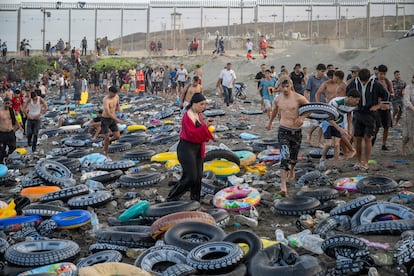
Over 40,000 migrants have entered Ceuta irregularly in the past 24 hours, according to initial estimates from security forces. That figure far exceeds the tally from the previous migration crisis in the autonomous Spanish city, in May 2021, when it was estimated that upward of 10,000 migrants breached border controls. The number of arrivals now being reported — which some sources put at closer to 50,000 — effectively increases the exclave’s population of 83,600 people by about 50%.
That has translated into a large number of people who have been roaming Ceuta’s streets since Thursday and who have spent the night outdoors. A resident described what has been seen in the city in recent hours as like “a constant demonstration.”
The estimate is a major blow to the Interior Ministry’s statistics on irregular migration. According to the ministry’s latest tally under Fernando Grande-Marlaska, 14,479 people had entered Spain irregularly between January 1 and July 15, a positive figure because it represented a drop of around 25% over the same period the previous year. In Ceuta specifically the total had been 2,826, meaning that in a single day the city has seen the cumulative statistics for more than six months multiplied by 20.
In the latest National Security report, covering 2025 and approved on April 21, the Department of National Security, part of the Office of the Prime Minister, noted that last year migration pressure in both Ceuta and Melilla had been “notably increased mainly due to the phenomenon of swimmers trying to enter by circumventing the border perimeter via the sea,” as has happened now. However, that trend does not explain the events of this Thursday in the Spanish city Nor, several police sources agree, does it explain a recent Supreme Court ruling that banned pushbacks at the border — colloquially known as “hot returns” — when entry occurs by swimming.
According to those sources, what happened in Ceuta bears strong similarities to what took place in May 2021, when the previous major migration crisis occurred because of the massive arrival of migrants, mostly Moroccans from towns near the Spanish city. At that time the National Intelligence Center (CNI) produced a four-page “reserved” report that it sent to Prime Minister Pedro Sánchez and other members of his cabinet linking that influx to the state of “relations” with Rabat “after the reception” in Spain, a month earlier, of Brahim Gali, leader of the Polisario Front and president of the Sahrawi Arab Democratic Republic (SADR), who had been brought to Spain for treatment due to a serious Covid-19 infection. A second CNI report, dated June 24, 2021, reiterated the same point, concluding that the objective was “to pressure the government of Spain to secure a position favorable to Morocco in the Western Sahara dispute.”
Sign up for our weekly newsletter to get more English-language news coverage from EL PAÍS USA Edition









































