
Inside Spain’s slaughterhouse of horrors: Dying animals, severed heads, and dead rats
Five people were arrested in an operation targeting livestock farms, industrial warehouses, and illegal facilities in Ávila, Toledo, and Madrid that were sending untraceable meat to restaurants
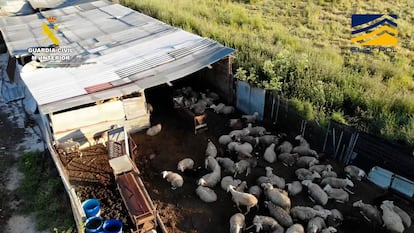

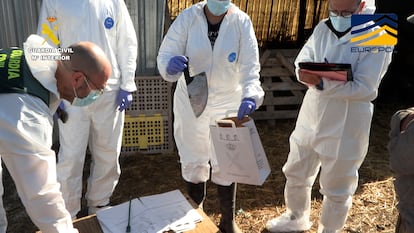
A dirt road near an industrial estate in San Fernando de Henares, in eastern Madrid, leads to what, from a distance, appears to be a bucolic country house in the middle of a meadow. However, there lies the slaughterhouse of horrors, a compound piled high with more than 200 sick, dying, and dead goats and sheep, surrounded by filth, severed animal heads, and rats. This is one of the compounds inspected last Wednesday by the Spanish Civil Guard’s Seprona (Nature Protection Service) unit in an operation targeting livestock farms, industrial warehouses, and illegal slaughterhouses in Ávila, Toledo, and Madrid that mistreated animals, slaughtered them in unsanitary conditions, and sent untraceable meat to restaurants.
Officers explained at a press conference Monday that they had arrested five people and are investigating another 12 accused of various crimes against public health, animal abuse, document falsification, membership of a criminal organization, and money laundering. Due to the poor condition of the animals in the various facilities, authorities had to euthanize approximately 350.
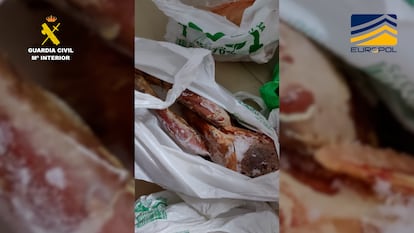
The so-called Operation Pox was launched after it was detected that meat from illegal slaughterhouses was being distributed to 10 Asian restaurants in both the Usera district (Madrid) and the Cobo Calleja industrial estate (Fuenlabrada). This meat was offered both on menus and through home delivery via online platforms. Four of the 10 establishments have been closed down by the inspection authorities.
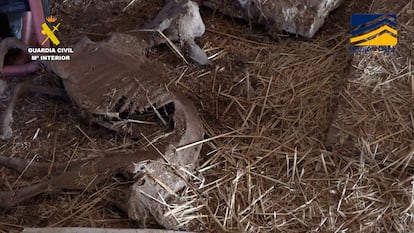
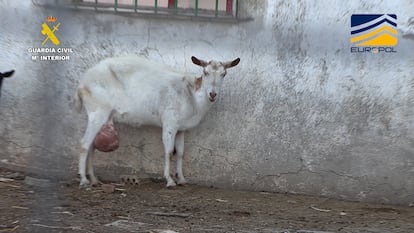
One of the slaughterhouses inspected was the San Fernando slaughterhouse. It is an enclosure surrounded by a fence, within which are several low buildings. One of them, with a collapsed roof, serves as a corral. When the officers entered, there were two dying goats, clearly in pain, lying on the ground, leaning against each other. Another had a huge tumor on its stomach. There were also eight dead goats, decomposing.
To the side, there are several metal shacks — which generate unbearable heat in summer — filled with filth, their roofs covered in cobwebs. In one of them, a blowtorch can be seen hooked to two butane gas cylinders, unsafely, where the skins of dead animals are burned. There is an overpowering smell of death. Further away, very small cages used to transport live animals, unfit for the purpose. At the door, two dead rats can be seen next to a pool of blackish liquid.
Another shack, its roof half-collapsed, served as a slaughterhouse. Entering it sends shivers down your spine: a filthy wooden platform was used to kill the animals; next to it, knives were stacked with dried blood, and on the floor, severed goat heads rotted. The smell was nauseating. Here, the animals were slaughtered, hung on spikes, skinned, and sent directly to restaurants and individual buyers.
The poor health of the animals and the appalling conditions in which they were slaughtered surprised investigators: such facilities are unusual in Spain. Therefore, those investigated will be charged with both animal cruelty and a crime against public health.
This was explained Monday by José Carlos Martínez, commander of the Seprona Central Operational Unit: “It’s always surprising to see these types of clandestine facilities that keep animals in very poor conditions... There were animals in near-mortality conditions, living next to piled-up dead animals. Those that were alive had rashes on their bodies, which could correspond to symptoms such as sheep or goat pox, and signs of malnutrition.”
Furthermore, legal slaughterhouses are required to maintain the traceability of each animal, which is determined by a plastic tag typically placed in the ear and used to identify and monitor animals. In this case, most did not have one.
Martínez noted that “the network came to light thanks to the cooperation between Seprona and the Ministry of Agriculture, Fisheries, and Food,” given that “due to the risk of goat pox, it was detected that new outbreaks were continuing to appear, and the main reason was clandestine movements of livestock from one facility to another.”
The other slaughterhouse inspected was in Navahermoso (Toledo). The animals came from both legal and illegal farms, but traceability was lost once they passed through these facilities. There has also been collaboration with Europol to check the criminal records of foreign nationals under investigation.
According to investigative sources, the main suspect runs an illegal livestock farm in the province of Toledo, without official registration, from which he facilitates the illegal transport of sheep and goats. Along with another suspect, he transports animals from legal and illegal farms to various facilities, using falsified documentation to simulate legal transfers.
Some of the cattle were sent directly to a slaughterhouse in the province of Ávila. The rest were transported to the San Fernando de Henares facility, which serves as the organization’s main clandestine slaughterhouse. Animals were slaughtered there without authorization, in poor hygiene and sanitation conditions, and in violation of animal welfare regulations.
Direct sales to individuals
In addition to distribution to restaurants, several of those investigated collected meat from clandestine slaughterhouses to sell directly to individuals, without any traceability or health controls. The use of falsified documentation, tax evasion, and money laundering through cash payments and irregular invoicing have also been detected.
The organization has a defined hierarchical structure, with members responsible for the transportation, slaughter, and distribution of meat through unauthorized channels. The Seprona operation represents a significant blow against illegal meat trafficking and strengthens health controls and food safety. The investigation is under seal.
All the animals at the San Fernando facility were seized. Researchers intended to send those in good condition to animal sanctuaries, but ultimately 350 of them had to be euthanized.
Sign up for our weekly newsletter to get more English-language news coverage from EL PAÍS USA Edition









































