
The botanist who took 30 years to name 18 trees: 'It is a race against myself'
A researcher at Madrid’s Royal Botanic Garden has brought to light new tree species from Colombia, Ecuador and Peru, but says there is still much work left to do
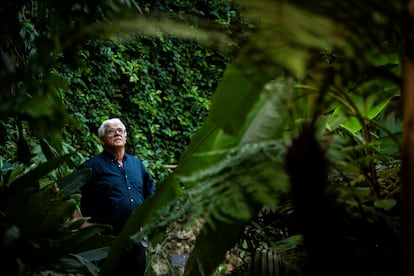
It is as though the walls of his office were almost covered by the dead branches of a tree. Floor-to-ceiling shelves are packed with folders, their once-red and green covers faded by time. Inside are dozens of tropical dried plant specimens, tied with string alongside pages of notes. To most people, the mass of documentation would look like a pile of leaves fallen from the sky, but José Luis Fernández-Alonso knows exactly where everything is in his small jungle.
“It is not much,” says the botanist and taxonomist. He keeps far more downstairs, in the herbarium in the basement of Madrid’s Royal Botanic Garden, part of Spain’s National Research Council (CSIC). From there, Fernández-Alonso has just published three studies describing 18 new tree species from Colombia, Ecuador and Peru, the result of 30 years of work.
It has taken him so long because botanists can no longer devote their lives solely to naming plant species, he explains. He has pursued his own lines of research little by little, always taking advantage of expeditions funded for other purposes that carried “greater economic interest,” such as studying the essential oils of plants or the proteins in seeds. He did not mind moving slowly, nor was he worried that another scientist might beat him to naming those species, since, he says, no one else has worked in those areas along the Pacific coast of northern South America. But now he is in a hurry.
Although he hopes to continue working independently, the researcher is 66 and will retire at 70. And he is likely the only person in the world capable of making sense of the papers stored in his office. “I still have several things in progress,” he says. He then sets about looking for them, these large leaves from the South American rainforests, with an energy that belies his loafers and thick moustache. Stretching up to grab one folder after another as if reaching into a tropical tree, he adds: “I do not know how much I will manage to do, but what I publish will be easy for others to consult. What I leave in my memory and in my folders nobody will understand, because they are very complex things,” he laments.
His most recent publication, in the Journal of the Colombian Academy of Exact, Physical and Natural Sciences, is only “a part” of his life’s work, he explains. The 18 newly described species belong to the neotropical genera Matisia and Quararibea of the Malvaceae family, each of which already comprises around a hundred described species, according to the International Plant Names Index.
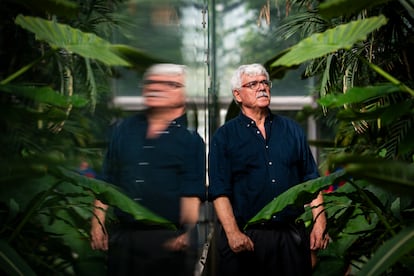
Fernández-Alonso had already named several of them in earlier studies. They come from the “rainy, humid and lush” Pacific forests, which the botanist first set foot in in 1989 as a fellow on an expedition organized by the National University of Colombia. “When I went into the field I began to see that there was a lot of variety of malvaceous trees in these forests,” he recounts. “My supervising professor, the American Alwyn Gentry, was setting up plots of 1,000 square meters [the size of four tennis courts] in different forests around the world to record species diversity per area. They looked at every trunk in the grid, and it was in those places that the greatest variety of trees was seen.”
He remembers it as if it were yesterday — and fortunately so. Over the following three decades, Fernández-Alonso returned to his notes from that first journey to the Colombian jungles to publish several studies. His office is a little warm. He keeps the window closed in case an insect gets in and contaminates the loose specimens, though it is nowhere near as hot as the forests where he collected them. Suddenly, he clears everything from his desk and, out of nowhere, produces the very notebooks he took to South America in the 1990s, filled from cover to cover with handwritten notes and sketches. His entire life is there. Written by hand.
“For a botanist, field notebooks are essential,” he says. “The idea is that each expedition you undertake translates into samples that are cataloged in a notebook associated with a date, a location and the collectors.”
He is describing taxonomy, the scientific discipline devoted to classifying all living things. It is a hidden, centuries-old profession that Fernández-Alonso calls “vital.” “The more information you have about species and their distribution, which are rare or threatened, the more arguments you will have to conserve them,” he says. “It is urgent because there are species that are endemic to a territory.”
Taxonomy also has practical applications, he points out, and that is often what secures funding for expeditions. He warns: “If taxonomy falls apart, no one will be able to identify pests or organisms for applied sciences, chemists, doctors or foresters.”
Fernández-Alonso believes that “a lot of people have grown comfortable” with researching plant DNA. “Sometimes it has created many conflicts and low-quality data,” he says. “You have to go and understand them in the field, how species are distributed and why they interact. You must combine modern DNA methods with fieldwork that gathers habitat data and information on pollinators.”
He is a hands-on scientist, one who admits he is not very good with computer software and yet estimates he has discovered around 150 new plant species over the course of his career. Obtaining some tree specimens required repeated visits to the forest before he could collect a leaf, sometimes from the ground when the fertile parts of the plant were out of reach.
“The conditions are tough,” he says. “Sometimes it is complicated, or you run out of water, which has happened to me. You risk drinking from any source and then have digestive problems, but that is part of it.”
The methods used by taxonomists have changed little over the years. Fernández-Alonso has made many discoveries by following the footsteps and clues found in the journals of José Celestino Mutis, who led the Royal Botanical Expedition to the New Kingdom of Granada, encompassing present-day Colombia, Panama, Ecuador and Venezuela, between 1783 and 1808.
He pulls out a folder and shows a plant that had never been described before. “I dedicated it to Mutis,” he explains proudly. Its name is Stemodia mutisii.
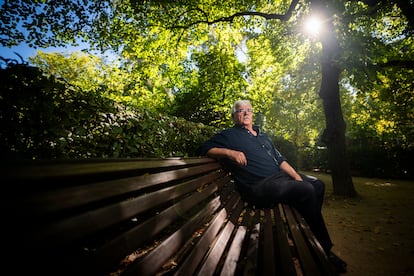
Fernández-Alonso has traveled to areas that few botanists have visited in modern times. He recalls “a very interesting route, in a region that had little data because it was traditionally a red zone controlled by the guerrilla.” He recounts: “There were roads where there was conflict that became less dangerous and we went on an expedition.” It was in those places that he found “marvels,” he says.
Like Mutis, he hopes those marvels will remain for “someone who comes 100 years from now and finds your plants there, in the herbarium.” Different studies estimate the number of flora still unknown between 10,000 and 100,000, but Fernández-Alonso dismisses such figures as “speculation.”
The truth is that he’s working around the clock to identify more new species out of his folders. It’s a long process, he explains. But he no longer plans to return to the forests. His felt hat — which could easily be Indiana Jones’s — hangs on a hook in his office. “It is time to write,” he says.
He’s not even thinking about returning to his hometown in Valladolid, where, as a child, he competed with his brother to compile data on all the insects in Encinas de Esgueva. He also did that with a notebook — the first step into the world of taxonomy — which he still keeps in his office.
“It is a race against myself,” he concludes. “I will sacrifice visits to my hometown so I can produce these pending publications.”
Sign up for our weekly newsletter to get more English-language news coverage from EL PAÍS USA Edition









































